What are the sources of nutrient pollution?
Both point source and non-point sources of nitrogen and phosphorus can move nutrients from land and facilities into bodies of water.
- Non-point sources: Surface water runoff and groundwater flow from agricultural and urban areas.
- Point sources: Discharges from industrial and wastewater treatment facilities and septic systems.
Where nutrients originate
- Manures and chemical fertilizers used in agriculture
- Lawn fertilizers, yard and pet waste, and some detergents from residential and commercial properties
- Soil erosion that carries away nutrient-rich soils
- Discharge from community sewage and industrial wastewater treatment plants
- Nitrogen compounds from the atmosphere, nitrogen oxide and ammonia, that deposit into sediment. This happens after burning fossil fuels and from certain agricultural practices.
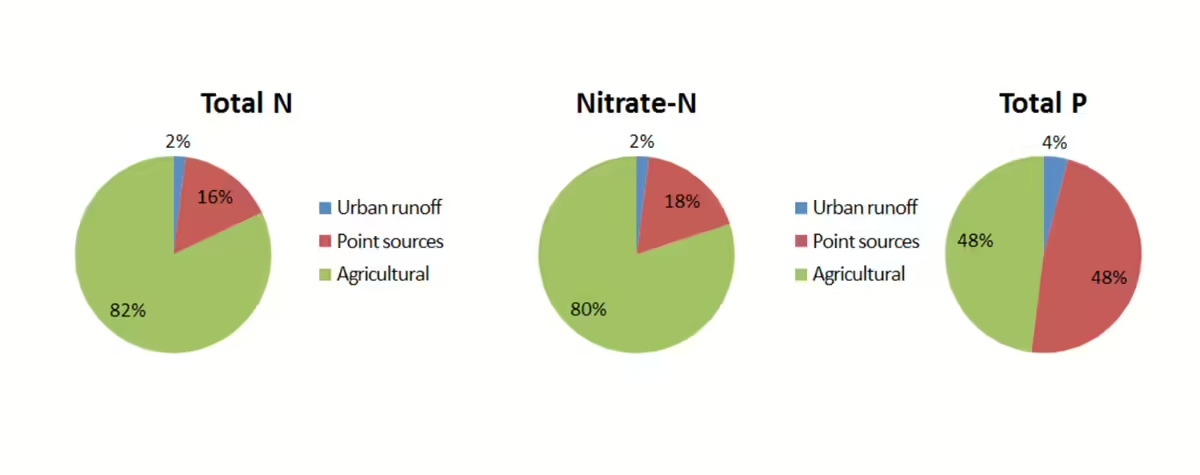
The primary goals of the Illinois Nutrient Loss Reduction Strategy are to reduce the annual loading of nitrate-nitrogen and total phosphorus to the Mississippi River. These charts document the proportion of nitrate and total phosphorus lost to the Mississippi River from Illinois by nutrient source, as documented in the 2015 Science Assessment.
Learn more about these sources of nutrient loss and solution
Agricultural Sources

Urban Stormwater
