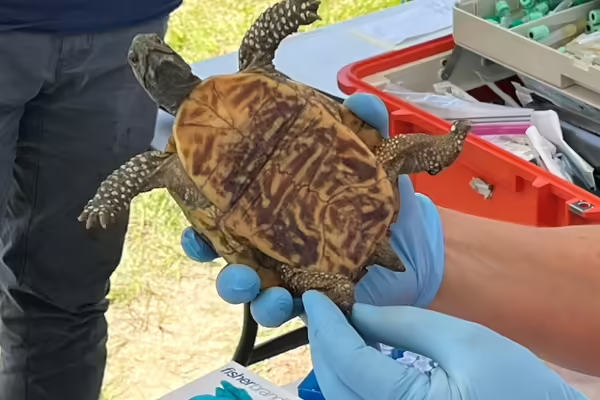
OTTAWA, Ill. – University of Illinois Extension Master Naturalist volunteers contribute thousands of hours each year to conservation, education, and stewardship efforts across Illinois. This spring, Master Naturalist volunteer Dave Brewer participated in a unique wildlife monitoring project at The Nature Conservancy's Nachusa Grasslands preserve near Franklin Grove.
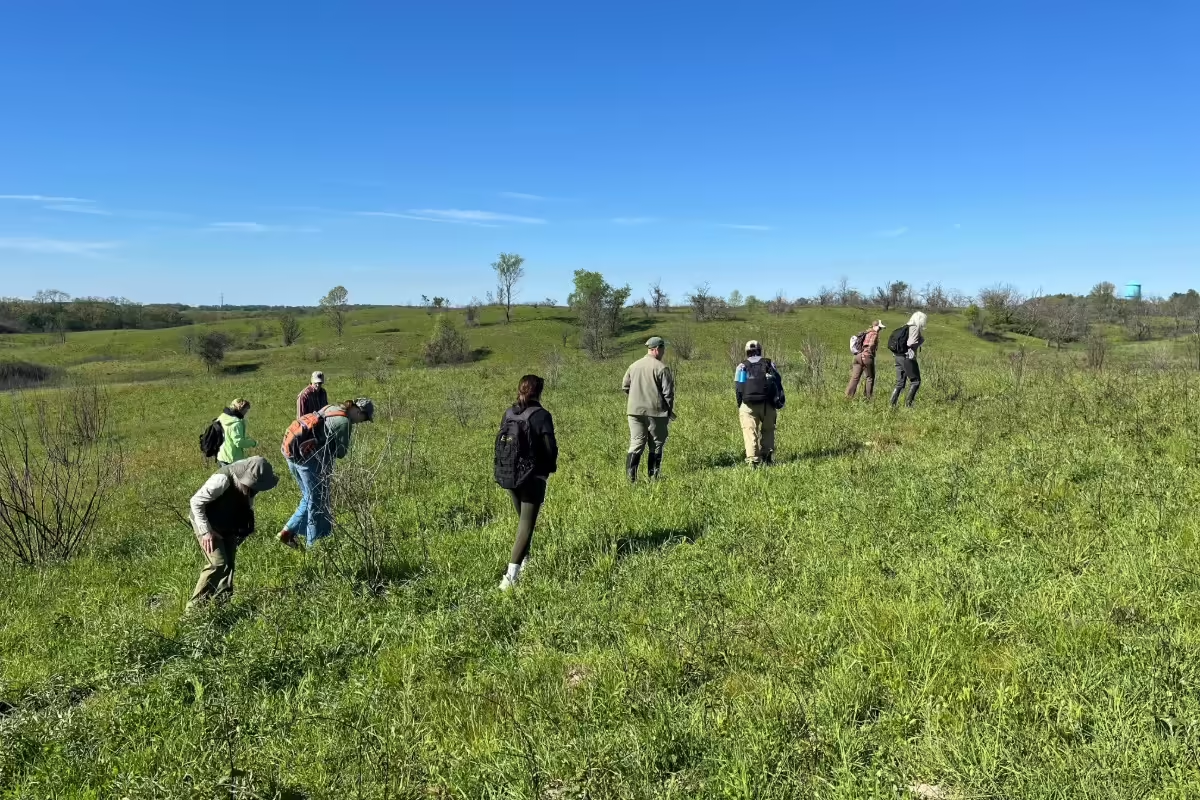
Joining researchers and approximately 20 other volunteers, Brewer spent several hours walking through prairie habitat searching for native turtles as part of a long-term wildlife health and conservation study. The annual effort helps scientists monitor the health of turtle populations and better understand how prairie management practices affect wildlife over time.
The search process is simple but requires patience and sharp observation skills. Volunteers spread out across assigned areas of prairie habitat and slowly walk the landscape looking for turtles hidden among grasses and other vegetation.
For many years, specially trained dogs helped researchers locate turtles. The dogs were able to detect turtles by scent and gently retrieve them for study. Following the retirement of the dogs and their handler, volunteers have become an important part of the search effort.
"I think we’re less effective than the dogs, but we do find turtles,” said Brewer. "We spent several hours carefully searching assigned areas of the prairie and helping researchers cover as much ground as possible."
In addition to volunteer search teams, researchers also locate some turtles using radio telemetry. Individuals that have been tagged in previous years can be tracked and revisited as part of ongoing monitoring efforts.
When turtles are found, researchers flag the exact location and transport them to a temporary field laboratory for health assessments. Scientists collect measurements and biological samples, including blood samples, to evaluate the animals' health and monitor factors such as stress, inflammation, and reproduction. Researchers also use shell markings to determine whether an individual has been encountered during previous surveys. After the examination is complete, each turtle is returned to the precise location where it was originally found.
The research contributes to a broader understanding of turtle health and provides information that can help conservation professionals protect vulnerable turtle populations and the prairie ecosystems they depend on.
For Dave Brewer, the experience offered a firsthand look at how volunteers can support scientific research and conservation efforts.
"Projects like this demonstrate the important role volunteers play in conservation science," said Emily Hansen, University of Illinois Extension natural resources educator. "By helping researchers collect valuable data, Master Naturalists gain hands-on experience while contributing to the protection of Illinois' natural resources."
University of Illinois Extension Master Naturalist volunteers complete specialized training and then contribute service through environmental stewardship, citizen science, and educational outreach projects. Opportunities range from habitat restoration and wildlife monitoring to nature-based educational programs in local communities.
Individuals interested in becoming an Illinois Extension Master Naturalist volunteer can learn more by visiting go.illinois.edu/BLMPMN.
University of Illinois Extension develops educational programs, extends knowledge, and builds partnerships to support people, communities, and their environments as part of the state's land-grant institution. Extension serves as the leading public outreach effort for University of Illinois Urbana-Champaign and the College of Agricultural, Consumer and Environmental Sciences in all 102 Illinois counties through a network of 27 multi-county units and over 500 staff statewide. Extension’s mission is responsive to eight strategic priorities — community, economy, environment, food and agriculture, health, partnerships, technology and discovery, and workforce excellence — that are served through five program areas — 4-H youth development, agriculture and agribusiness, community and economic development, health and community wellness, and natural resources, environment, and energy.