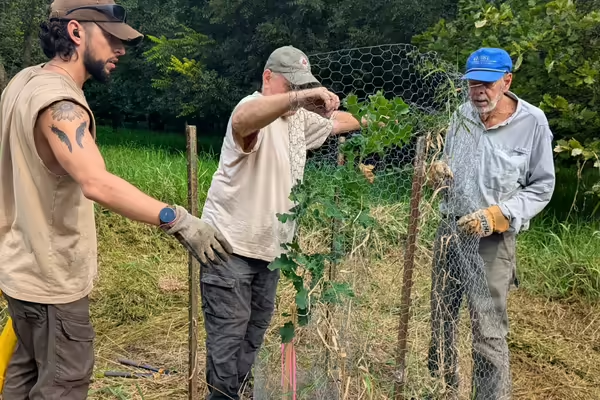
OTTAWA, Ill. – University of Illinois Extension Master Naturalist volunteers are helping protect and restore an important wildlife habitat along the Illinois River through ongoing stewardship work at Plum Island Eagle Sanctuary near Starved Rock State Park.
Owned and managed by the Illinois Audubon Society, Plum Island is a 45-acre island that serves as an important wintering area for bald eagles and other wildlife. The sanctuary was protected from development in 2004 and remains closed to the public to support conservation efforts and habitat restoration. Reforestation and habitat management activities continue on the island with the assistance of dedicated volunteers.
Over the past year, Illinois Extension Master Naturalist volunteers have partnered with Illinois Audubon Society to improve habitat conditions on the island. Volunteers have assisted with plant surveys, invasive species removal, tree planting, and other stewardship activities designed to support a healthy and diverse native ecosystem.
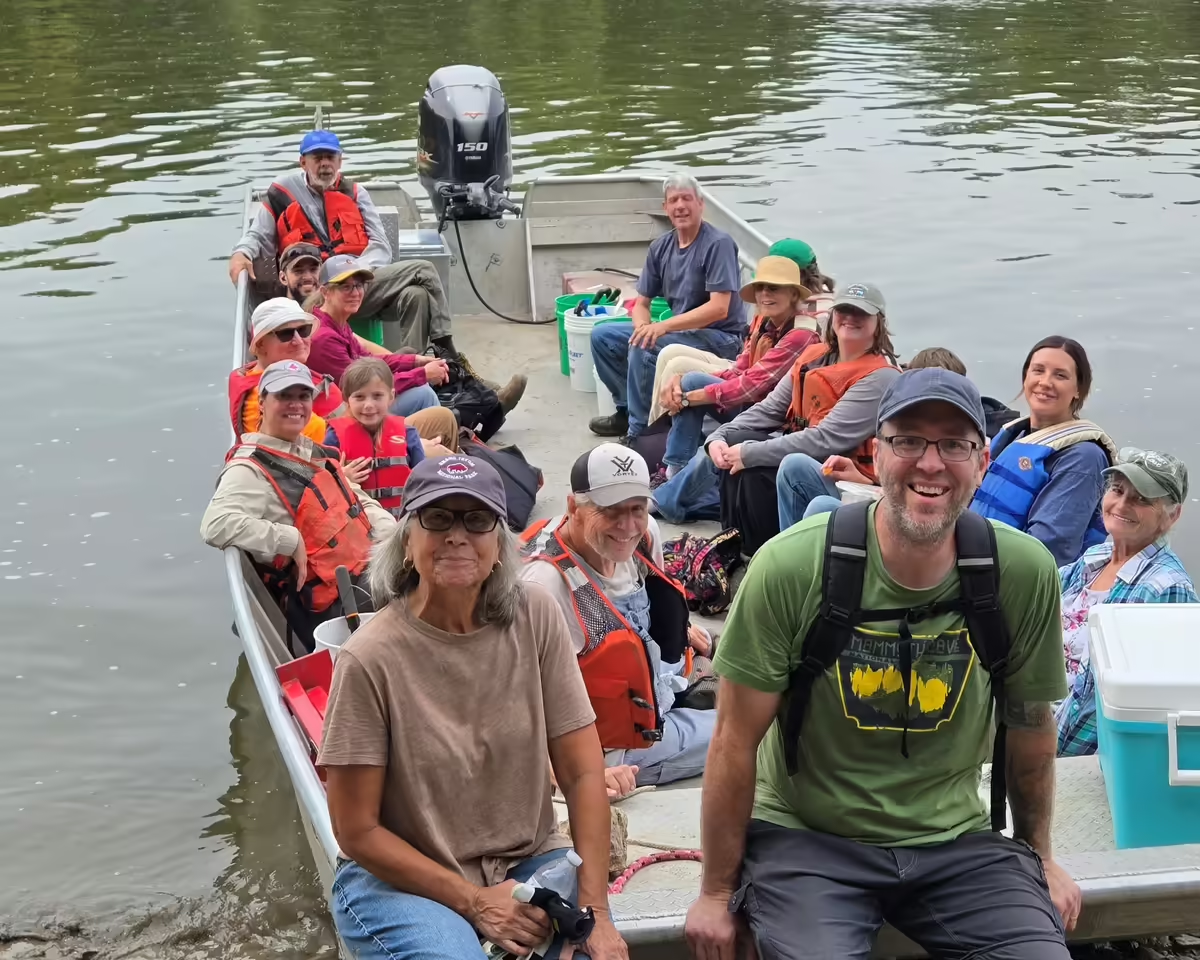
Unlike many volunteer stewardship sites, Plum Island can only be reached by boat. As a result, volunteer workdays are highly dependent on weather and river conditions. This summer's frequent rainfall led to elevated water levels on the Illinois River, making access to the island more difficult and limiting opportunities for volunteers to complete restoration projects.
Despite these challenges, volunteers have made significant progress. More than 1,100 trees have been planted on the island, including oaks, sycamores, and black walnuts. These trees will help stabilize the shoreline, reduce erosion, and provide future nesting and roosting habitat for bald eagles and other wildlife.
"Plum Island has easily become my favorite place to volunteer," said Master Naturalist Jillian Pender. "It's rewarding to see the growth of trees that were planted just last October. One of my favorite things is hearing the eagles calling to each other and knowing we're playing a part in preserving their habitat. There's something special about stepping off the boat onto the island and being fully surrounded by nature and the peace it brings."
In addition to tree planting, volunteers have been working to remove invasive species that threaten newly established vegetation. Recent stewardship efforts have focused on clearing invasive reed canary grass and honeysuckle from around young trees, allowing native plants to thrive. Volunteers have also conducted plant surveys to document species found on the island and guide future restoration decisions.
Last year, Master Naturalists and Plum Island stewardship leaders completed the island's first comprehensive plant survey. Among the native species documented were false indigo bush and buttonbush, both important shrubs found along Illinois River shorelines. Building on those findings, volunteers are expanding restoration efforts beyond tree planting. Plans are underway to plant more than 100 native shrubs, including willows, buttonbush, and dogwoods, in erosion-prone areas along the island's shoreline.
Master Naturalist Ellen Evancheck said some of the most memorable moments come from seeing the results of past restoration efforts. "One highlight was finding mature native false indigo shrubs after removing invasive reed canary grass. Seeing eagles and pelicans on the island is always a rewarding reminder of why this work matters."
According to Don Goerne, Chair of the Plum Island Stewardship Committee, volunteers have become an essential part of the sanctuary's success.
"Partnering with our local U of I Extension Master Naturalists has, without a doubt, increased Plum Island stewardship productivity," Goerne said. "Master Naturalists are knowledgeable and dedicated volunteers who make a big difference toward reaching our habitat restoration goals every year."
According to Emily Hansen, University of Illinois Extension natural resources educator, projects such as Plum Island demonstrate the impact that trained volunteers can have on natural resource conservation.
"Master Naturalist volunteers play an important role in protecting and restoring natural areas locally," Hansen said. "Their dedication, knowledge, and willingness to get involved allow important conservation work to happen while also strengthening connections between people and the natural world."
For volunteers, the challenges of reaching and working on the island make each stewardship day even more rewarding. Whether removing invasive plants, documenting native vegetation, or planting the next generation of trees, their efforts contribute to the long-term health of a unique sanctuary that provides critical habitat along the Illinois River.
University of Illinois Extension Master Naturalist volunteers complete specialized training and then contribute service through environmental stewardship, citizen science, and educational outreach projects. Opportunities range from habitat restoration and wildlife monitoring to nature-based educational programs in local communities.
Individuals interested in becoming an Illinois Extension Master Naturalist volunteer can learn more by visiting go.illinois.edu/BLMPMN.
University of Illinois Extension develops educational programs, extends knowledge, and builds partnerships to support people, communities, and their environments as part of the state's land-grant institution. Extension serves as the leading public outreach effort for University of Illinois Urbana-Champaign and the College of Agricultural, Consumer and Environmental Sciences in all 102 Illinois counties through a network of 27 multi-county units and over 500 staff statewide. Extension’s mission is responsive to eight strategic priorities — community, economy, environment, food and agriculture, health, partnerships, technology and discovery, and workforce excellence — that are served through five program areas — 4-H youth development, agriculture and agribusiness, community and economic development, health and community wellness, and natural resources, environment, and energy.