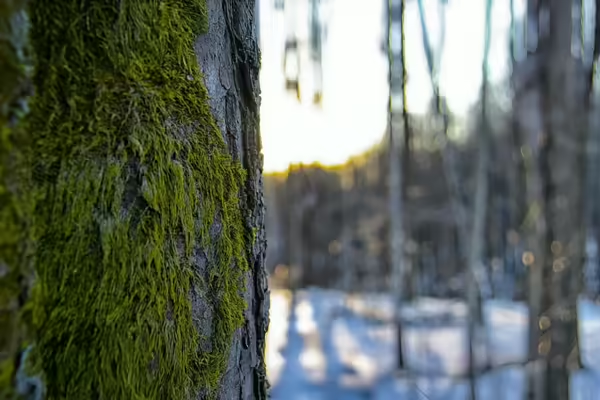
Carlyle, IL — University of Illinois Extension invites nature enthusiasts and community members to attend a FREE in-person Winter Tree Identification workshop on Saturday, January 17, at 12:30 p.m. at the Carlyle Lake Visitor Center.
This educational program will teach participants the basics of identifying trees during the winter months. Mary Grapperhaus, retired Natural Resources Coordinator for the Illinois Department of Natural Resources, will lead the session. Attendees will learn key characteristics used to identify trees without leaves, including location, bark, twigs, buds, and terminology, as well as techniques and tools for identifying unknown species.
Following the classroom portion, participants will enjoy a hands-on Winter Tree Identification hike along Chipmunk Trail at Carlyle Lake, applying their new skills in the field.
Event Details:
- Date: Saturday, January 17
- Time: 12:30 p.m.
- Location: Carlyle Lake Visitor Center
Registration:
Register online at go.illinois.edu/WinterTreeID26 by January 16.
For questions or to register by phone, call Kaylen at 618-327-8881.
Don’t miss this opportunity to deepen your understanding of Illinois’ winter landscapes!
University of Illinois Extension develops educational programs, extends knowledge, and builds partnerships to support people, communities, and their environments as part of the state's land-grant institution. Extension serves as the leading public outreach effort for University of Illinois Urbana-Champaign and the College of Agricultural, Consumer and Environmental Sciences in all 102 Illinois counties through a network of 27 multi-county units and over 700 staff statewide. Extension’s mission is responsive to eight strategic priorities — community, economy, environment, food and agriculture, health, partnerships, technology and discovery, and workforce excellence — that are served through six program areas — 4-H youth development, agriculture and agribusiness, community and economic development, family and consumer science, integrated health disparities, and natural resources, environment, and energy.