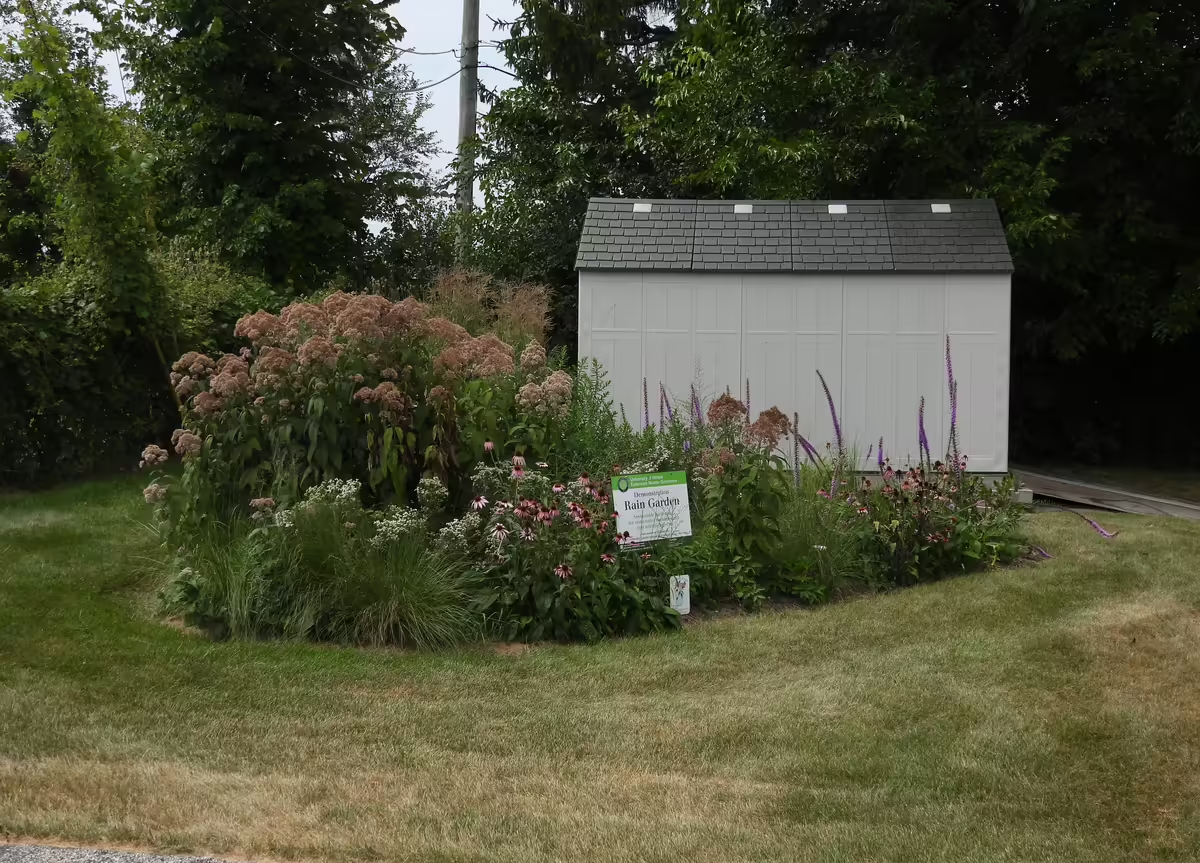
Rainscaping Education Program
The Rainscaping Education Program is a statewide training offered by University of Illinois Extension to help communities use nature-based solutions to manage stormwater and improve water quality.
Designed for Master Gardeners, Master Naturalists, conservation agencies, stormwater professionals, landscape companies, consultants, and other community leaders, the program combines classroom instruction with hands-on learning to build the knowledge and skills needed to plan, install, and maintain successful rainscaping projects.
What You'll Learn
Participants explore the principles of rainscaping through five workshop sessions covering:
Introduction to rainscaping and rain gardens
Site selection and assessment
Plant selection and garden design
Installation techniques
Long-term maintenance
Community engagement and volunteer management
The program includes self-paced online learning, interactive workshops, hands-on activities, field techniques, site visits to local rainscaping projects, and group discussions.
Participants also work with community partners to help design and install a demonstration rain garden in a public space, providing valuable real-world experience.
Example of a Two-Day Agenda Overview
Day 1
Session 1: Introduction to Rainscaping
- Welcome, Overview, Logistics
- Introduction to rainscaping
- In-person: Rain garden site tours; Lunch
- Virtual: Virtual rain garden tours and discussion
Session 2: Site Selection and Analysis
- Rain garden siting and sizing
- Inlets, outlets, and flow management
Session 3: Plant Selection and Garden Design
- Classroom instruction for plant selection and garden design
- Introduce group design activity
Day 2
Session 3: Plant Selection and Garden Design, Continued
- Group design activity
Session 4: Installation and Maintenance
- Installation techniques
- Maintenance and maintenance activity
- Common rain garden concerns and solutions
- Taking information to the public
Session 5: Rainscaping at Home and in the Community
- Rainscaping in the community speaker panel
- Certificates
- In person: Demonstration rain garden installation
- Virtual: Sharing rain garden projects activity
What Is Rainscaping?
Rainscaping is the use of resilient landscape practices that capture, slow, filter, and absorb stormwater where it falls. By allowing rainwater to soak into the soil rather than flow directly into storm drains, rainscaping helps reduce flooding, improve water quality, recharge groundwater, and create healthier landscapes.
Rainscaping can be implemented at both residential and community scales using practices that work with natural processes instead of relying solely on traditional stormwater infrastructure.
More Information about Managing Too Much Water
Examples of rainscaping include:
Installing rain barrels to capture roof runoff
Building rain gardens and bioswales
Disconnecting downspouts from storm sewers
Preserving mature trees and native vegetation
Planting the right plants in the right locations
Replacing impervious surfaces with permeable materials
Interested in attending a future workshop? Complete the Rainscaping Interest Form to receive updates about upcoming trainings and events hosted by Illinois Extension.
Illinois Demonstration Rain Gardens
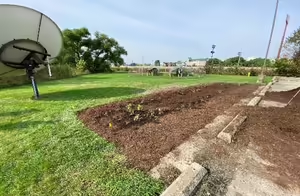
Effingham County
In October of 2021, a rain garden was established at the University of Illinois Extension Office in Effingham. This was a partnership with the Effingham County Master Gardeners, Watershed Outreach in the Illinois Nutrient Loss Reduction Strategy, and Effingham County Extension.
The office has a large sloped parking lot that leads to an area that is wet most of the year. This site was chosen to collect some of the stormwater coming from the Extension office and slow its progression to the wet area. This site is visible to the public and will be used for educational and teaching programs as well as a conversation topic. This should decrease the amount of water that sheets off the parking lot into the wet area during rain events. The infiltration test revealed one basic soil type in the area, which allowed water to move quickly across the ground to the wet area. To overcome this, the rain garden slopes from level ground to a 6” deep trough. The area receives full sun. The plant species were selected for full sun tolerance.
All plants are native to Illinois and purchased from Southernwood Gardens, a native plant grower and nursery, located in Alto Pass. Two types of hardwood mulch, regular and doubled ground, were purchased from a local vendor, Heartland Landscaping, Inc. in Effingham. Plants and mulch were provided by Illinois Extension Effingham County. Mycorrhizal inoculum was added at the time of planting and provided through grant funds. Site excavation was provided by the Josh and Amy Tegler family. One planting day was selected with three Master Gardeners, one volunteer, and two University of Illinois Extension staff. Approximately 100 plants were installed in this garden.
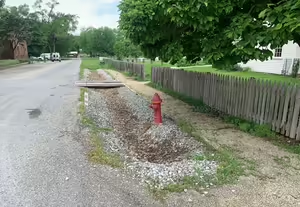
Hancock County
In the fall of 2022, Illinois Extension partnered with Historic Nauvoo to present the Purdue Rainscaping program. Prior to the course, the horticultural staff at Historic Nauvoo worked with Illinois Extension to identify suitable locations for installing a rain garden. The site selected features two linear sections along a roadway at the intersection of Hyde and Hotchkiss streets.
The site was a graveled ditch. Due to the site's ability to infiltrate stormwater and its high visibility, the team decided it was an ideal location for a rain garden. Water flow comes from the adjacent street flowing north to south, through a connecting culvert at the intersection, and then east to west. These rain gardens function more like a bioswale, conveying water while slowing it down and allowing for more infiltration with increased friction from plant material.
The Historic Nauvoo horticulturist worked closely with Illinois Extension in the planning, design, preparation, and installation of the rain garden. Historic Nauvoo has an estimated 100,000 visitors each year, making it a prime location for educational efforts about green infrastructure.
Illinois Extension received a grant from the Extension Disaster Education Network for green infrastructure projects to support the purchase of plants and mulch.
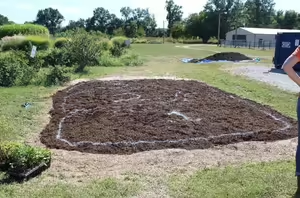
Jackson County
In August of 2019, a rain garden was established at the Illinois Extension Office in Murphysboro in partnership with the Jackson County Master Gardeners and Jackson County Extension. There is a large sloped parking lot located at the Extension office that leads to an area of surrounding turf and research plots.
This site was chosen to collect stormwater exiting the Extension office parking lot, slow its progression to the surrounding turf and research plots, and allow for infiltration of the collected stormwater into the ground layers. It is a site that is visible to the public and will be used for educational and teaching programs. The garden should decrease the amount of water that sheets off the parking lot into the research plot area during rain events. The rain garden is an unlined bio-filtration basin. The area was amended down to a depth of 18” with an engineered bio-retention media consisting of 70% landscape sand, 15% compost, and 15% native soil. The area receives full sun. The plant species were selected for full sun tolerance.
The garden was planted with a range of native forbs and sedges designed to bloom throughout the growing season and create a deeply rooted dense planting. The plants selected help to slow down and infiltrate stormwater run-off, resist water stress, and attract pollinators. Mycorrhizal inoculum was also added to increase the symbiotic fungal activity between the soil and plant root ecosystem. Approximately 300 native plants were installed in this garden.
Kane County
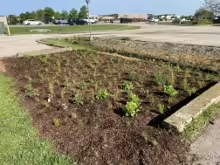
In May of 2024, a rain garden was established at the Illinois Extension Office in St. Charles. There is a grassy area between two sections of the parking lot, bounded by a ditch with sharply sloped sides on one end and the Kane County Fairgrounds on the other side. This area of grass is in full sun, frequently wet, and the ditch has continuous flow for most of the year.
This site was chosen to help mitigate the stormwater flow from impervious surfaces at the Fairgrounds and Extension office while also improving the appearance of the area. There was already a gentle slope on all sides, creating a sort of “bowl” shape which directed water to the ditch. This site is visible to the public on Randall Rd. and will be used for educational purposes, as well.
The site was mulched with regular, double-ground hardwood mulch from a local vendor. Plants were selected from Midwest Groundcovers, a local nursery with a native plant division, which also donated a number of plants for the project. All plants are native to the region. Plants were installed by the 17 students in a Rainscaping class offered by Extension.
Rock Island County
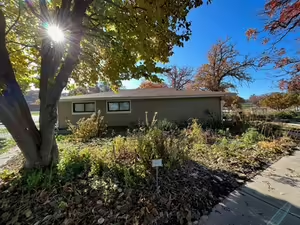
Riverside Rain Garden is a small demonstration garden that is part of a larger park plan. Done in partnership with the City of Moline, the rain garden is located next to the park building, a highly visible location. Water from the building is diverted into the garden. An existing sidewalk provides clear visibility for park visitors and easy access to an educational sign about the garden.
Illinois Master Gardeners and Master Naturalists partner with Friends of Riverside to maintain a few planting beds within the park. The rain garden will be maintained as an Illinois Extension project.
The planting plan was derived from a recommended plan developed by the University of Illinois Red Oak Rain Garden. Plant growth and garden development will be documented, and data will contribute to the study of those plans as they continue to be improved.
Working with Our Partners