Title
What Is a Soft Landing?
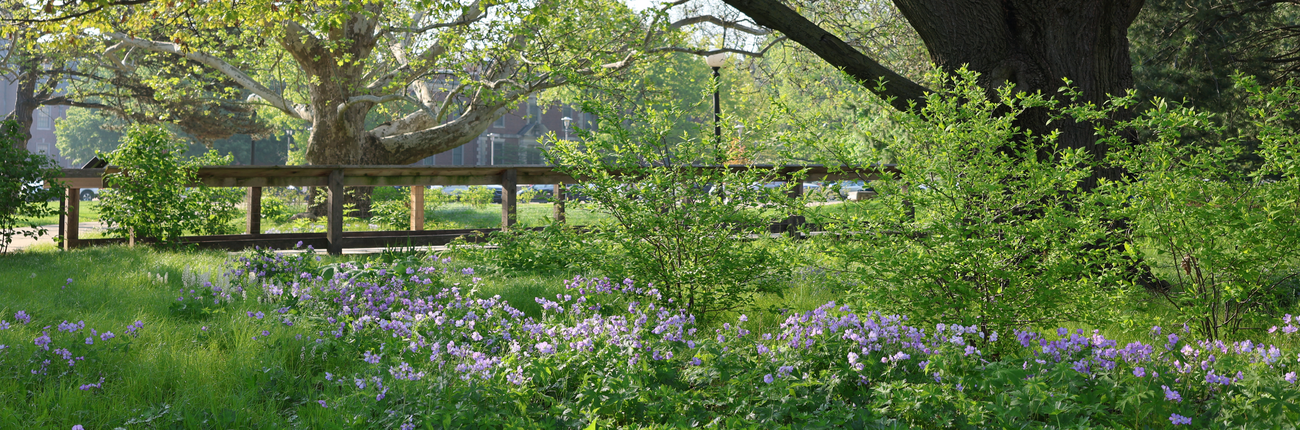
The term “soft landing” was coined by pollinator conservationist and author Heather Holm and conservation gardener Leslie Pilgrim to describe a planting of native, shade-tolerant plants beneath trees. Instead of maintaining turfgrass right up to the trunk, a soft landing creates a diverse understory layer inspired by woodland ecosystems. This approach supports tree health, improves ecological function, and provides habitat for wildlife while creating an attractive landscape.
Title
Why Plant a Soft Landing?
Soft landings provide multiple environmental benefits while improving the health of your landscape.
Provide Habitat for Wildlife
Unlike turfgrass, which offers little habitat value, a soft landing creates a diverse living community that supports biodiversity throughout the year. Many insects spend part of their life cycle in leaf litter or the soil beneath trees. Native plants provide food, shelter, and nesting habitat for pollinators, birds, and other wildlife.
Support Healthy Trees
Turfgrass growing beneath trees competes for water and nutrients, and frequent mowing around trunks can damage bark and shallow roots. Replacing turfgrass with appropriately selected native woodland plants creates a healthier growing environment for trees while protecting the critical root zone from mower and string trimmer damage.
A layer of native vegetation and mulch also helps:
- conserve soil moisture
- moderate soil temperatures
- improve soil structure and build organic matter
- reduce soil compaction and erosion
Healthier trees are better able to withstand drought, pests, and other environmental stresses.
Protect Water Quality
Rainfall that lands on roofs, driveways, sidewalks, and lawns eventually flows into nearby storm drains and waterways. As this water moves across the landscape, it can pick up sediment, fertilizers, pesticides, pet waste, and other pollutants before entering local waterways.
The extensive root systems of native plants improve soil structure, increase water infiltration, and reduce erosion, slowing stormwater runoff and allowing rainfall to soak into the soil, where pollutants are naturally filtered by soil microorganisms, plant roots, and the soil itself.
Title
Illinois Native Species for Soft Landings
Choosing the right plants is key to creating a successful soft landing. Illinois native woodland species are well adapted to local conditions and provide food and habitat for pollinators and other wildlife. Use the table below to explore some native plants that are well suited for soft landings.
| Name | Height | Light | Moisture |
| Wild Columbine Aquilegia canadensis | 3' | Sun/Part Sun/Shade | Average/Dry |
| Wild Ginger Asarum canadense | 1' | Part Sun/Shade | Average |
| Hairy Wood Mint Blephilia hirsuta | 3' | Part Sun/Shade | Average |
| Palm Sedge Carex muskigemensis | 3' | Sun/Part Sun/Shade | Average/Wet |
| Pennsylvania Sedge Carex pensylvanica | 1' | Part Sun/Shade | Average/Dry |
| Marginal Wood Fern Dryopteris marginalis | 3' | Part Sun/Shade | Average |
| Big-leaved Aster Eurybia macrophylla | 4' | Part Sun/Shade | Average/Dry |
| Wild Geranium Geranium maculatum | 2' | Part Sun/Shade | Average |
| False Solomon’s Seal Maianthemum racemosum | 3' | Part Sun/Shade | Average/Dry |
| Virginia Bluebells Mertensia virginica | 2' | Part Sun/Shade | Average |
| Woodland Phlox Phlox divaricata | 2' | Part Sun/Shade | Average |
| Jacob’s Ladder Polemonium reptans | 2' | Part Sun/Shade | Average/Dry |
| Christmas Fern Polystichum acrostichoides | 2' | Part Sun/Shade | Average/Dry |
| Short’s Aster Symphyotrichum shortii | 3' | Part Sun/Shade | Average/Dry |
Title
Explore More Extension Resources
- Listen to Extension experts discuss the benefits of Soft Landings in the Everyday Environment podcast.
- Read about layered landscape design in the Gardeners Corner blog.
- Learn how to read woodlands for Soft Landings inspiration in the Red Oak Rain Garden blog.