Title
Where Service Meets Impact
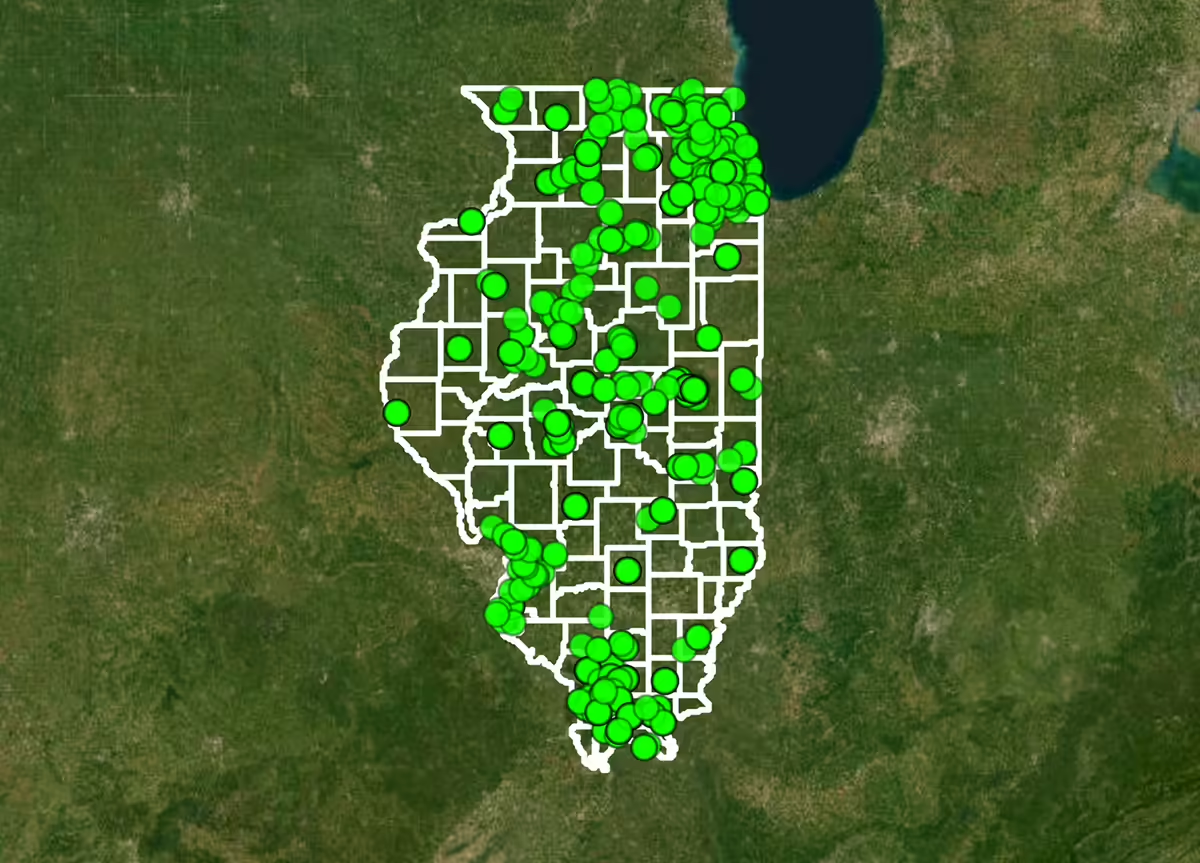
In 2025, over 900 Master Naturalists put in more than 77,000 hours removing invasive species, monitoring the health of waterways, raising and releasing monarch butterflies, teaching youth about the environment, and investing in the future of our natural areas.
Across the state, Master Naturalist volunteers share their knowledge and talents by putting research into action to help sustain and support the prairie state’s natural resources. Master Naturalists hold expertise in local natural resources, geology, and ecology. Explore more examples of how Master Naturalists across Illinois are putting knowledge to work in the 2025 Impact Report.
Environmental Stewardship
Project: Wet-Mesic Prairie Restoration in Kendall County
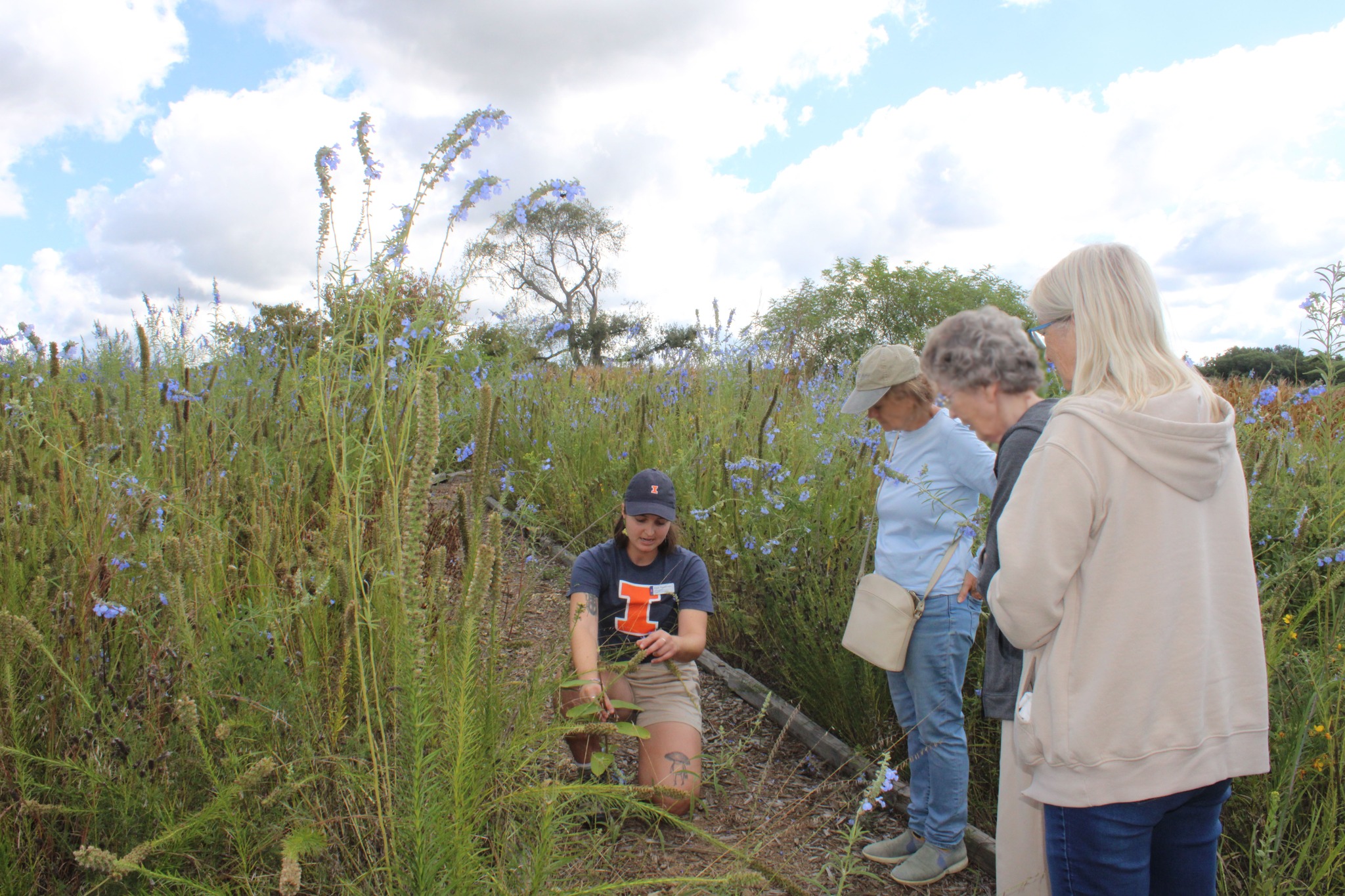
Master Naturalists, including Alyssa Theodor and her mother, Mary Theodor, have been key volunteers in helping the Oswegoland Park District and Friends of Illinois Nature Preserves restore the Yorkville Prairie, adjacent to Saw Wee Kee Park, which is a wet-mesic prairie home to plants adapted to wet conditions. Report
32,137 Environmental Stewardship Hours
Educating the Public
Project: Fall Tree Crawl in Piatt County
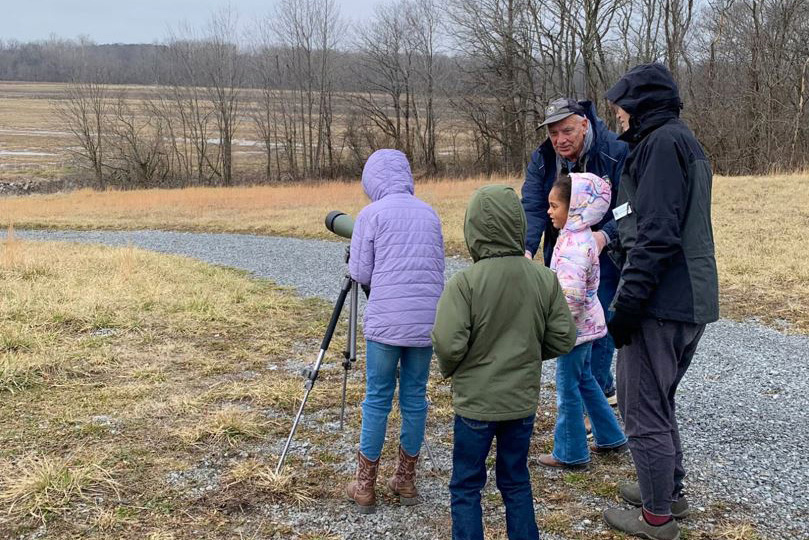
A Fall Tree Crawl at the Forest Preserve Park in Monticello gave volunteers the opportunity to connect with the public on the many species of trees located here and also introduce them to the Tree ID Project in the park. Permanent signage provides information about the native trees and links to additional resources online.
[I’m] now able to identify considerably more plants when performing stewardship activities at local forest preserves. [I] may now be in a position to make a significant contribution to a potential wetland restoration project.
Master Naturalist Volunteer, after taking the training
12,114 Education Hours
Advancing Scientific Knowledge
Project: Snake Road Sentinels in Union County
The only road in the world that closes biannually for snake migration is in Union County, within the Shawnee National Forest. Every spring and fall, the U.S. Forest Service closes the road to vehicle traffic to protect migrating snakes and allow visitors to observe them. Beginning in 2022, Illinois Extension partnered with the U.S. Forest Service to develop the Snake Road Sentinels program, a community science program. Master Naturalists receive training and then walk the road, collecting social science data from visitors as well as recording data on the snakes they encounter.
5,616 Community Science Hours
Collaborating with Communities
Project: Tree assessments in Adams County
After completing the Illinois Extension Mastering Tree Health and Identification course, a group of Master Naturalists put their new knowledge to work by conducting a 200-acre street tree inventory for downtown Quincy. In the fall of 2024, these passionate volunteers dedicated nearly 200 hours to training, cataloging tree species, assessing tree health, and identifying potential maintenance and removal needs, which helped reduce city expenses. Their work provided data that will inform the city’s tree care plans and future plantings, ensuring a thriving urban forest for generations to come.