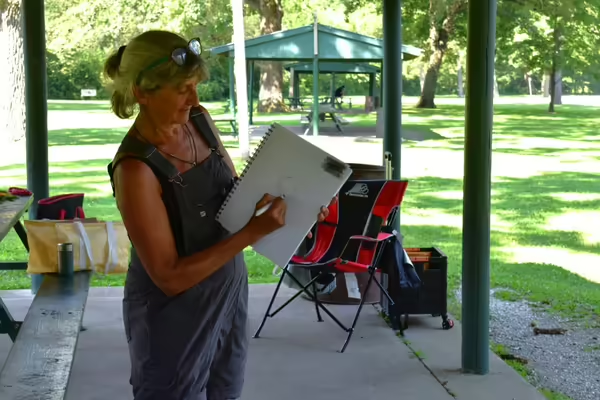
TISKILWA, Ill. – Discover how to slow down, look closely, and connect more deeply with the natural world through the practice of nature journaling. Nature journaling is an engaging practice that combines art, science, and personal reflection. During these hands-on workshops, participants will learn how to observe their surroundings, ask thoughtful questions, and document what they see using words and sketches.
No prior artistic experience is necessary, just a curiosity about nature and a willingness to explore. Participants ages 12 and up of all skill levels are welcome! Please bring a blanket or chair to sit on, a favorite journal, and a writing utensil. Assorted art supplies will be available to use during the workshop. Space is limited and pre-registration is required for all workshops. To learn more or to register visit go.illinois.edu/BLMPJournaling.
Our first Nature Journaling Workshop of 2026 will be held on January 31, 2026, from 8:00 a.m. – 10:00 a.m. at the Tiskilwa Public Library (119 E Main St, Tiskilwa, IL 61368). Please dress warmly as we will try to spend a portion of the workshop outdoors if weather permits.
If you need an accommodation to participate, please contact Emily Hansen at emhansen@illinois.edu or 815-224-0896. Early requests are strongly encouraged to allow sufficient time to meet your access needs.
University of Illinois Extension develops educational programs, extends knowledge, and builds partnerships to support people, communities, and their environments as part of the state's land-grant institution. Extension serves as the leading public outreach effort for University of Illinois Urbana-Champaign and the College of Agricultural, Consumer and Environmental Sciences in all 102 Illinois counties through a network of 27 multi-county units and over 700 staff statewide. Extension’s mission is responsive to eight strategic priorities — community, economy, environment, food and agriculture, health, partnerships, technology and discovery, and workforce excellence — that are served through six program areas — 4-H youth development, agriculture and agribusiness, community and economic development, family and consumer science, integrated health disparities, and natural resources, environment, and energy.