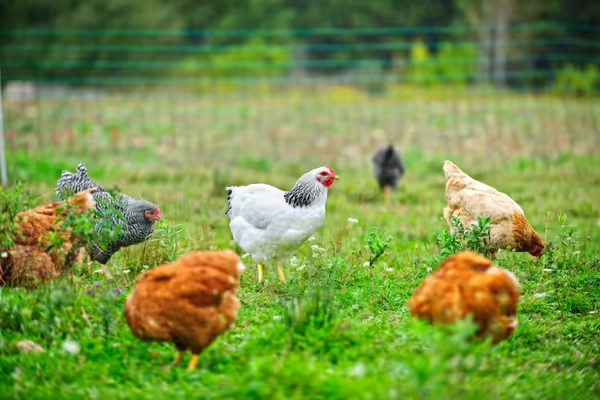
Union County, Illinois — The University of Illinois Extension is excited to offer a hands-on, two-day workshop designed for anyone interested in learning the skills and techniques of butchering chickens. As part of the ongoing Homesteading Series, this workshop will provide participants with the knowledge and practical experience to process poultry safely and effectively at home.
This two-day workshop will be held on August 7 and 8; each participant will have the opportunity to butcher two chickens and take home the meat. The class is priced at $95, which includes one catered meal on the first day. Participants can bring up to one additional guest with no extra charge.
The class will be held at The Flock Farm in Anna, IL, and taught by Brent Glays, farmer, and owner. The farm raises heritage breed chicken, lamb, and hogs, and sells meat at local farmers' markets and through an on-farm store. The farm is also home to a new poultry processing facility where the workshop will be located.
Whether you are interested in becoming more self-sufficient, expanding your homesteading skills, or learning how to sell poultry through your farm, this workshop covers all the bases. Attendees will also dive into topics such as:
- Breeds and feed
- Raising on pasture
- Predator control
- Processing techniques
- Packaging, Labeling
- Marketing, Food Safety, and more!
“We want to offer a practical learning experience for people who are ready to dive into more sustainable food practices,” said Maggie Ray, local foods and small farms program coordinator at Illinois Extension. “This is an opportunity for people to gain hands-on skills while learning about the regulations and standards that apply to those selling meat directly from their farm or at a farmers’ market. It’s about taking control of your food source in a practical, responsible way.”
Food Works, a nonprofit organization dedicated to growing local farming and food access, is teaming up to help support the event.
“Food Works is excited to support this workshop because it’s an opportunity for people to take a more active role in their food production,” said Jennifer Paulson, Food Works executive director. “Small-scale poultry also offers a lot of potential for entrepreneurs. With the poultry and rabbit producers’ exemption coming into law, people will soon be allowed to butcher up to 7,500 birds a year at their home property and sell them directly to consumers through farmers' markets, farm stands, and home delivery. Having the skills to process your own chicken opens up a lot of possibilities.”
The class is designed for beginners, so no prior experience is necessary. The two-day event will feature expert instruction, plenty of time for questions, and of course, plenty of chicken. Don’t forget to wear your rubber boots!
Registration Information:
· Cost: $95 (includes one meal and the butchering experience)
· Dates and times: August 7, 8 a.m. to noon and August 8, 2 to 6 p.m.
· Location: The Flock Farm; 460 McDuffee Lane, Anna, Illinois, 62906
· Register at: https://fwsoil.org/poultry-processing-workshop-2026/
· Note: Guests may attend for no additional registration fee. Registration is required as there are limited spots. Please remember to wear rubber boots.
Don’t miss this chance to gain valuable, hands-on experience while learning how to better provide for yourself and your family.
WRITER: Reed Capps, marketing and communications, reedc2@illinois.edu, (618) 357-2126
SOURCE: Maggie Ray, local foods and small farms program coordinator, mro@illinois.edu, (618) 687-1727
University of Illinois Extension develops educational programs, extends knowledge, and builds partnerships to support people, communities, and their environments as part of the state's land-grant institution. Extension serves as the leading public outreach effort for University of Illinois Urbana-Champaign and the College of Agricultural, Consumer and Environmental Sciences in all 102 Illinois counties through a network of 27 multi-county units and over 500 staff statewide. Extension’s mission is responsive to eight strategic priorities — community, economy, environment, food and agriculture, health, partnerships, technology and discovery, and workforce excellence — that are served through five program areas — 4-H youth development, agriculture and agribusiness, community and economic development, health and community wellness, and natural resources, environment, and energy.