Storm Safety
Severe storms can occur at any time of year. Be prepared for storms and know how to stay safe indoors and out if the power goes out and limbs and power lines come down.
If the Power Goes Out
Contact your electric utility to report the outage. Switch off lights, large electronics, and appliances to prevent overloading circuits and damaging appliances when power is restored. Leave one lamp or switch on as a signal for when your power returns.
Winter Outages
Close off unneeded rooms. When using an alternate heat source, follow operating instructions, use fire safeguards, and be sure to ventilate properly. Never use a charcoal grill to cook or heat with inside the home. Burning charcoal gives off deadly carbon monoxide gas and should only be used outdoors.
If you live with a child or an elderly person, you may need to take them somewhere with power, so they can stay warm. If you are healthy enough to stay home safely, there are ways to stay warm: stay inside and dress warmly in layered clothing.
To prevent water pipes from freezing, keep faucets turned on slightly, so water drips from the tap. Know how to shut off water valves in case a pipe bursts.
Stay away from downed power lines.
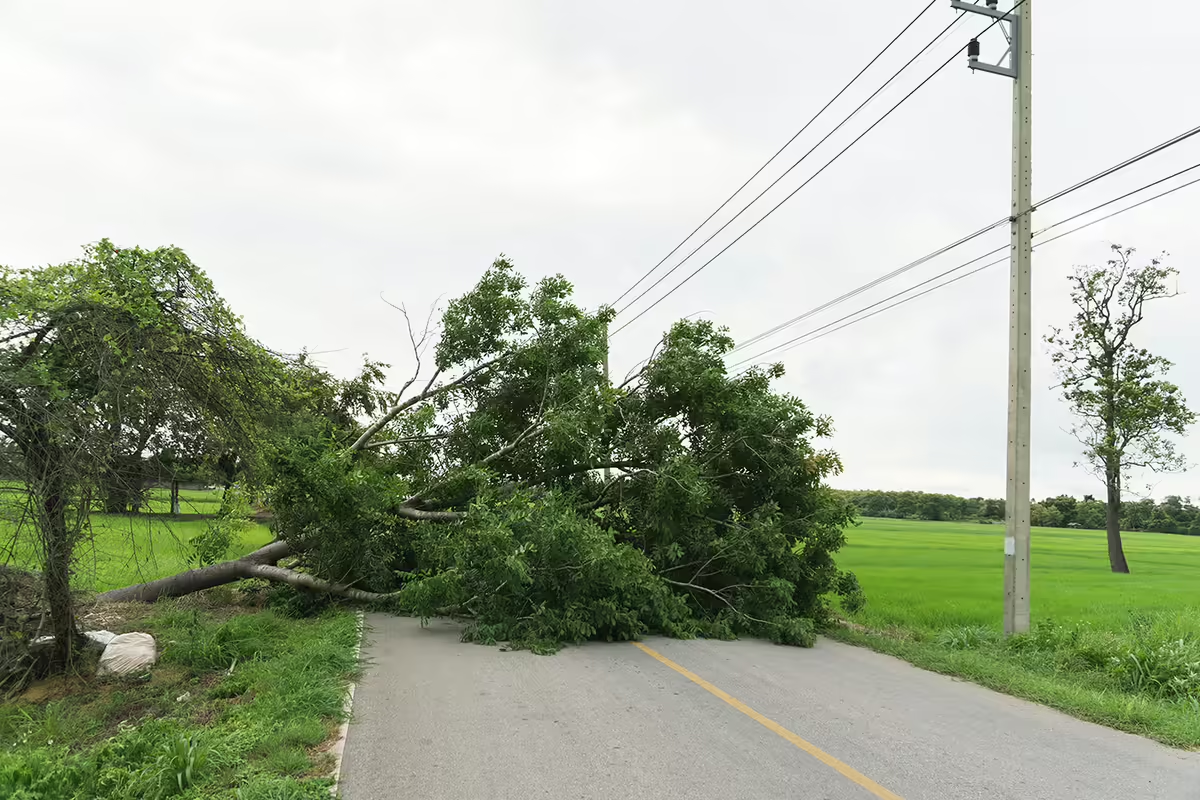
When venturing outside, stay away from downed power lines and be alert to the possibility that tree limbs or debris may hide an electrical hazard. A power line need not be sparking or arcing to be energized. Assume any low, dangling, or downed wires you encounter are energized and dangerous. Warn others to stay away and contact the electric utility. Equipment near power lines can also be energized and dangerous. Lines that appear to be “dead” can become energized as crews work to restore power, or sometimes from improper use of emergency generators.
Don't drive over downed power lines.
Never drive over a downed line, as snagging a line could pull down a pole or other equipment and cause other hazards. If you are driving and come upon a downed power line, stay in your vehicle, warn others to stay away, and contact emergency personnel or the electric utility. Also, when driving, be careful at intersections where traffic lights may be out. Stop at all railroad crossings and treat road intersections with traffic signals as a four-way stop before proceeding with caution.
If you are in an auto accident involving a downed power line, your vehicle is usually the safest place to be, unless it is on fire. If it is safe to do so, stay in your car, call 9-1-1, and wait for electric utility personnel to arrive to deenergize the power. If you step out of the car and the ground is energized, you could become the electrical current’s path to ground and you could be electrocuted. If your car is on fire or you see smoke, make a solid, clean jump from your vehicle and hop away with your feet together as far away as you can. If you run or walk away, you could get electrocuted.
Flooding and Electricity
Never step into a flooded room if water is covering electrical outlets, appliances, or cords. Be alert to any electrical equipment that could be energized and in contact with water. Never touch electrical appliances, cords, or wires while you are wet or standing in water.
Before re-entering storm-damaged buildings or rooms, be sure all electric and gas services are turned off. Never attempt to turn off power at the breaker box if you must stand in water to do so. If you can’t reach your breaker box safely, call your electric utility to shut off power at the meter.
Do not use water-damaged electric items until a qualified electrician has inspected them and ensured they are safe.
It is important to prepare in advance for a severe storm or natural disaster. Gathering emergency kit items, having a communication plan in place and knowing when, how and where to take shelter saves lives. It is easy to be complacent about storms or think that they won’t strike close to home....