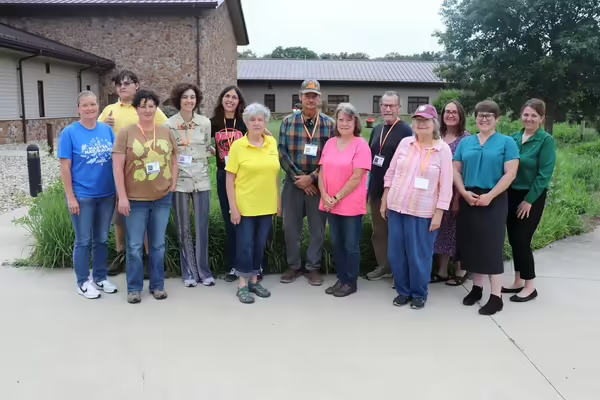
BENTON, Ill – Illinois Extension is dedicated to strengthening the bond between local communities and the natural world. The Illinois Master Naturalist program helps cultivate a new generation of learners who are connected to the outdoors while offering opportunities for personal growth, service, and fulfillment.
Illinois Extension offered a ten-week training course of online materials and in-person sessions from March 13 to May 22. This new cohort met at the Rend Lake Visitor Center every Friday during these ten weeks to learn from specialists in ecology, invasive species, rivers and streams, aquatic life, ornithology, forestry, geology, herpetology, entomology, and more. Master Naturalist trainees engaged with a variety of learning tools, including online courses, a printed manual, hands-on activities, and guided hikes.
Congratulations to the new 2026 Illinois Extension Master Naturalist interns!
Joe Powers – Jackson County
LeLynn Koch – Jackson County
Erin Navins – Jackson County
Jennifer Wharton - Jackson County
Logan Grathler – Saline County
Kathy Clore – Randolph County
Keith Clore – Randolph County
Laura Marjorie Miller – Williamson County
Each intern is required to complete sixty hours of volunteer services to complete their Master Naturalist internship. They have twenty-four months to complete their internship and become certified Master Naturalists.
To learn how you can become a Master Naturalist, visit extension.illinois.edu/mn or contact Erica Lunde at eplunde@illinois.edu or (618) 687-1727.
University of Illinois Extension develops educational programs, extends knowledge, and builds partnerships to support people, communities, and their environments as part of the state's land-grant institution. Extension serves as the leading public outreach effort for University of Illinois Urbana-Champaign and the College of Agricultural, Consumer and Environmental Sciences in all 102 Illinois counties through a network of 27 multi-county units and over 500 staff statewide. Extension’s mission is responsive to eight strategic priorities — community, economy, environment, food and agriculture, health, partnerships, technology and discovery, and workforce excellence — that are served through five program areas — 4-H youth development, agriculture and agribusiness, community and economic development, health and community wellness, and natural resources, environment, and energy.