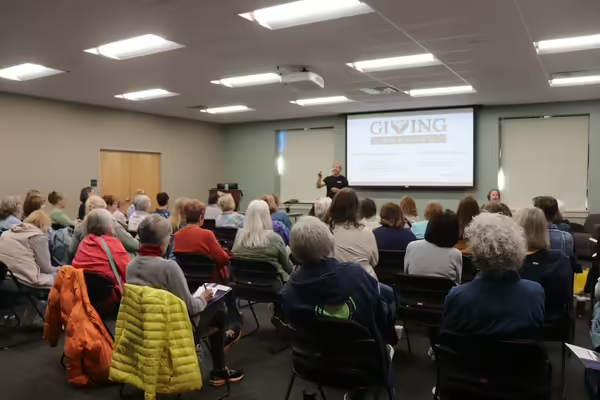
Macomb, IL — The 28th Annual Gardener’s Day brought together nearly 100 gardening enthusiasts on March 28, 2026, at the Spoon River College Outreach Center in Macomb. Hosted by University of Illinois Extension and the McDonough County Master Gardeners, the daylong event offered hands‑on learning, expert guidance, and inspiration for gardeners of all experience levels.
Participants spent the day attending sessions led by Extension educators and local specialists, gaining practical skills they can apply directly in their own gardens. Workshops ranged from creative, hands‑on projects like crafting nature tiles to problem‑solving discussions on managing challenging lawns and landscapes.
In addition to educational sessions, attendees browsed a diverse selection of vendors, including local garden centers, plant sellers, and community advocacy groups. The vendor area provided opportunities to shop, gather resources, and build wish lists for the upcoming growing season.
Lunch was catered by The Old Dairy, offering participants a chance to relax and connect with fellow gardeners.
“Gardener’s Day continues to be a highlight for our local gardening community,” Kate Budde, Extension Horticulture Program Coordinator, shared. “It’s a wonderful opportunity for people to learn, share ideas, and head into spring feeling inspired and prepared.”
For more information about upcoming horticulture programs and events, contact Kate Budde at kbudde@illinois.edu or visit our website at go.illinois.edu/HKMW.
University of Illinois Extension develops educational programs, extends knowledge, and builds partnerships to support people, communities, and their environments as part of the state's land-grant institution. Extension serves as the leading public outreach effort for University of Illinois Urbana-Champaign and the College of Agricultural, Consumer and Environmental Sciences in all 102 Illinois counties through a network of 27 multi-county units and over 500 staff statewide. Extension’s mission is responsive to eight strategic priorities — community, economy, environment, food and agriculture, health, partnerships, technology and discovery, and workforce excellence — that are served through five program areas — 4-H youth development, agriculture and agribusiness, community and economic development, health and community wellness, and natural resources, environment, and energy.