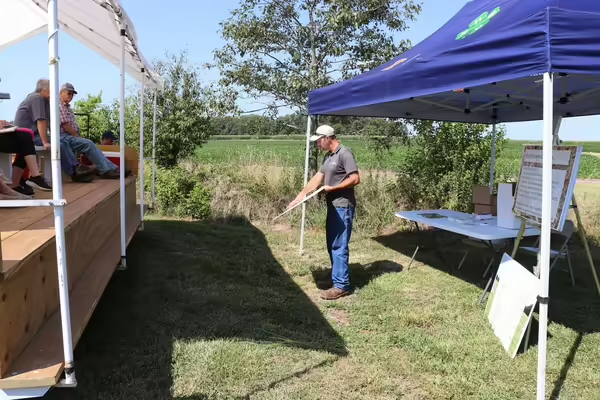
EWING, Ill. – Illinois Extension invited the public to their annual Agronomy Field Day at the Ewing Demonstration Center on Thursday, July 23, 2026, at 9 a.m., with a free lunch to follow. The event featured various educators and campus faculty as they provided best management practices for local growers.
Ewing Demonstration Center has served the agricultural community of southern Illinois since 1910. Research at the center includes various trials for corn, soybeans, sorghum, wheat, and cover crops. The center has featured no-till research and demonstration plots for more than 50 years, offering representative growing conditions for southern Illinois.
During the free program, individuals were transported to field stations on the demonstration grounds to hear concurrent presentations on the following topics:
Disease updates and fungicide returns on investment
Boris Camiletti, University of Illinois assistant professor in crop sciences
Supporting better phosphorus and potassium decisions with local data
John Jones, University of Illinois assistant professor of agronomy and Extension specialist in soil fertility
Biologicals and bio stimulants for row crops, what we know today and what we see for tomorrow
Connor Sible, University of Illinois research assistant professor
Exploring cover crop systems and strategies
Nathan Johanning and Dane Hunter, commercial agriculture team
Participants left the event with knowledge that will help them with their own operations. The field day was a free event with lunch provided. Certified Crop Advisor CEUs were offered.
University of Illinois Extension develops educational programs, extends knowledge, and builds partnerships to support people, communities, and their environments as part of the state's land-grant institution. Extension serves as the leading public outreach effort for University of Illinois Urbana-Champaign and the College of Agricultural, Consumer and Environmental Sciences in all 102 Illinois counties through a network of 27 multi-county units and over 500 staff statewide. Extension’s mission is responsive to eight strategic priorities — community, economy, environment, food and agriculture, health, partnerships, technology and discovery, and workforce excellence — that are served through five program areas — 4-H youth development, agriculture and agribusiness, community and economic development, health and community wellness, and natural resources, environment, and energy.