Seasonal Energy Savings
Illinois experiences hot, humid summers and long, cold winters, which can quickly raise energy costs if homes aren’t prepared. Doing a home energy audit and making small changes like managing summer cooling, improving insulation for winter, and reducing energy use while away can lead to big savings on utility bills.
Conduct a home energy audit for year-round savings.
Illinois homes tend to use 44% more electricity than the U.S. average, so even small improvements can lead to noticeable savings on utility bills, leaving more money for other household needs.
An energy audit helps you understand where your home is losing energy and which fixes will make the biggest difference. An audit is not a home inspection or code evaluation. Instead, it focuses on how energy moves through your home, identifying air leaks, insulation gaps, and inefficient systems that drive up heating and cooling costs.
Increasing energy efficiency adds up:
- Sealing uncontrolled air leaks can save $83 to $166 per year
- Weatherstripping double-hung windows can save $42 to $86 annuall
- Insulating a water heater tank can save $20 to $45 a year
A DIY Energy Audit
A self-audit is a good first step to understand your home’s energy performance, especially before making upgrades. In newer homes, builders may be able to provide information. In older homes, you may need to inspect it yourself.
1. Identify your insulation type: The type of insulation in your home, the R-value, which measures how well insulation resists heat flow, and the thickness or depth of the insulation.
2. Check the attic and behind walls
In the attic, if the insulation is level with or below attic floor joists, adding more may improve efficiency. If insulation is well above the joists, additional insulation may not be cost-effective. Insulation should be evenly distributed with no thin or bare spots.
Behind the walls, turn off the power at the outlet and confirm with a voltage tester. Remove the outlet cover and shine a flashlight into the opening to check for insulation. Check multiple outlets throughout the home. Insulation may not be consistent in every wall.
3. Conduct an air leak audit: Before adding insulation, identify and seal air leaks, especially around doors and windows, sill plates and top plates, crawl spaces and attic hatches, outdoor faucets and vent penetrations, and recessed lighting and duct registers.
Do a visual inspection outside, looking for gaps, cracks, or visible openings. With a partner, shine a flashlight at night along suspected gaps while the other watches from outside. Light shining through indicates an air leak that should be sealed.
Professional Home Energy Audits
For a professional audit, contact your local utility or a trusted insulation contractor. Professional home energy audits typically include tools like blower door tests and infrared cameras to pinpoint hidden energy losses. Costs vary, but many Illinois utilities offer discounted or free audits and may provide rebates for recommended upgrades such as insulation and air sealing.
After a Home Energy Audit
After a home energy audit, use your findings to prioritize low-cost, high-impact fixes, such as air sealing and insulation. Then explore Illinois utility rebates and assistance programs. Other next steps include insulation upgrades, smart thermostats, or appliance improvements.
Seasonal Savings
Winter Savings
Heat what matters. You can cut up to a fifth of your winter energy bill by sealing exterior wall air leaks and drafts.
Use a space heater to help warm a room and keep the home setting lower. A 1°F reduction can save 3% on your bill.
Open the drapes on sunny days.
Clean your furnace and change the furnace filter monthly.
Summer Savings
Energy use and costs typically increase in summer, but simple changes can save energy and reduce electric bills. Most of these energy-saving steps can pay for themselves quickly. For each 1-degree increase in the thermostat setting, cooling costs can be trimmed by about 3%.
Use ceiling and oscillating fans. The moving air makes the temperature feel cooler.
Move heat-producing appliances like televisions and lamps away from the thermostat. They will raise the temperature in the area, causing the air conditioner to run when it is not needed.
Reduce sun exposure
Most of the summer heat buildup in homes comes through windows. Closing curtains, blinds, and shades can reduce this heat gain by 40%. Install awnings or shutters over windows exposed to direct sunlight to reduce indoor heat gain by up to 70%.
Outdoor landscaping that shades a building, including trees, shrubs, and other plants, can reduce energy costs.
Maintenance and Insulation
Clean or change air filters monthly.
For greater operating efficiency, keep the AC unit in a shady area, and keep it free from plant overgrowth and debris
Ventilate the attic and check insulation. Adequately sized vents and/or an attic fan can help keep hot air from building up in the summer.
Vacation Savings
Heading on vacation? Don’t pay for an empty house. Give your electric bills a break while you’re away, while keeping your home running efficiently.
Unplug household appliances, such as TVs, home entertainment components, computers, microwave, and toasters. Save energy and avoid potential fires.
Set your refrigerator setting to 38°F and your freezer to 5°F. Shut off the icemaker.
In cold weather, set your thermostat at 55°F and save from 10% to 30% of your heating costs. In warm weather, shut off the AC or set it higher than usual if you are home.
Turn down the temperature of your water heater on a long trip to the lowest setting.
Title
Home Insulation
In the U.S., 9 out of 10 homes are under-insulated, according to ENERGY STAR. Your home’s envelope includes its outer walls, windows, doors, attic, and other openings. Homeowners can save an average of 15% on heating and cooling costs with a well-sealed envelope and proper insulation.
Seal Gaps
Weather stripping and caulking are inexpensive ways to boost efficiency and cut energy costs year-round.
Use sealant or metal tape to seal leaks or holes in your ventilation ducts. Air leaks in ducts can account for about 20% to 30% of wasted heat.
Caulk and add weather stripping to doors and windows that leak air. Use foam sealant on larger gaps around windows, baseboards, and other areas where air may leak.
Insulation R-Value
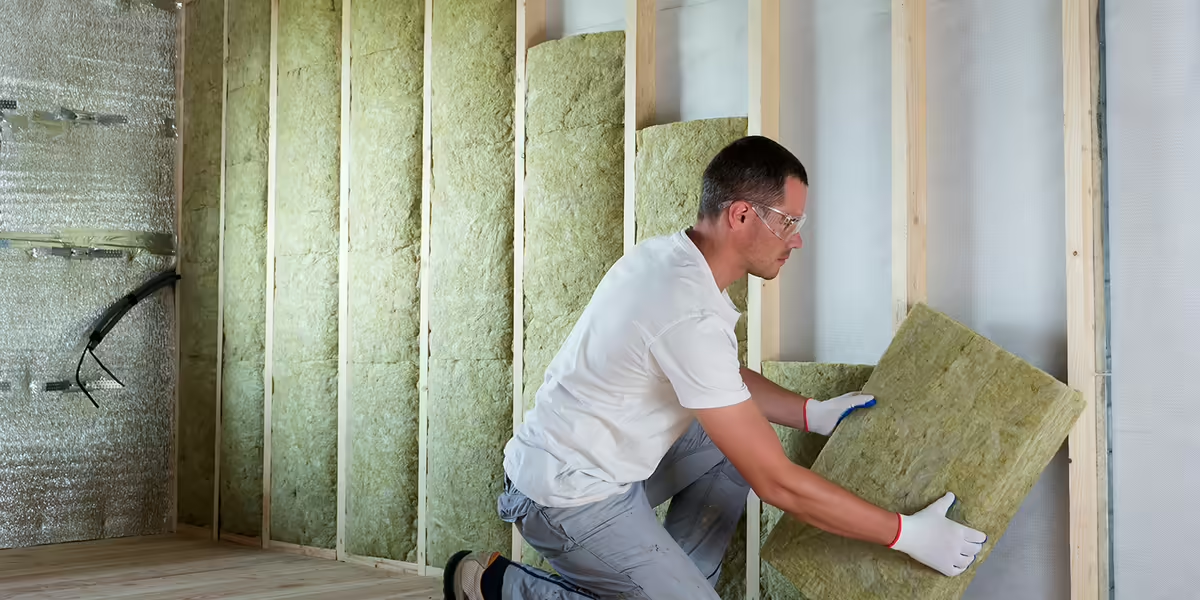
There are different kinds of insulation: batts and blankets, loose-fill and blown-in, sprayed foam, reflective, and more. The R-value of insulation measures its resistance to conductive heat flow. The higher the number, the greater the resistance. The value rating depends on the type of insulation, the thickness, and its density. Two different types of insulation can have the same R-value but vary in thickness because of how they are made and their density.
The optimal insulation R-value varies by climate, type of home or how it’s built, and type of cooling and heating used in the home. The U.S. government publishes maps that recommend home insulation R-values at Energy.gov and Energystar.gov.
Do you need more insulation?
A home energy audit can determine whether your home has sufficient insulation. Insulation should be 12 to 18 inches deep in your attic or crawl space. If your attic has less than 6 to 8 inches of insulation, consider adding more. Check that the insulation doesn’t block vents or cover exhaust fans.