Understanding who does what within state and local government can sometimes be confusing. With information coming from many different sources, it can be difficult to determine what is accurate. To provide clarity, Extension will take a closer look each month at topics based on common questions and concerns from community members. The goal is to help residents better understand how responsibilities are divided among different levels of government.
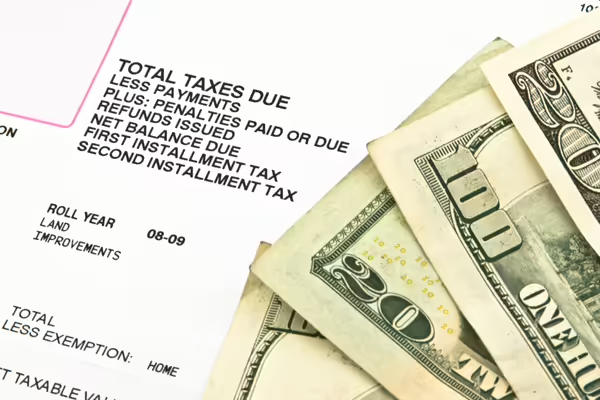
Property tax bills have been mailed, and many taxpayers have questions when they arrive. Today, we'll address some of the most common questions. Per 35 ILCS 200/1-130 (a) of the Property Tax Code, “real property” is defined as the land itself and what is contained in it, permanent fixtures such as structures and buildings, minerals in the land, and any rights, privileges, and appurtenances (such as structures, built-in fixtures, landscaping, rights, and easements) belonging to the land. Real property is what is being taxed when we talk about property taxes.
What is the purpose of property taxes, and why are taxpayers responsible for funding services they may not personally use?
Property taxes fund essential community services that help create a safe, educated, and economically strong place to live. Even if you do not directly use services such as public schools or libraries, you still benefit from safer neighborhoods, well-maintained infrastructure, higher property values, and a stronger local economy.
Even renters contribute indirectly, as property taxes are typically built into rent costs. Businesses also contribute—those in Tax Increment Financing (TIF) districts still pay taxes over time, and in the short-term help strengthen the community by improving property, creating jobs, and expanding the future tax base. In Illinois, these taxes are the primary funding source for local services, meaning everyone contributes to the community’s overall quality of life and long-term success.
Why doesn’t everyone within a county have the same taxing districts on their tax bill?
Your property’s location determines which taxing districts receive your property taxes. These districts can range from countywide services, such as government and law enforcement, to specialized districts such as schools, libraries, and fire protection. School districts typically receive the largest share of property tax revenue, often around 65%. Each district has its own boundaries, which often overlap and may cross city, township, or county lines. As a result, every property is taxed based on a unique combination of districts, meaning not all taxpayers in the same county support the same services.
What can a property owner do to decrease their property taxes?
While property owners have limited control over their property tax bill, there are steps you can take to ensure you are not paying more than they should. Double-check your square footage, how many bedrooms/bathrooms are listed, and features on your property that may no longer exist, and if you find an error, file an appeal with your county assessor. Make sure to speak with your county's Treasurer's Office to find the appropriate way to file an appeal. They may recommend that you pay your taxes even if there is an appeal pending so that you avoid late fees, penalties, and interest.
You also might be eligible for exemptions. To learn more, check with your county assessor's office to see what you qualify for. Your township assessor will determine how much property tax you pay based on the value that they place on your property, which is assessed at 33 1/3% of market value. There are some exceptions to this rule, such as farm acreage.
The most effective way to help reduce property taxes in a community is to broaden the tax base. This can be achieved by encouraging residential and business development. In many cases, municipal governments have the tools and resources to offer incentives that attract growth, which can ultimately help lower the property tax burden for individual taxpayers.
Why do tax payments vary from year to year?
Your local property tax bill is influenced by two main factors: the assessed value of your property and local government spending.
The fair market value of your property is a key factor that impacts your tax bill. Elements that influence market value include housing demand (higher demand tends to push values up), location, physical characteristics (such as square footage, lot size, number of bedrooms and bathrooms, and the age and condition of the structure), as well as comparable property sales in your area. The assessed value of your property is typically 33 1/3% of its fair market value.
Local government spending also plays a significant role in property tax increases or decreases. Local taxing bodies determine how much revenue they need to fund public services. They then follow statutory procedures to adopt a formal tax levy, which is certified with the county clerk.
Who determines the amount a taxing body can levy (request)?
The local board of the taxing body determines the amount they are requesting based on a review of their operating costs and annual budget. The Illinois Truth in Taxation Act requires that taxing bodies requesting an amount more than 5% higher than the previous year’s extension must publish a notice and hold a public hearing. If rate increases are also above statutory caps, then they must be approved by local votes through a public referendum.
What can be done if there are concerns about government spending or the amount a taxing body is levying?
If you are concerned about the amount a taxing body is levying, you can attend public budget hearings, review the budget, and share your concerns. You can make a greater impact by running for office within a government entity, supporting candidates with similar views on spending, or learning more about those seeking office so you can make informed voting decisions. Remember, when you vote, you are not just choosing a person. You are voting for their ability to ask questions and speak up, which can directly impact budgets and levies.
Where can you learn more?
To learn more, visit your local county’s website and explore the Assessment Office and Treasurer’s Office pages. An additional resource is the Illinois Department of Revenue’s website, which provides detailed information on property taxation:
University of Illinois Extension develops educational programs, extends knowledge, and builds partnerships to support people, communities, and their environments as part of the state's land-grant institution. Extension serves as the leading public outreach effort for University of Illinois Urbana-Champaign and the College of Agricultural, Consumer and Environmental Sciences in all 102 Illinois counties through a network of 27 multi-county units and over 500 staff statewide. Extension’s mission is responsive to eight strategic priorities — community, economy, environment, food and agriculture, health, partnerships, technology and discovery, and workforce excellence — that are served through five program areas — 4-H youth development, agriculture and agribusiness, community and economic development, health and community wellness, and natural resources, environment, and energy.