SIMPSON, Ill. – Dixon Springs Agricultural Center is a University of Illinois research center dedicated to agricultural innovation, hands-on education, and rural development in the heart of southern Illinois. Since 1934, DSAC has supported farmers, landowners, and communities with practical, research-driven solutions tailored to the region’s unique environment.
While the center has a long history of welcoming visitors, this summer marked a new milestone with a large-scale event featuring a farm-to-table meal with food grown and produced on-site. The program also included eight educational sessions on current research, offering practical management strategies in forestry, wildlife, specialty crops, and livestock production.
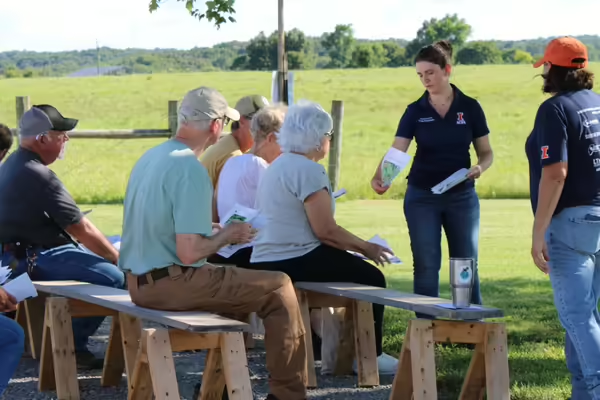
During the evening, participants could visit vendor booths, enjoy a delicious meal, and rotate through multiple stations, each led by Extension specialists, educators, researchers, and student interns, covering topics central to land stewardship and agricultural sustainability.
The three commercial-size high tunnels, which provide year-round growing space, showcased tomato and pepper variety trials, with Extension educators and campus-based specialists leading sessions on strategies to reduce heat stress on vegetables and the use of natural predator insects to control insect pests in specialty crops.
Extension specialists and educators guided participants through key natural resource programs, including a tour of the demonstration forest to explore management practices and their effects on wildlife, an overview of invasive plant identification, and effective control strategies. Guests visited the pollinator prairie to learn how prairies are established, maintained, and used to support native plants and pollinators. There was also an in-depth look at the state’s tick species, the diseases they carry, where they are commonly found, and effective bite-prevention strategies.
Through a partnership with Animal Science, University of Illinois students spend their summer at DSAC working and gaining hands-on experience in beef production, research, and producer outreach. Interns and graduate students showcased current research projects within the department, discussed research methods, and shared information on ongoing studies in livestock production, animal health, nutrition, genetics, and agricultural sustainability.
Despite the July heat, the program welcomed 140 participants. DSAC Director Angela Messmer was pleased with the inaugural event.
A lot of thought and planning went into making this happen,” said Messmer. “Everyone seemed to enjoy themselves, and I’m extremely proud of the staff who worked hard to put this event together.”
From beef cattle and forestry to specialty crops and local food systems, DSAC is committed to building a stronger, more sustainable future for rural Illinois. To learn more about current research or upcoming events, visit extension.illinois.edu/dsac.
University of Illinois Extension develops educational programs, extends knowledge, and builds partnerships to support people, communities, and their environments as part of the state's land-grant institution. Extension serves as the leading public outreach effort for University of Illinois Urbana-Champaign and the College of Agricultural, Consumer and Environmental Sciences in all 102 Illinois counties through a network of 27 multi-county units and over 500 staff statewide. Extension’s mission is responsive to eight strategic priorities — community, economy, environment, food and agriculture, health, partnerships, technology and discovery, and workforce excellence — that are served through five program areas — 4-H youth development, agriculture and agribusiness, community and economic development, health and community wellness, and natural resources, environment, and energy.