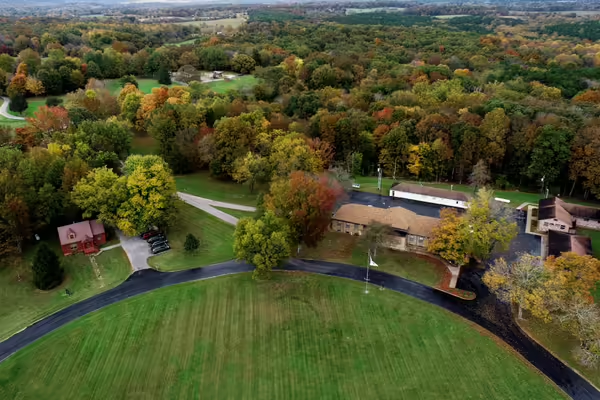
SIMPSON, Ill. – Community and agriculture come together for an evening of learning and connection during the inaugural Dixon Springs Agricultural Center Field Day on July 14. The experience will begin at 5 p.m. and includes a farm-to-table meal featuring food grown and produced at the Ag Center. Presentation stations include:
Forest Management – Extension Forestry Specialist Kevin Rohling will lead a tour of our demonstration forest and discuss different management approaches and practices, and how they influence the forest. He will also discuss recent research on the impacts of forest management on forest moths and other wildlife.
Invasive Species Identification and Management – Extension Forestry Specialist Chris Evans will show different invasive plant species of concern to landowners in the region, discuss management practices and recommendations, and talk about recent research underway at Dixon Springs on invasive species.
Pollinator Prairie Establishment – Extension Educator Erin Garrett will lead a tour of the Dixon Springs Pollinator Prairie and the native plants growing there. Erin will also discuss the process of establishing a prairie, the benefits of increasing native plants in your landscape, and practices needed to maintain a prairie.
Ongoing Animal Science Research Projects – Animal Science summer I-BELIEF interns and graduate students from the University of Illinois will showcase current research projects within the department, discuss research methods, and share information on ongoing studies related to livestock production, animal health, nutrition, genetics, and agricultural sustainability.
Ticks of Illinois - Bite Prevention and Identification - Ticks and tick-borne diseases are an increasing concern in Illinois. Dr. Teresa Steckler, Extension Specialist, will discuss Illinois tick species and their associated diseases, where ticks are found, how to protect yourself from tick bites, and see real ticks under the microscope to learn how small they actually are!
High Tunnel Vegetable Production - Extension Educator Bronwyn Aly will lead a tour of the research and demonstration high tunnels and discuss vegetable management strategies within the protected cover environment of the tunnels. She will also discuss ongoing tomato and pepper variety trials.
Biological Insect Control - Extension specialist Dr. Kacie Athey will share information on how to use natural predator insects to control insect pests in specialty crops. Research conducted in the high tunnels at DSAC over the past 5 years will be highlighted.
Managing Heat Stress in Tomatoes - Extension Specialist Dr. James Santiago will discuss the effects of heat stress on tomatoes and other specialty crops, current research projects related to heat stress, and strategies to reduce heat stress in vegetables.
This event does not replace the annual Dixon Springs Beef Day, which is scheduled for Thursday, July 23, covering least cost rations, the beef market, an update on research at DSAC, and an update on the Asian longhorned tick, and a meal.
The Field Day program will be held on July 14 from 5-8 p.m. at Dixon Springs Agricultural Center. The $5 registration fee covers the cost of the program and a farm-to-table meal. Shirts can be purchased for an additional $20. To register, visit go.illinois.edu/dsacfieldday26 or call 618-695-2441.
University of Illinois Extension develops educational programs, extends knowledge, and builds partnerships to support people, communities, and their environments as part of the state's land-grant institution. Extension serves as the leading public outreach effort for University of Illinois Urbana-Champaign and the College of Agricultural, Consumer and Environmental Sciences in all 102 Illinois counties through a network of 27 multi-county units and over 500 staff statewide. Extension’s mission is responsive to eight strategic priorities — community, economy, environment, food and agriculture, health, partnerships, technology and discovery, and workforce excellence — that are served through five program areas — 4-H youth development, agriculture and agribusiness, community and economic development, health and community wellness, and natural resources, environment, and energy.