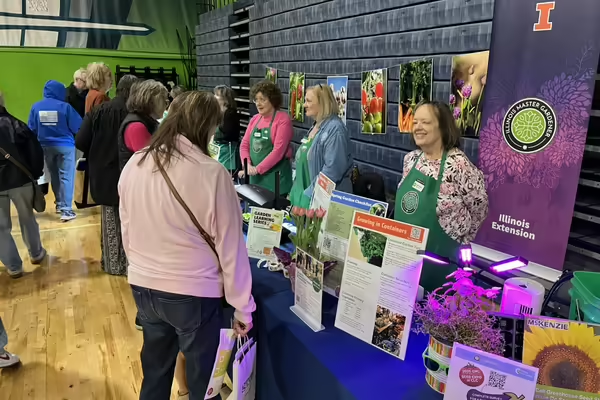
GRAYSLAKE, IL. — For the University of Illinois Extension Master Gardener program in Lake County, the last four decades can be measured in thousands of volunteer hours devoted to bringing educational and horticultural assistance to residents, community gardens, and food pantries across the county.
This year marks the 40th anniversary of the Lake County Extension Master Gardener program. With almost 150 active Master Gardeners and 38 currently in training, Lake County Master Gardeners have given more than 55,000 hours of their time over the last five years alone, a value of almost $2 million to the communities and residents of Lake County.
Master Gardener volunteers generously donate their time, knowledge, and expertise, providing numerous educational opportunities and programs related to gardening, plants, and food production in nearly every town and village in Lake County.
The mission of the Illinois Master Gardener program is “Helping Others Learn to Grow.” After 80 hours of training in topics such as plant identification, vegetable and flower gardening, insect problems, and plant diseases, the volunteers participate in programs throughout their communities. Opportunities may include speaking at garden clubs, civic groups, or schools; answering calls or emails in the Resource Center; establishing demonstration gardens that serve as educational tools; hosting Ask a Master Gardener booths at community events; and educating citizens on how to establish community gardens.
“I am constantly amazed by the Master Gardeners’ dedication and commitment to not only educating others, but to their own pursuit of knowledge and continued learning. I’m inspired every day by this amazing group of volunteers and the effort they put into supporting residents and community partners. From the African American Museum in Waukegan to the Fox Lake Community Garden, Master Gardener volunteers are always ready to roll up their sleeves and support their neighbors,” said Lake County Master Gardener/Master Naturalist Program Coordinator, Alex Landberg.
Extension Master Gardener volunteers also maintain multiple demonstration gardens, as well as a compost demonstration area, at the Lake County Extension office in Grayslake. These gardens showcase a variety of themes, including food production, drought-tolerant plants, native shrubs, and rain gardens. Group tours of the gardens can be scheduled and are always open to the public. The compost demonstration area showcases various techniques and bin types, so Lake County residents can see firsthand what type of composting setup could work for them, regardless of where they live or how much space they have. In December, Master Gardeners will be hosting a workshop specific to vermicomposting, or composting with worms, which can be done indoors, year-round.
Pictured are (standing from left to right) Master Gardeners: Loretta Neuberger, Robin Reynolds, and Judy Panico
University of Illinois Extension Master Gardeners are rooted in community and grow through connection, studying and sharing research-based horticulture topics, including vegetable gardening, insects, tree and small fruits, introductory botany, integrated pest management, turfgrass care, plant diseases, tree and shrub care, soils and fertilizer, and flower gardening. Over 2,000 active volunteers invest their time and talents cultivating collaborative gardens that feed and support healthy communities, foster hands-on learning, enhance neighborhood beauty, and support the environment. Help Master Gardeners grow.
University of Illinois Extension develops educational programs, extends knowledge, and builds partnerships to support people, communities, and their environments as part of the state's land-grant institution. Extension serves as the leading public outreach effort for University of Illinois Urbana-Champaign and the College of Agricultural, Consumer and Environmental Sciences in all 102 Illinois counties through a network of 27 multi-county units and over 500 staff statewide. Extension’s mission is responsive to eight strategic priorities — community, economy, environment, food and agriculture, health, partnerships, technology and discovery, and workforce excellence — that are served through five program areas — 4-H youth development, agriculture and agribusiness, community and economic development, health and community wellness, and natural resources, environment, and energy.