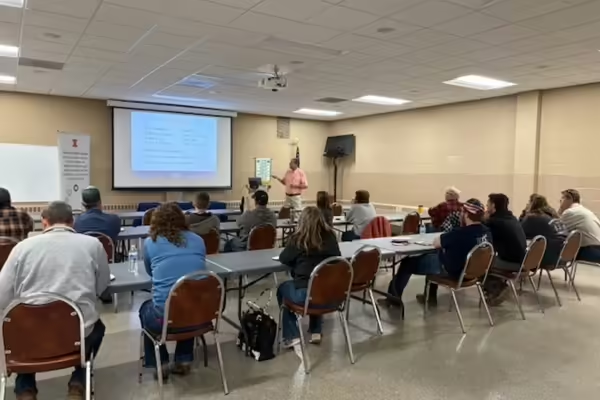
WOODSTOCK, Ill. — The University of Illinois Extension brought together producers, agribusiness professionals, and Certified Crop Advisers on February 18 for the annual McHenry County Agronomy Update, a program focused on the challenges farmers are likely to face in the 2026 growing season. This year’s discussions centered on emerging fungal diseases and the increasing adaptability of herbicide‑resistant weeds—issues that continue to reshape management strategies across Illinois.
Extension specialists Steve Brand and Dr. Aaron Hagar delivered research‑driven presentations highlighting trends from the 2025 crop year. Brand outlined the continued spread and impact of Tar Spot, Southern Rust, and Red Crown Rot, noting that these diseases remain among the most significant threats to corn and soybean production. Hagar addressed the evolving landscape of herbicide resistance, with particular attention to waterhemp, and emphasized the importance of integrated management planning as resistance patterns shift.
A live question‑and‑answer session allowed attendees to raise local concerns and connect statewide research to on‑farm realities. Many participants said the opportunity to speak directly with specialists added meaningful value to the program.
Evaluation results reflected strong satisfaction with the event. Most attendees reported that the information presented was highly beneficial, praising both the relevance of the topics and the clarity of the speakers. Several noted that the program helped them better understand how to stay ahead of disease pressure and manage resistant weeds. Others appreciated the unbiased delivery of information and the practical tools provided, including crop‑tracking resources.
Participants also identified several priorities for future Extension programming. Soil health, cover crops, fertility management, biological products, pest control, and crop economics ranked among the most requested topics. Many attendees also said that the availability of CCA credits enhanced the usefulness of the event.
The McHenry County Agronomy Update continues to serve as an important resource for producers navigating rapidly changing agronomic conditions. By offering accessible, research‑based guidance and opportunities for direct engagement with experts, the program helps strengthen local decision‑making and prepares farmers for the challenges of the upcoming season. Feedback from this year’s attendees suggests the program not only met its goals but also reinforced producer confidence at a time when adaptability is essential.
University of Illinois Extension develops educational programs, extends knowledge, and builds partnerships to support people, communities, and their environments as part of the state's land-grant institution. Extension serves as the leading public outreach effort for University of Illinois Urbana-Champaign and the College of Agricultural, Consumer and Environmental Sciences in all 102 Illinois counties through a network of 27 multi-county units and over 500 staff statewide. Extension’s mission is responsive to eight strategic priorities — community, economy, environment, food and agriculture, health, partnerships, technology and discovery, and workforce excellence — that are served through five program areas — 4-H youth development, agriculture and agribusiness, community and economic development, health and community wellness, and natural resources, environment, and energy.