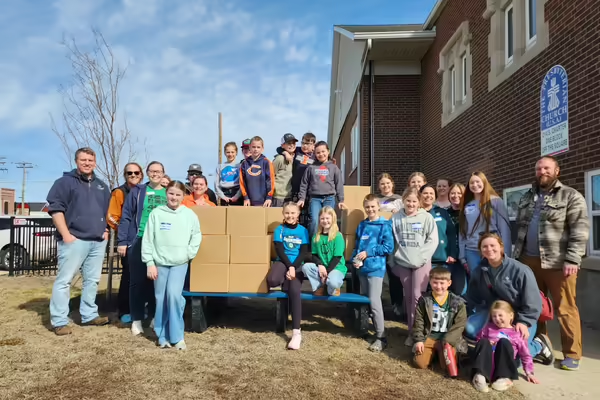
MONTICELLO, Ill. — Piatt County 4-H mobilized local youth in the fight against food insecurity on Feb. 28 after receiving a $1000 Food Advocacy Grant. Partnering with Illini Fighting Hunger, twenty-five 4-H members and their families spent the morning at the First Presbyterian Church in Monticello packaging 5,000 meal kits for distribution in Piatt County and the Champaign area.
The event was facilitated by four University of Illinois students, who organized the workspace to ensure every volunteer played an active role in the assembly process. By limiting the number of participants, organizers created an efficient, hands-on environment where each attendee contributed to the effort. The project showcased 4-H members living out their pledge by putting their hands to larger service, making a meaningful impact through hands-on community action.
“The day was truly rewarding,” says 4-H Program Coordinator Anne Reinbold. “The volunteers and the Illini Fighting Hunger students made the entire process seamless, and I love that some of the meal kits went to the Monticello Methodist Food pantry and the Blessing Boxes at County Market.”
Food insecurity continues to affect communities across Illinois, and initiatives like this one give young people a direct way to support their communities. Meals packaged at Illini Fighting Hunger events are distributed to food pantries and food banks that serve thousands of Illinois residents
University of Illinois Extension develops educational programs, extends knowledge, and builds partnerships to support people, communities, and their environments as part of the state's land-grant institution. Extension serves as the leading public outreach effort for University of Illinois Urbana-Champaign and the College of Agricultural, Consumer and Environmental Sciences in all 102 Illinois counties through a network of 27 multi-county units and over 500 staff statewide. Extension’s mission is responsive to eight strategic priorities — community, economy, environment, food and agriculture, health, partnerships, technology and discovery, and workforce excellence — that are served through five program areas — 4-H youth development, agriculture and agribusiness, community and economic development, health and community wellness, and natural resources, environment, and energy.