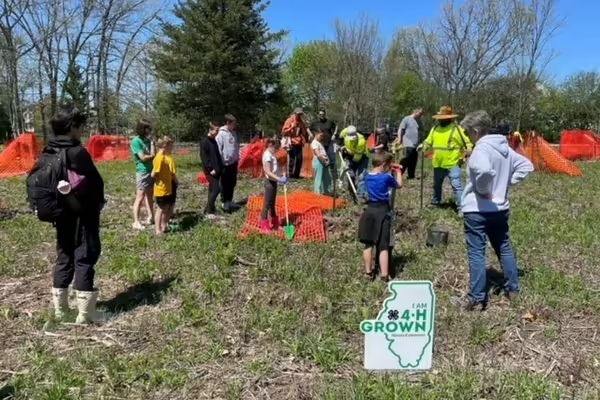
Round Lake Beach, IL - On April 25, in celebration of Arbor Day and Earth Week, more than 40 youth and their families came together in Round Lake Beach for a hands-on conservation effort focused on restoring Illinois’ native oak savanna landscape. The tree planting event was led through a partnership between University of Illinois Extension, Illinois 4‑H, Illinois Extension Master Naturalists, the McHenry-Lake County Soil and Water Conservation District, the Round Lake Area Park District, and the Prairie Grass Nature Museum.
Youth ages 2–18, along with family members and community volunteers from Lake and McHenry Counties, worked side by side with Extension staff, Park District staff, and Master Naturalist volunteers to plant 25 Illinois native oak trees. These trees join an additional 25 oaks planted during the same event last year, bringing the site total to 50 trees and marking an important step toward establishing a traditional native oak savanna.
The planting took place next to a scenic pond in a newly developed area of the Round Lake Area Park District’s fully accessible Hero Park. Once mature, the trees will help create an oak savanna ecosystem—one of the most diverse and ecologically important landscapes in Illinois.
Throughout the day, participants learned about the natural history of oak trees, the role of oak savannas in Illinois, and why oak species are considered “keystone” species. Youth and families explored how oaks support hundreds of species of insects, birds, and mammals, help regulate water and soil health, and contribute to long-term climate resilience. Just as importantly, they learned how community members of all ages play a role in protecting and restoring these vital ecosystems.
This event was part of the statewide Illinois 4‑H Green Communities Tree Program, which combines hands-on community service, conservation, and environmental education. Illinois 4‑H is partnering with the Illinois Soil and Water Conservation Districts Forestry Committee to address the dramatic decline of native oak savannas across the state. Once home to an estimated 14 million acres of trees, Illinois today has fewer than 5 million acres due to modern development practices.
Through this program, Illinois 4‑H is helping turn the tide by planting 1,075 native oak trees across 43 counties this spring. By establishing 25-tree oak savanna plantings in public spaces, the program helps rebuild native ecosystems approximately three-quarters of an acre at a time—while empowering youth as environmental stewards.
While the planting day was filled with excitement and learning, partners emphasized that behind-the-scenes preparation played a key role in the event’s success. Thanks to the planning and groundwork by Round Lake Area Park District staff, the trees were planted efficiently and safely, allowing participants to focus on learning, teamwork, and fun.
Events like this highlight the power of collaboration and experiential learning. By bringing together Extension, local agencies, volunteers, and families, the oak savanna planting not only enhanced a public space but also strengthened community connections and inspired the next generation of environmental leaders.
University of Illinois Extension develops educational programs, extends knowledge, and builds partnerships to support people, communities, and their environments as part of the state's land-grant institution. Extension serves as the leading public outreach effort for University of Illinois Urbana-Champaign and the College of Agricultural, Consumer and Environmental Sciences in all 102 Illinois counties through a network of 27 multi-county units and over 500 staff statewide. Extension’s mission is responsive to eight strategic priorities — community, economy, environment, food and agriculture, health, partnerships, technology and discovery, and workforce excellence — that are served through five program areas — 4-H youth development, agriculture and agribusiness, community and economic development, health and community wellness, and natural resources, environment, and energy.