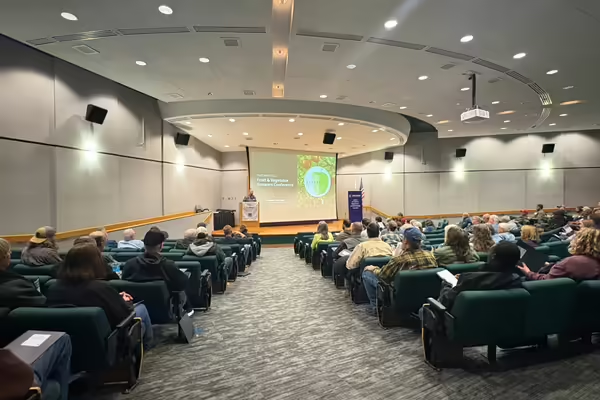
Our 30th Annual Stateline Fruit and Vegetable Growers Conference was held on Monday, February 16, in Rockford. Nearly 120 growers and community college students attended this event, which focuses on timely updates for fruit and vegetable growers in Northern Illinois and Southern Wisconsin. We were fortunate to have mild weather that day — a welcome break from our typical February cold.
This year’s program featured an excellent lineup of speakers. Dr. Emily Lavely, Fruit Tree Educator with Michigan State University, delivered presentations on freeze and frost management in tree fruits, along with an introductory session on selecting rootstocks for new orchardists. Josie Dillon, UW–Madison Extension Fruit Specialist, presented sessions on pruning and pollination. Dr. James Santiago, Illinois Extension Specialist, joined us for the first time with insight into heat stress challenges in vegetables. Rich Tobiasz of McHenry County College provided an introduction on growing in hydroponics.
Local Foods and Small Farm Educators — Zack Grant, Kathryn Pereira, and Alexis Barnes — contributed important sessions on high tunnels, marketing, and cut flower production. As always, we appreciated annual updates from Drs. Kacie Athey and Mohammad Babadoost. We were also pleased to welcome Dr. Elizabeth Wahle back to Northern Illinois.
It was wonderful to reconnect with many of you and to meet new growers. Planning is already underway for next year’s conference, when we will return to sessions focused on pumpkins.
University of Illinois Extension develops educational programs, extends knowledge, and builds partnerships to support people, communities, and their environments as part of the state's land-grant institution. Extension serves as the leading public outreach effort for University of Illinois Urbana-Champaign and the College of Agricultural, Consumer and Environmental Sciences in all 102 Illinois counties through a network of 27 multi-county units and over 500 staff statewide. Extension’s mission is responsive to eight strategic priorities — community, economy, environment, food and agriculture, health, partnerships, technology and discovery, and workforce excellence — that are served through five program areas — 4-H youth development, agriculture and agribusiness, community and economic development, health and community wellness, and natural resources, environment, and energy.