The Midwest's springtime severe weather season is underway, and many communities have already been affected. The forecast for March will feature significant weather volatility across the US, with increased severe thunderstorm risk, including hail and tornadoes, from the Plains to the Ohio Valley.
Although thunderstorms and tornadoes can occur at any time of year, most occur during the warmer months. April, May, and June are the most active months for tornadoes across the US, and in Illinois, nearly 80% of all tornadoes occur during this time. Thunderstorms are commonly seen from April into the early fall; however, the most significant activity occurs from May through July.
A natural disaster can strike at any moment and anywhere. You could be at home or work. It could even happen while traveling or, worse yet, while on vacation. While it may seem that severe weather has become an inevitable part of our lives, taking steps to reduce its stress will benefit you and your loved ones.
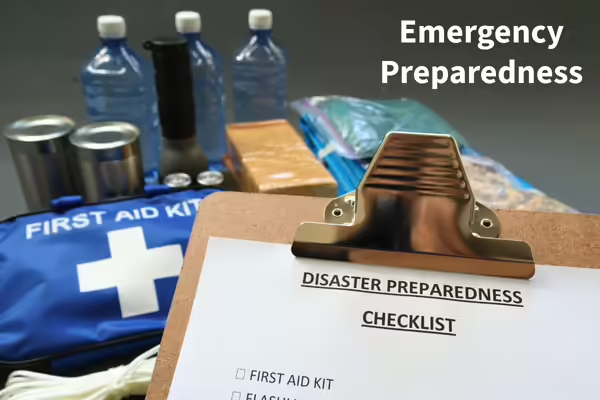
Being prepared for a natural disaster is essential to successfully navigating the many challenges that can arise during an emergency. Having conversations with friends and family about what to do and why preparation matters can reduce confusion and help everyone respond more calmly in an already stressful situation. Creating an emergency plan, assembling a disaster supply kit, and practicing your plan in advance ensures that each person understands their role and knows what steps to take. Taking these proactive measures can make a significant difference in protecting you, your loved ones, and your property in the event of a disaster.
To help you be better prepared if a disaster strikes, the Senior Resource Center and Midwest Medical Center is teaming up with University of Illinois Extension to offer a disaster preparedness program on Thursday, April 16, from 1-3 p.m., at Midwest Medical Center, 1 Medical Drive, Galena, IL.
Nutrition and Wellness Educator Diane Reinhold will discuss the importance of creating a culture of preparedness for you and your family. Topics discussed will include understanding weather warning terminology, recognizing common types of disasters, and knowing what steps to take before and after an emergency. Participants will also learn about fire and food safety considerations during disasters and the value of developing a personalized disaster plan to ensure everyone knows how to respond when it matters most.
To register for Emergency Preparedness Essentials, call the Extension office at (815) 858-2273 or visit us online at go.illinois.edu/jsw. There is no fee to register. However, preregistration is requested.
If you need accommodations to participate, please let our office know when you register. Early requests are strongly encouraged to allow sufficient time to meet your access needs.
University of Illinois Extension develops educational programs, extends knowledge, and builds partnerships to support people, communities, and their environments as part of the state's land-grant institution. Extension serves as the leading public outreach effort for University of Illinois Urbana-Champaign and the College of Agricultural, Consumer and Environmental Sciences in all 102 Illinois counties through a network of 27 multi-county units and over 500 staff statewide. Extension’s mission is responsive to eight strategic priorities — community, economy, environment, food and agriculture, health, partnerships, technology and discovery, and workforce excellence — that are served through five program areas — 4-H youth development, agriculture and agribusiness, community and economic development, health and community wellness, and natural resources, environment, and energy.