ARTHUR, Ill. — University of Illinois Extension will offer the Saving the Season: Summer food preservation series on Wednesdays from 9 to 10:30 a.m. beginning June 24 and continuing through Aug. 26 at the Moultrie-Douglas Extension Office, 304 E. Progress St., Arthur.
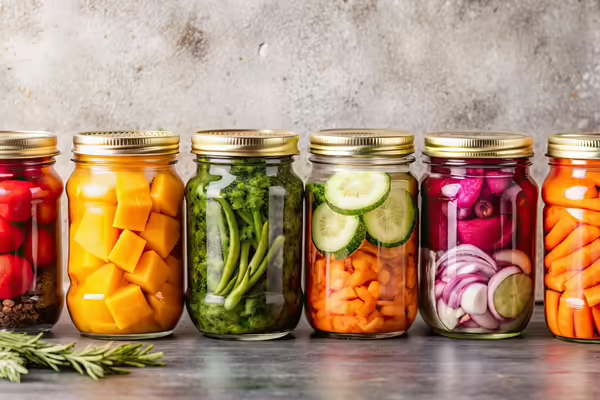
The series will provide participants with information on a variety of home food preservation methods to help safely preserve seasonal produce for year-round use. Attendees will gather to watch recorded Illinois Extension presentations and discuss food preservation topics with others in the community.
Registration is not required.
Program topics include:
- June 24 — Canning Foods at Home
- July 1 — Boiling Water Bath Canners
- July 8 — Pressure Canners
- July 15 — Making Jams and Jellies at Home
- July 22 — Freezing Foods at Home
- July 29 — Fermenting Foods at Home
- Aug. 5 — Preserving Apples at Home
- Aug. 12 — Processing Tomatoes at Home
- Aug. 19 — Pickling Foods at Home
- Aug. 26 — Dehydrating Foods at Home
The series is open to anyone interested in learning research-based food preservation techniques and exploring ways to safely store and enjoy locally grown foods throughout the year.
If you need a reasonable accommodation to participate, please contact 217-543-3755. Early requests are strongly encouraged to allow sufficient time to meet your needs.
University of Illinois Extension develops educational programs, extends knowledge, and builds partnerships to support people, communities, and their environments as part of the state's land-grant institution. Extension serves as the leading public outreach effort for University of Illinois Urbana-Champaign and the College of Agricultural, Consumer and Environmental Sciences in all 102 Illinois counties through a network of 27 multi-county units and over 500 staff statewide. Extension’s mission is responsive to eight strategic priorities — community, economy, environment, food and agriculture, health, partnerships, technology and discovery, and workforce excellence — that are served through five program areas — 4-H youth development, agriculture and agribusiness, community and economic development, health and community wellness, and natural resources, environment, and energy.