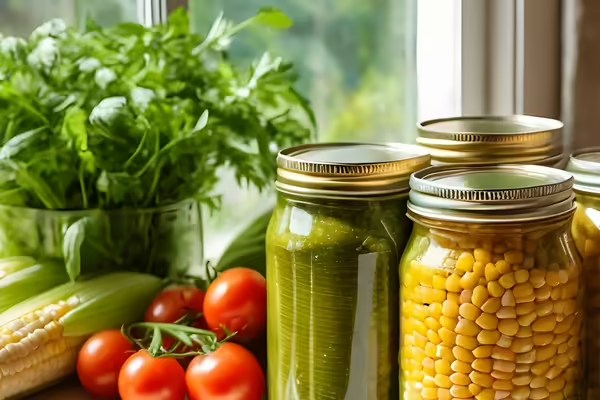
ELDORADO, Ill. – For many, the summer garden season is ending, but that doesn’t mean the work is done. There are many things you can do now to set your garden and pantry up for success over the winter.
On Sept. 22, join Extension to learn tips and resources for wrapping up the summer garden and ensuring the safety of your preserved harvest. Local Food Systems and Small Farms educator Bronwyn Aly will walk through end-of-summer garden tasks and cleanup. She’ll also cover the benefits of cover crops for home or community gardens, including the timing and crop types that work best for your space.
Lizz Cooley-Questelle, health and community wellness educator, will provide resources about food preservation and food safety. Whether you freeze or can, it's important to store your preserved items properly for your health and the health of those you share them with. Information will be provided about proper storage and timely use of home-preserved items.
The Sept. 22 program will take place at 5 p.m. at Eldorado First Baptist Church, 1101 Second Street, Eldorado, IL. Please use the entrance under the carport.
There is no cost to attend the program, but registration is encouraged. To register visit registration.extension.illinois.edu/start/summer-garden-wrap-up or call 618-382-2662.
If you will need an accommodation to participate, please email Bronwyn Aly at baly@illinois.edu. Early requests are strongly encouraged to allow sufficient time to meet your access needs.
University of Illinois Extension develops educational programs, extends knowledge, and builds partnerships to support people, communities, and their environments as part of the state's land-grant institution. Extension serves as the leading public outreach effort for University of Illinois Urbana-Champaign and the College of Agricultural, Consumer and Environmental Sciences in all 102 Illinois counties through a network of 27 multi-county units and over 500 staff statewide. Extension’s mission is responsive to eight strategic priorities — community, economy, environment, food and agriculture, health, partnerships, technology and discovery, and workforce excellence — that are served through five program areas — 4-H youth development, agriculture and agribusiness, community and economic development, health and community wellness, and natural resources, environment, and energy.