BOURBONNAIS, Ill — The SNAP-Ed program, which offers free nutrition and healthy lifestyle education for people eligible for SNAP benefits, is nearing its final chapter due to a loss in federal funding after over 30 years of helping families make healthier choices. As the program comes to a close and the SNAP-Ed program staff face an uncertain future, the local community outreach worker team continues to do what they’ve always done: provide lifelong learning to families for as long as possible.
“Our community outreach workers are very talented, and we haven’t slowed down since the funding announcement over the summer,” said Morgan Pizur-Kranc, who provides guidance to the community outreach worker staff team in Will and Kankakee counties as the Illinois Extension SNAP-Ed educator. “I don’t think people realize how hard this great team works to truly make a difference in the community.”
Illinois Extension recently sat down with the Will and Kankakee SNAP-Ed team to discuss why their work has been so impactful. The summary of the conversation can be stated easily: ‘It’s all in the relationships.’
Lifelong impact starts with people: “This is what I do. This is what I offer. It’s free.”
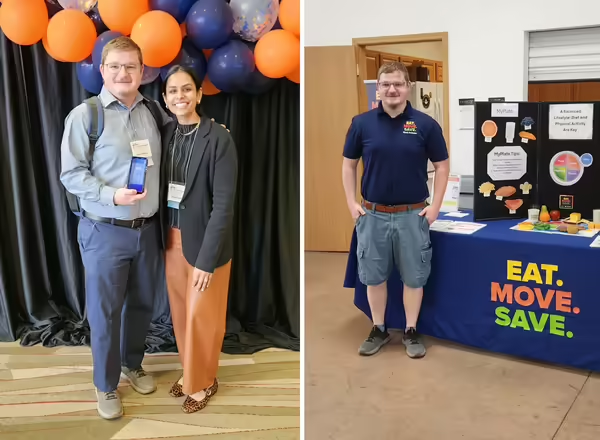
The Illinois Eat.Move.Save. program, the state’s name for SNAP-Ed, is made up of over 200 staff. In Kankakee and Will counties, this team is made up of three community outreach workers and one educator.
“The community outreach workers provide research-based education to community members,” said Pizur-Kranc, “while I focus my efforts on helping organizations and communities create policies and systems that make healthy food access easier, and providing guidance to this talented team of facilitators.”
The program generally targets areas where at least half of residents live below 185% of the poverty level. “We have a map that is available to us that traces where the eligible audiences are, and then we go to work,” said Isabel Dyche, who works in Will county as a community outreach worker.
Some sites qualify automatically, such as food pantries, while others—including K-12 schools or food retailers—must meet additional criteria, all centered on reaching those with the greatest need.
It sounds complicated at first. However, as the team began talking, it became clear that the foundation of the entire program is built on growing local relationships. According to Dyche, once you know the areas you want to impact, you simply have to ask:
“I knock on the door, I bring a folder, and I say: ‘This is what I do. This is what I offer. It’s free.’”
Learning in a safe and supportive environment: “She had saved $100 in a single month by changing her habits”
On paper, the lessons are about food and healthy living, but in practice the program provides an outlet for learning in a safe environment that is unique.
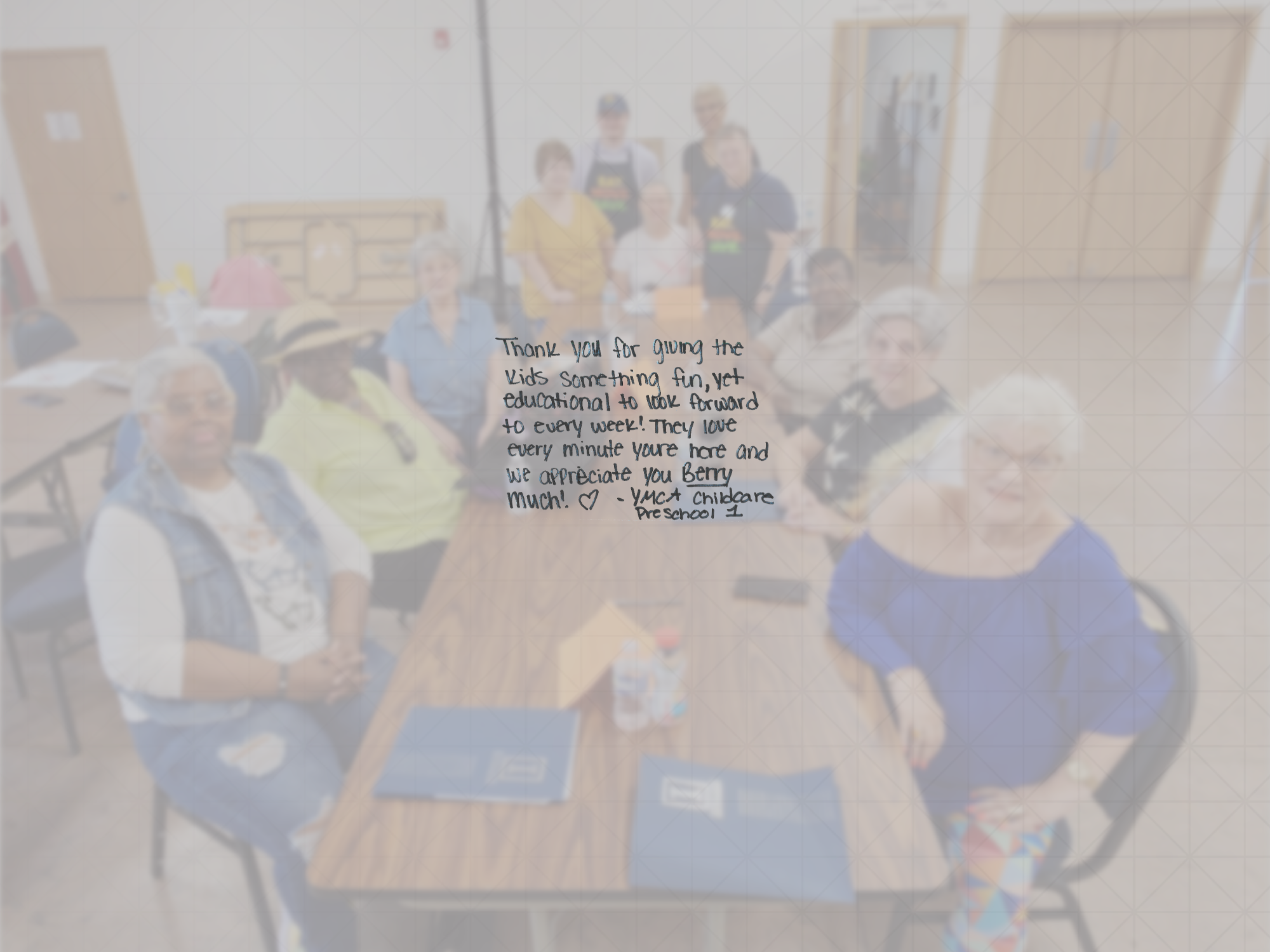
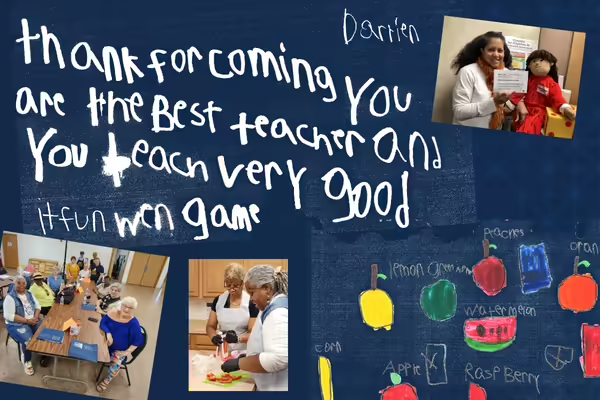
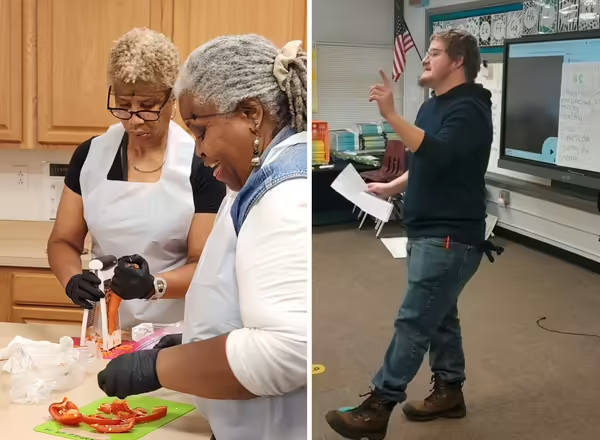
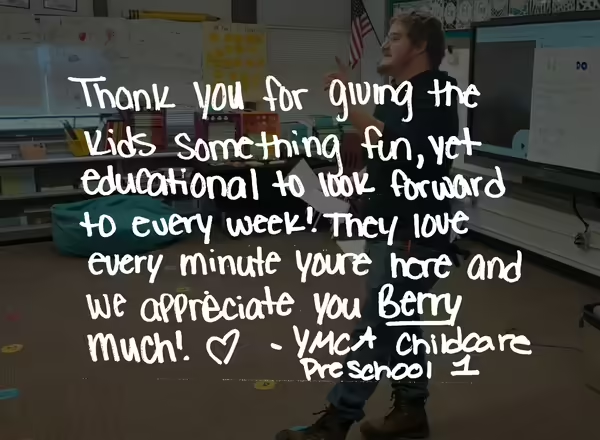
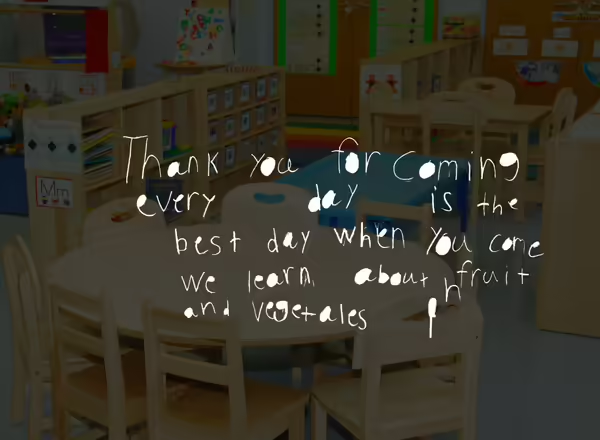
Quinn Kilburg, SNAP-Ed community outreach worker serving Kankakee county, tells about a program done at the local YMCA child care center. In one activity, he watched as preschoolers wrinkled their noses, then reached back for seconds during a “Tiny Trees Taste Test,” sampling broccoli and cauliflower with hummus or a savory yogurt dip.
“It’s a great way to introduce kids to new foods in a really low-pressure way,” Kilburg said. “They get to decide what they like. That autonomy matters.”
Teachers notice the ripple effects almost immediately. Some say children are more willing to try fruits and vegetables at snack time, while others report that the youth are more apt to share what they’ve learned with parents and others.
One small breakthrough still stands out. A young boy, known for refusing anything beyond bread or crackers, surprised his teachers during a taste test. He loved dried mango, he liked hummus, and he asked for more.
“He really loved the flavor,” said Kilburg. “They were struggling so much to try to find things to feed him. But now the teachers, and hopefully the parents, have something to build on for a healthy future.”
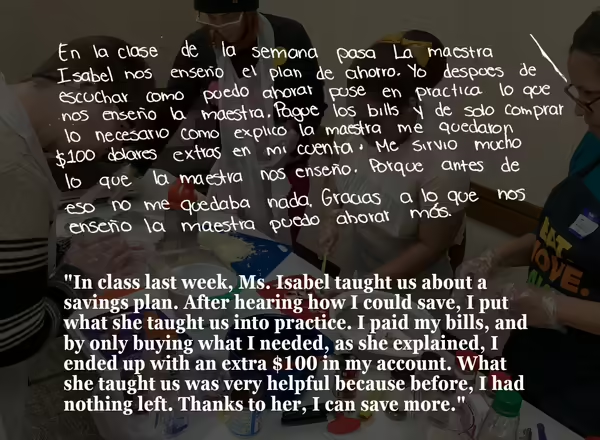
“She put it into practice, and she saved,” Dyche said. “That made me very happy.”
The same pattern of impact is observed in adults.
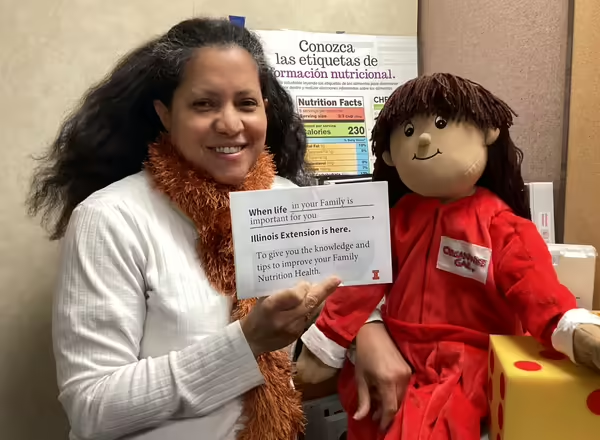
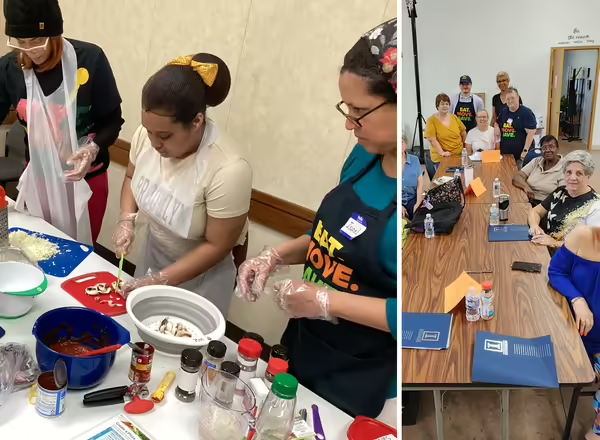
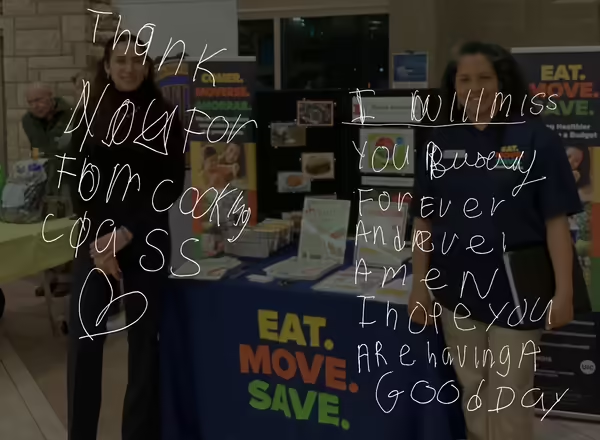
At the Joliet Township Infant and Child Care Center, Isabel Dyche teaches teen parents, some still in high school, who are navigating adulthood earlier than expected. The conversations are candid and, at times, uncomfortable.
“They feel like they know everything,” Dyche said, laughing. “But behind that is a longing to learn more about the things they don’t fully understand.”
Dyche shows them how to read recipes, plan meals, and experiment with unfamiliar flavors. When the group asked for quesadillas, she brought blue corn flour, something most had never seen.
“I said okay, let’s try something new. They didn’t know there were different colors of corn but they tried it and liked it,” Dyche said.
The lessons go beyond cooking. Dyche talks openly about sugary beverages, energy drinks during pregnancy, how to budget, and how quickly small purchases add up. One student later wrote her a note saying she had saved $100 in a single month by changing her habits.
“She put it into practice, and she saved,” Dyche said. “That made me very happy.”
“It’s a ripple effect. They tell their families. Their families tell others.”
As the program, which impacts over one million residents annually with nearly 2,000 statewide partnerships, continues the process of being sunset due to a loss of federal funding, the life-changing impacts of the work will not be erased. You can read more about the impacts of Eat.Move.Save. on Illinois residents in a recent news report.
Through every program the team facilitates, the focus is on information about choices and how those choices affect the body and the wallet. For many participants, that information becomes an “aha” moment.
“You see it click,” Kilburg said. “They realize they can change one habit, and that change actually matters.”
What has made the program work, staff say, is the trust built over time. Classes are delivered where people already are: schools, food pantries, child care centers, churches, housing programs, etc. Often, staff return again and again, becoming familiar faces.
“That’s when the real learning happens,” said Morgan Pizur-Kranc. “When people feel comfortable enough to ask questions and share what’s really going on in their lives.”
The effects don’t stop with one participant. A lesson learned by a parent reaches a child. A lesson taught to a child reaches a parent. It’s all about lifelong learning which leads to lifelong impact.
“It’s a ripple effect,” Dyche said. “They tell their families. Their families tell others.”
As SNAP-Ed approaches its end, that ripple continues outward, impacting families right up to the day the program ends. Even though the funding was disrupted, the relationships remain.
WRITER: Anthony Warmack, communications coordinator, Illinois Extension
SOURCE: Marilu Andon, county director, Illinois Extension; Morgan Pizur-Kranc, SNAP-Ed Educator, Illinois Extension; Isabel Dyche, SNAP-Ed community outreach worker, Illinois Extension; Harold "Quinn" Kilburg, SNAP-Ed community outreach worker, Illinois Extension; Janet Moody, SNAP-Ed community outreach worker, Illinois Extension; Trinity Allison, SNAP-ED senior program lead, Illinois Extension; Beth Peralta, family and consumer sciences digital nutrition education senior manager, Illinois Extension.
MEDIA ACCESS: The photos in this story can be downloaded for media use. For press inquiries, contact Anthony Warmack, warmacka@illinois.edu, 217-244-5813. Want to keep in touch with news from Illinois Extension? Sign up for press updates.
University of Illinois Extension develops educational programs, extends knowledge, and builds partnerships to support people, communities, and their environments as part of the state's land-grant institution. Extension serves as the leading public outreach effort for University of Illinois Urbana-Champaign and the College of Agricultural, Consumer and Environmental Sciences in all 102 Illinois counties through a network of 27 multi-county units and over 700 staff statewide. Extension’s mission is responsive to eight strategic priorities — community, economy, environment, food and agriculture, health, partnerships, technology and discovery, and workforce excellence — that are served through six program areas — 4-H youth development, agriculture and agribusiness, community and economic development, family and consumer science, integrated health disparities, and natural resources, environment, and energy.