BOURBONNAIS, Ill — As 2025 winds down, University of Illinois Extension in Grundy, Kankakee, and Will counties is taking a look back at the stories that shaped the year. From community programs that made a difference to heartwarming stories of impact, these highlights reflect the Extension mission to bring practical knowledge and resources to every corner of the state.
Here are the top stories you may have missed:
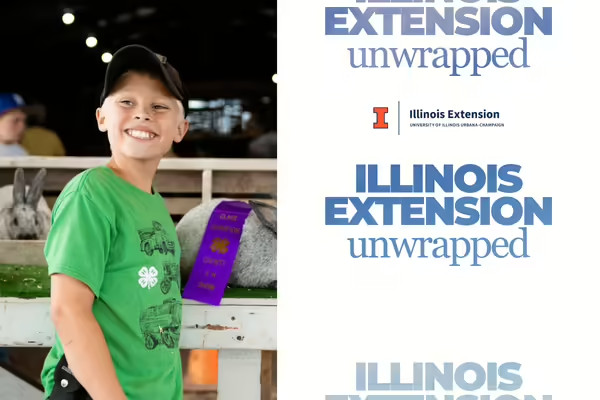
‘I am autistic and rabbit shows helped me:’ Showing livestock to be ‘Beyond Ready’ for life
Sixth-grader Michael Galloway shares how showing rabbits helped him, as a child with autism, find his voice, make friends, and build confidence. Through hands-on livestock experiences, 4-H empowers youth to overcome challenges, explore interests, and become Beyond Ready for life.
“It's OK, you’re going to get through this. I had some really bad days and even was in the hospital, but I have a lot of people who love me who help me through it. Find something you enjoy doing and use that to help when you feel anxious – like for me, I go to the barn and spend time with my animals. Even if you don’t feel like it, you have someone who loves you and wants to help you. Kids in 4-H will always help each other.”

Local youth are 'Beyond Ready' this National 4-H Week
In celebration of National 4-H Week in October, Perry Harlow, a 4-H alumnus from Grundy County, shared how 4-H shaped his life and career. His story shows how 4-H empowers youth with real-world skills, resilience, and purpose; preparing them to be Beyond Ready for life.
Harlow is the subject of a recent video showcasing the impact of 4-H on young people as the organization moves to continue to empower youth to be 'Beyond Ready' for life today.
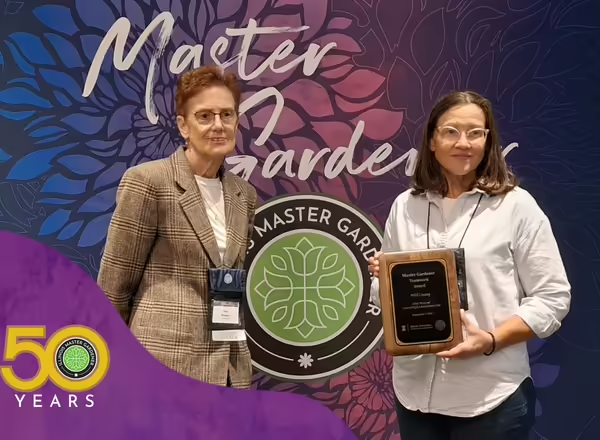
Will County volunteers recognized at 50th Anniversary Master Gardener Conference
At the 2025 University of Illinois Extension Master Gardener Conference, local volunteers from Will County were celebrated for their service and community impact. The honors reflect decades of dedication to helping others learn to grow and enhancing gardens, natural resources, and community spaces across Will County
"Local Master Gardener volunteers are helping others learn to grow and are making a significant difference," said Nancy Kuhajda, horticulture educator with Illinois Extension who leads the program locally. "It’s important to pause and recognize those whose work is truly exceptional. These volunteers work tirelessly in our communities and dedicate themselves to public education, enhancing natural resources for pollinators, and donating fresh produce."
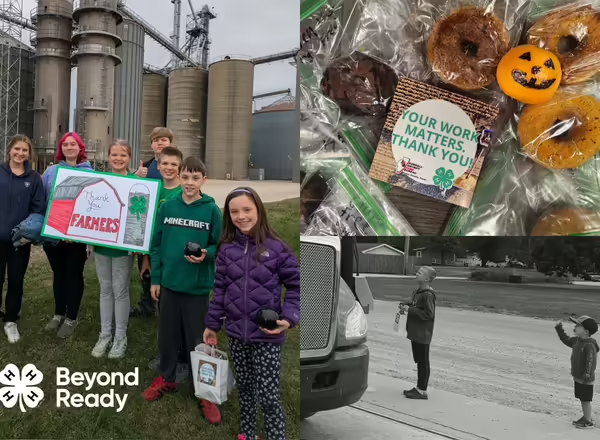
With Harvest 2025 underway, local youth say thanks
In October when the harvest was well underway, 4‑H youth from Grundy, Kankakee, and Kendall counties took time out of a school holiday to show appreciation for local farmers. Partnering with area Farm Bureaus, they packed and delivered 550 care packages filled with snacks and handwritten thank‑you notes to farmers in the field and at grain elevators.
“This is one of my favorite events to help host each year,” said Brooke Katcher, Illinois Extension 4-H recruitment and engagement coordinator, who added that the event is now in its fourth year. “4-H empowers youth to be ‘Beyond Ready’ for life. One important element of this is the confidence to become changemakers in the community. These young people are taking the time out of their school holiday to encourage and show gratitude to a profession that is a foundation of our community.”
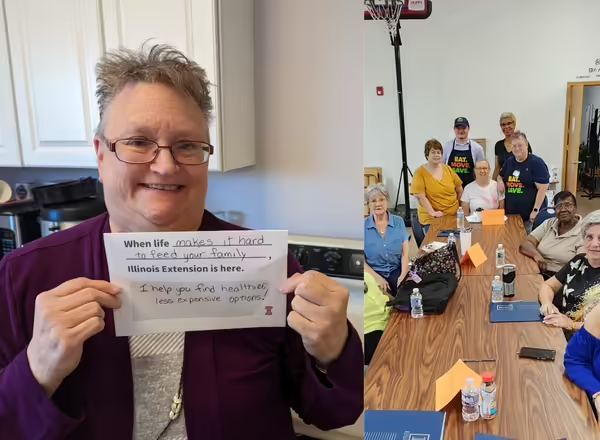
Illinois Extension staff spotlight: Janet Moody
Illinois Extension is honoring Janet Moody, SNAP‑Ed community worker in Kankakee County, as she prepares to retire after 20 years of service providing nutrition education and empowering families to make healthy lifestyle choices through the Eat.Move.Save. program. Janet’s work with children and adults alike has helped neighbors build confidence in the kitchen, stretch food dollars, and embrace lifelong learning.
Due to the recent changes in the SNAP-Ed program, I will be retiring on January 1, 2026. I can say with great pride that over the years, I have grown more confident in myself and my skills. I will be forever grateful for my years here with Extension."
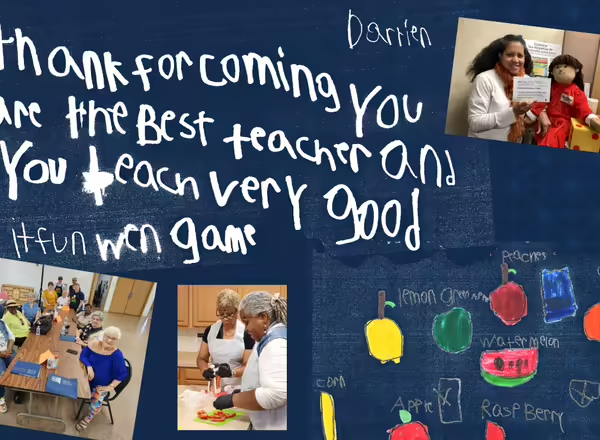
'I knock on the door and I say this is what I do... It’s free': SNAP-Ed’s human touch leaves a lifelong impact
As the Illinois SNAP‑Ed (Eat.Move.Save.) program nears the end of its 30‑plus years of service due to loss of federal funding, local community outreach workers are still delivering free nutrition and healthy living education that makes a real difference in people’s daily lives right up until the program ends. The result is a lasting ripple effect of healthier communities across Will and Kankakee counties.
The effects don’t stop with one participant. A lesson learned by a parent reaches a child. A lesson taught to a child reaches a parent. It’s all about lifelong learning which leads to lifelong impact. “It’s a ripple effect,” Dyche said. “They tell their families. Their families tell others.”
To find more stories from Illinois Extension, visit the news page. If you believe in the Extension mission, consider a gift to University of Illinois Extension.
WRITER: Anthony Warmack, communications coordinator, Illinois Extension.
IMAGE CAPTION: Cover image of boy by Kayla Dunlavey Photography.
MEDIA ACCESS: For press inquiries, contact Anthony Warmack, warmacka@illinois.edu, 217-244-5813. Want to keep in touch with news from Illinois Extension? Sign up for press updates.
University of Illinois Extension develops educational programs, extends knowledge, and builds partnerships to support people, communities, and their environments as part of the state's land-grant institution. Extension serves as the leading public outreach effort for University of Illinois Urbana-Champaign and the College of Agricultural, Consumer and Environmental Sciences in all 102 Illinois counties through a network of 27 multi-county units and over 700 staff statewide. Extension’s mission is responsive to eight strategic priorities — community, economy, environment, food and agriculture, health, partnerships, technology and discovery, and workforce excellence — that are served through six program areas — 4-H youth development, agriculture and agribusiness, community and economic development, family and consumer science, integrated health disparities, and natural resources, environment, and energy.