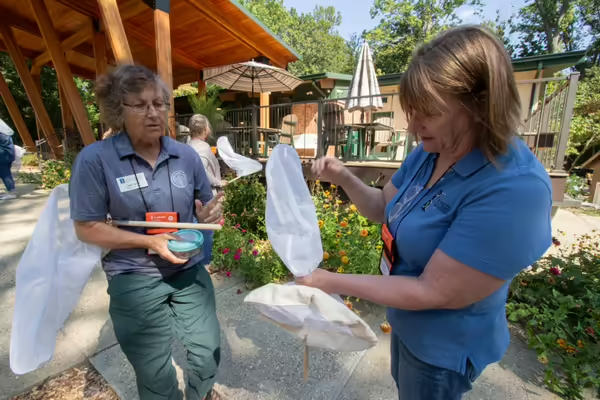
BOURBONNAIS, Ill. — In communities across Illinois, the impact of a vegetable garden or a monarch waystation often begins long before the first seed is planted. It begins with a volunteer. During National Volunteer Week, University of Illinois Extension is recognizing Master Gardener and Master Naturalist volunteers who dedicate their time and talents to helping communities better understand their environments.
“This National Volunteer Week, we want to acknowledge the dedication, time, and impact of our volunteers who work hard in the community,” said Nancy Kuhajda, Illinois Extension horticulture educator who serves Grundy, Kankakee, and Will counties. “The work they do goes beyond gardening; they are increasing access to fresh food, encouraging healthier lifestyles, and strengthening the natural environments of the communities they call home.”
In 2025, 41 Master Gardener volunteers and seven Master Naturalist volunteers in Grundy, Kankakee, and Will Counties gave over 2,440 hours to the community, time valued at $83,841 according to Independent Sector value of volunteer time and Extension reporting.
The two programs each have a different focus, but the impact of empowering volunteers to become changemakers within their communities is the same.
Helping others learn to grow
The Master Gardener program empowers residents to grow their own food and understand the environments in which they live. The mission is simple: Helping Others Learn to Grow.
“Illinois Extension Master Gardeners invest their time and talents in local Illinois communities,” said Kuhajda. “They share their knowledge with others to help them grow food, support pollinators, and sustain gardens.”
Across Illinois, the impact adds up: In 2025, 2,048 volunteers donated over $5.2 million in volunteer time to their communities. Volunteers across the state also provided at least 60,662 information services, and, as reporting this data is voluntary, the number may be much higher.
Becoming a Master Gardener is a commitment, and those who complete certification are passionate about their craft. Volunteers complete extensive training and contribute ongoing service and continuing education each year, ensuring the information they share is trustworthy and research-backed.
Connecting people to the natural world
While Master Gardeners focus on cultivated landscapes, Master Naturalist volunteers extend that same spirit of service into Illinois’ forests, prairies, and waterways.
“Master Naturalist volunteers connect people with nature through environmental stewardship and education,” said Kuhajda. “The goal of the program is to bring together enthusiastic people who are passionate about nature to help protect, preserve, and restore our natural resources.”
Statewide, 927 volunteers contribute over $2.6 million in volunteer time to their communities.
Rooted in community
Together, these volunteer programs reflect Extension’s broader mission: delivering research-based knowledge that improves lives.
“This work is about more than plants or landscapes,” said Kuhajda, “it’s about the people. Our programs build knowledge and create spaces where communities can grow together. It’s all thanks to our amazing group of volunteers.”
To learn more about volunteering with the Master Gardener or Master Naturalist program locally, visit: extension.illinois.edu/gkw/volunteer.
SOURCE: Nancy Kuhajda, Horticulture Educator, Illinois Extension.
WRITER: Anthony Warmack, Communications and Marketing Coordinator, Illinois Extension.
MEDIA ACCESS: Images related to this story can be downloaded for media use.
INTERVIEWS: Contact Anthony Warmack, warmacka@illinois.edu, to request specialist interviews on this topic.
About Master Gardener: University of Illinois Extension Master Gardeners are rooted in community and grow through connection, studying and sharing research-based horticulture topics, including vegetable gardening, insects, tree and small fruits, introductory botany, integrated pest management, turfgrass care, plant diseases, tree and shrub care, soils and fertilizer, and flower gardening. Over 2,000 active volunteers invest their time and talents cultivating collaborative gardens that feed and support healthy communities, foster hands-on learning, enhance neighborhood beauty, and support the environment. Help Master Gardeners grow.
About Master Naturalist: Illinois Extension’s Master Naturalists learn about botany, environmental ethics, archaeology, climate, forestry, geology, prairies, mammals, birds, insects, sustainable agricultural systems, and more from University of Illinois experts. They then share their time and expertise through local environmental stewardship projects such as invasive species removal, restoration projects, wildlife monitoring, and more. The Master Naturalist program is offered through Illinois Extension offices around the state. Learn more about how to become an Illinois Master Naturalist and bring positive change to your community’s natural areas at extension.illinois.edu/MN.
University of Illinois Extension develops educational programs, extends knowledge, and builds partnerships to support people, communities, and their environments as part of the state's land-grant institution. Extension serves as the leading public outreach effort for University of Illinois Urbana-Champaign and the College of Agricultural, Consumer and Environmental Sciences in all 102 Illinois counties through a network of 27 multi-county units and over 500 staff statewide. Extension’s mission is responsive to eight strategic priorities — community, economy, environment, food and agriculture, health, partnerships, technology and discovery, and workforce excellence — that are served through five program areas — 4-H youth development, agriculture and agribusiness, community and economic development, health and community wellness, and natural resources, environment, and energy.