URBANA, Ill. — For some residents, a walk through a park or an afternoon in the backyard brings a new level of anxiety thanks to growing concerns about ticks and the diseases they carry. This fear can lead people to limit outdoor activity out of concern that they may be bitten. As reports of tick-borne illnesses become more common and tick encounters increase, University of Illinois Extension experts encourage residents to be prepared when spending time outside.
“It’s understandable that people feel concerned when they hear stories about ticks and things like Lyme disease or alpha-gal syndrome, a condition that can trigger an allergy to red meat,” said Nancy Kuhajda, Illinois Extension horticulture educator. “These are very real and concerning stressors. But ticks shouldn't keep you from enjoying the outdoors. All you need to do is be informed and stay prepared.”
Understanding more about ticks and their changing habitats, along with what to do before, during, and after going outside, can go a long way toward staying safe and reducing anxiety.
Jump to: Understanding ticks • Avoiding ticks • Checking for ticks • Removing Ticks • Tick-borne diseases • Livestock owners • Free toolkit.
Understanding ticks
Ticks are not insects. In the same class as spiders, ticks have eight legs instead of six and are external parasites.
“Ticks do not fly, they do not jump, and they do not have wings,” Kuhajda said. “They just have to wait for opportunistic areas when they can move onto a potential host.”
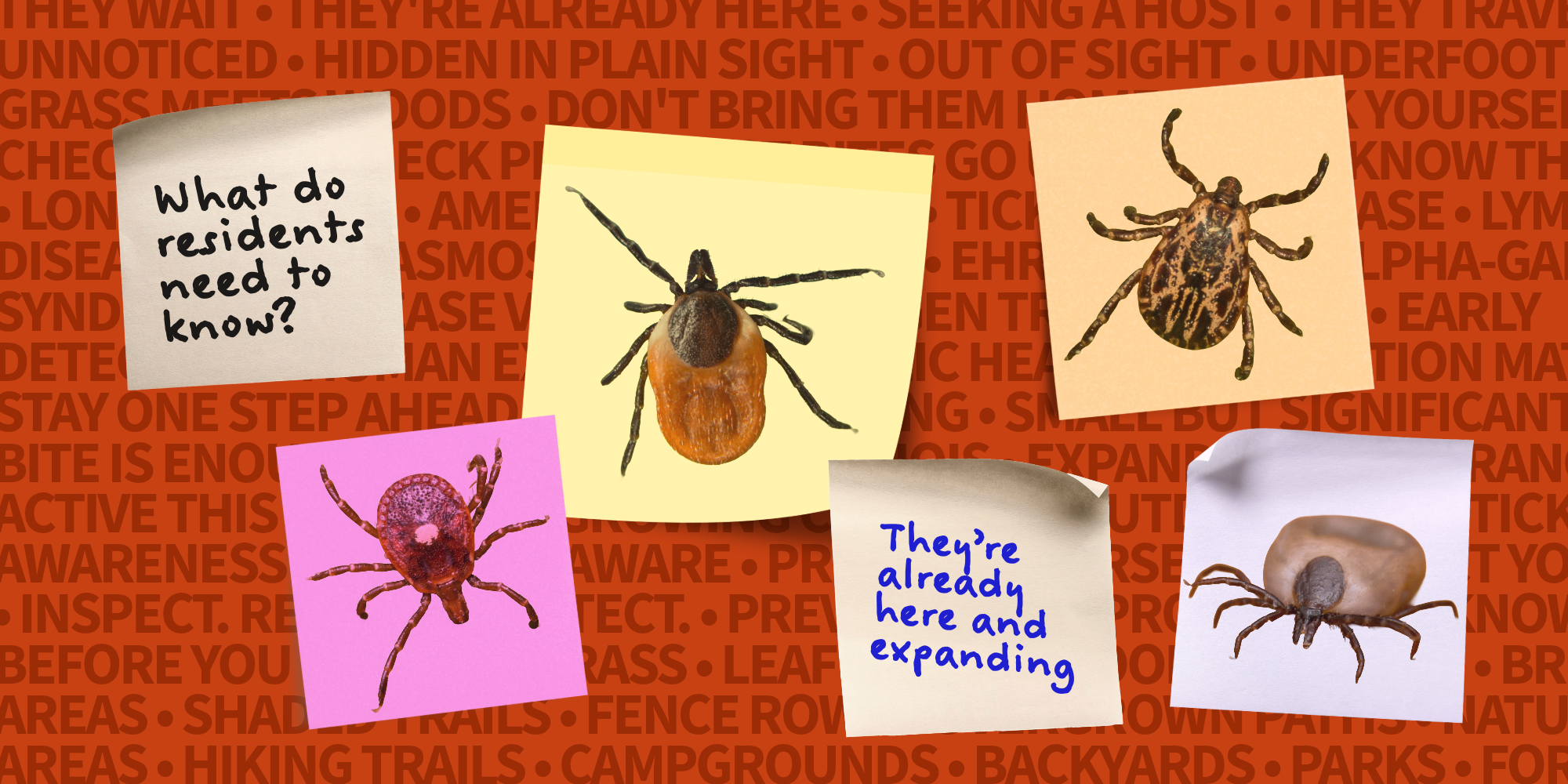
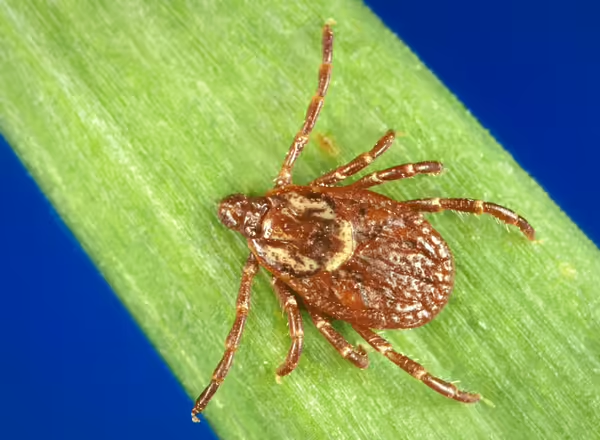
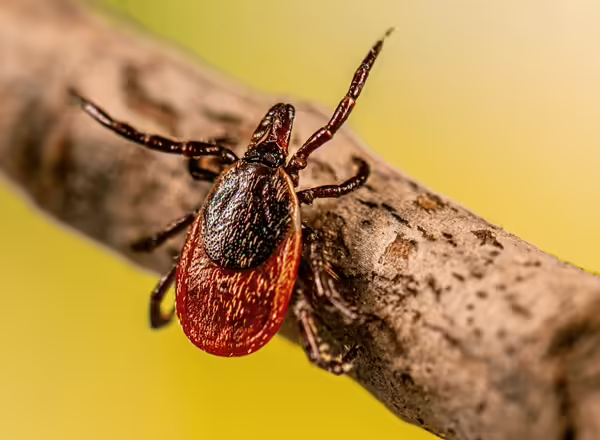
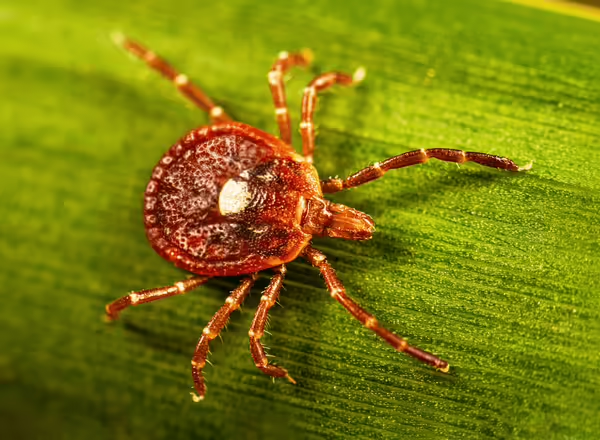
At least three potentially harmful tick species are found in varying levels across Illinois according to a recent U of I study: the lone star tick (Amblyomma americanum), the black-legged or deer tick (Ixodes scapularis), and the dog tick (Dermacentor variabilis). Though all Illinois counties are likely home to all three tick species, southern Illinois has more lone star ticks, northern and central Illinois have higher numbers of deer ticks, and dog ticks are most common in central and southern Illinois.
There are more ticks, and they are moving
Due to a variety of factors, including a changing climate, shifting wildlife patterns, and the movement of people and their pets, tick populations in Illinois are growing and shifting, with species spreading into new areas.
“If you look at the distribution maps, the number of ticks is definitely increasing,” said Teresa Steckler, Illinois Extension commercial agriculture specialist who works closely with the Illinois Natural History Survey Medical Entomology Laboratory on tick monitoring and identification efforts. “We haven't had really cold, long winters. Our winters are milder, and we're having earlier springs, which allows ticks to overwinter more easily.”
Even during years with comparatively harsh winters, Kuhajda said one common misconception is that cold weather eliminates tick populations. “People think ticks die in the winter,” Kuhajda said. “Ticks are parasites, and if they are attached to a warm-blooded animal, the cold won’t kill them.”

Invasive species are altering the ecosystem
In addition to native tick species expanding their range, researchers are also monitoring invasive ticks that have entered the United States. One of the most closely watched is the Asian longhorned tick (Haemaphysalis longicornis), a species capable of occurring in large numbers on livestock and wildlife. The Asian longhorned tick is currently found in at least six counties in Illinois, according to Steckler.
Invasive plant species may also be contributing to the spread of ticks. Steckler said woodland species such as invasive garlic mustard and bush honeysuckle can alter local habitats, creating warmer, more humid conditions that favor tick survival, though she stressed further research is needed.
“These invasive species are altering the microclimate,” Steckler said. “They're making it much more hospitable for the ticks by keeping it moist and humid and also keeping the temperature more ideal for them.”
Simple steps to avoid tick encounters
As their distribution continues to shift, ticks have become a fact of life in Illinois. A few simple precautions can significantly reduce the risk of encountering them.
“The solution isn’t to limit your time outside; it’s to be proactive and prepared,” said Kuhajda. “Just like you dress for the weather or use insect repellent when mosquitoes are active, a few simple precautions can help reduce your risk of ticks and allow you to enjoy the outdoors to the fullest.”
Wearing long sleeves, long pants, and closed-toe shoes can help prevent ticks from reaching exposed skin.
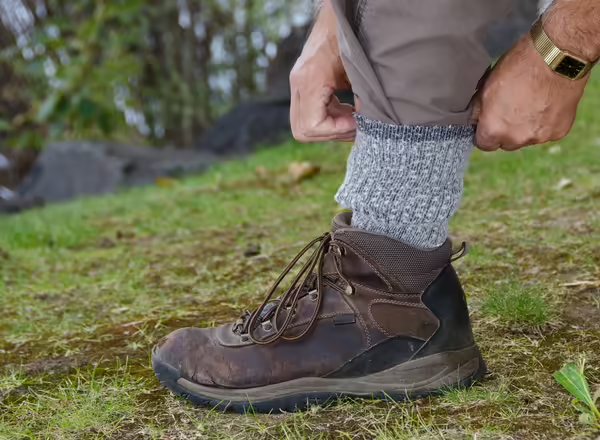
For those going into tall grasses or other areas where ticks are known to be prevalent, Kuhajda and Steckler recommend tucking pant legs into socks or applying insect repellent to provide additional protection. “Covering yourself is one of the best ways to avoid ticks,” Kuhajda said.
Two active ingredients are effective tick repellents, according to Kuhajda. While many people are familiar with DEET, the synthetic repellent picaridin is also effective but less widely known. Long used in other parts of the world, picaridin is often considered an alternative for people who dislike some of the unpleasant characteristics associated with DEET, such as its odor or feel on the skin. Both are effective at repelling ticks and other biting pests when used according to label directions, something that both Kuhajda and Steckler stressed.
“People must read and follow the labels, and the labels can change from year to year,” said Steckler. “Always, always review the label. When using repellents, you should also only use them in a well-ventilated area and keep away from pets until the product has dried, as improper use can be toxic to animals.”
People who frequently work or recreate outdoors in areas where ticks are present may also consider insecticide-treated clothing. These garments are treated to repel or kill ticks on contact and are commonly sold through outdoor recreation retailers. Clothing treatments containing permethrin can also be applied to existing clothing following the manufacturer’s directions to provide an additional layer of protection.
“Many treatments can remain effective through multiple washings. So, if you already have a coverall or pair of pants you typically wear when working outdoors, it’s the perfect piece to spray and have that extra layer of protection,” said Steckler.
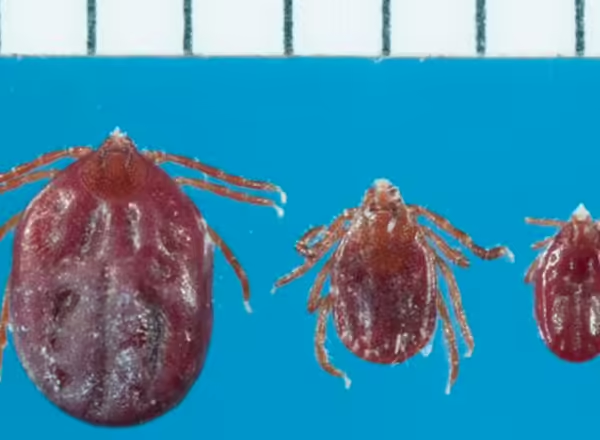
[Story continues after "How big are ticks, really?"]
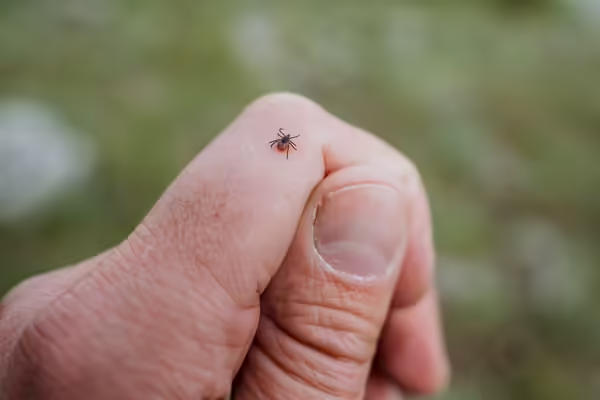
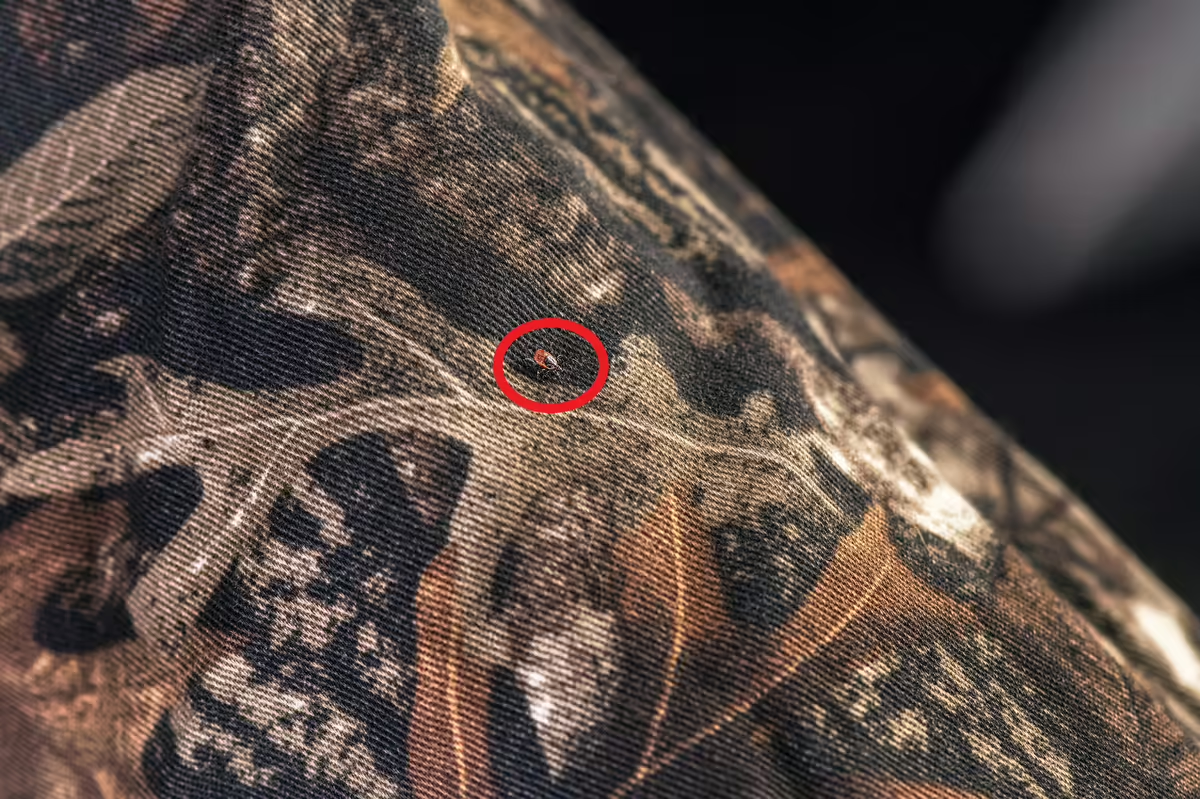
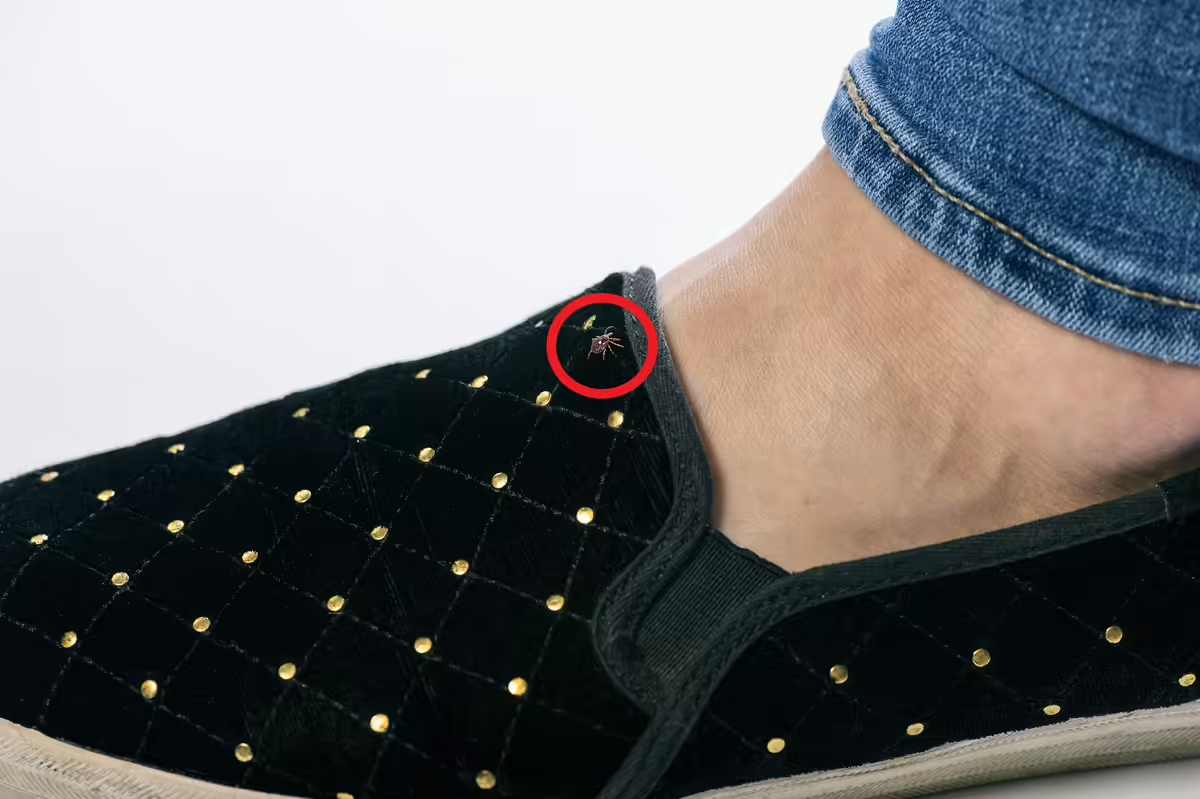
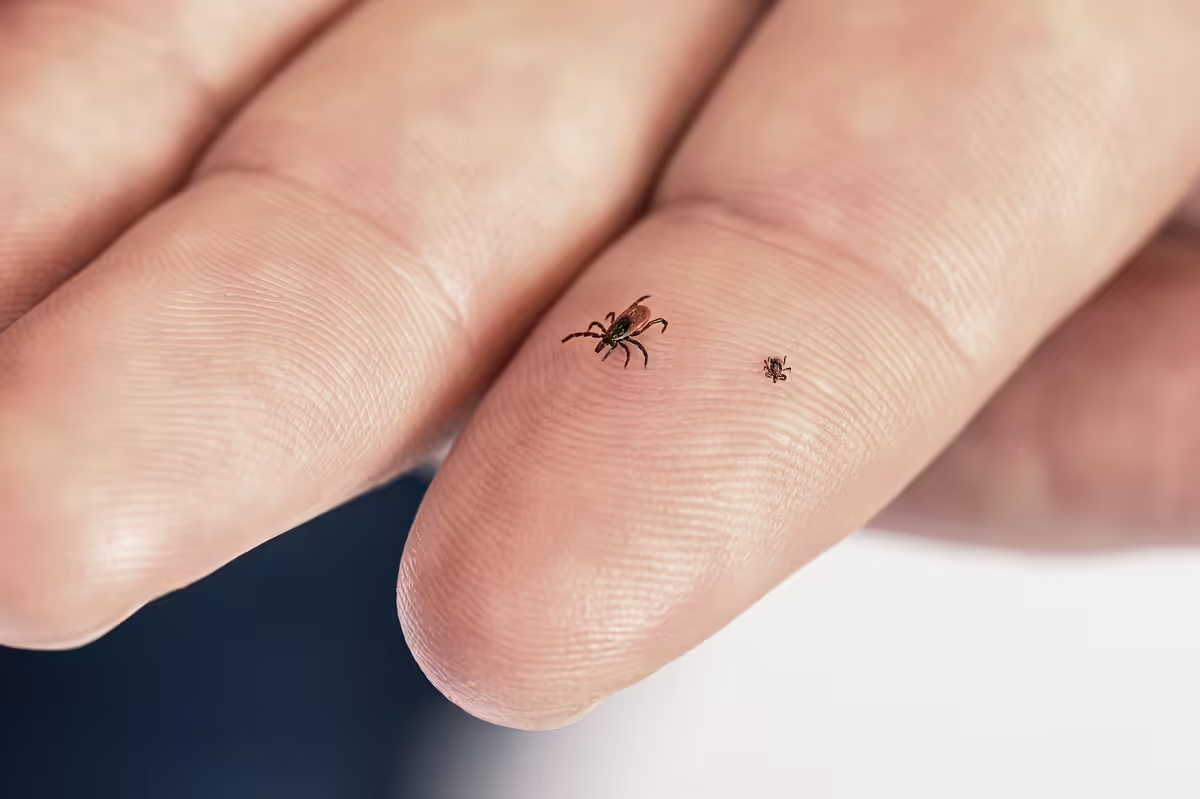
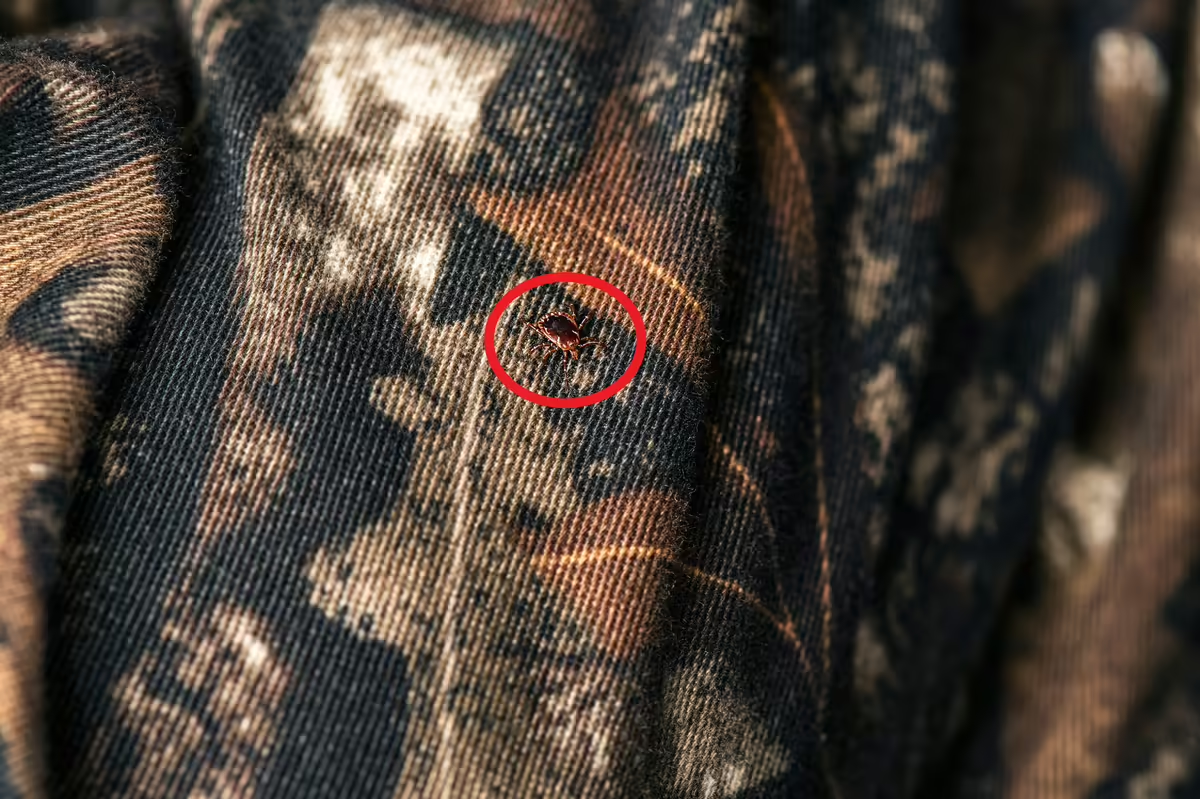
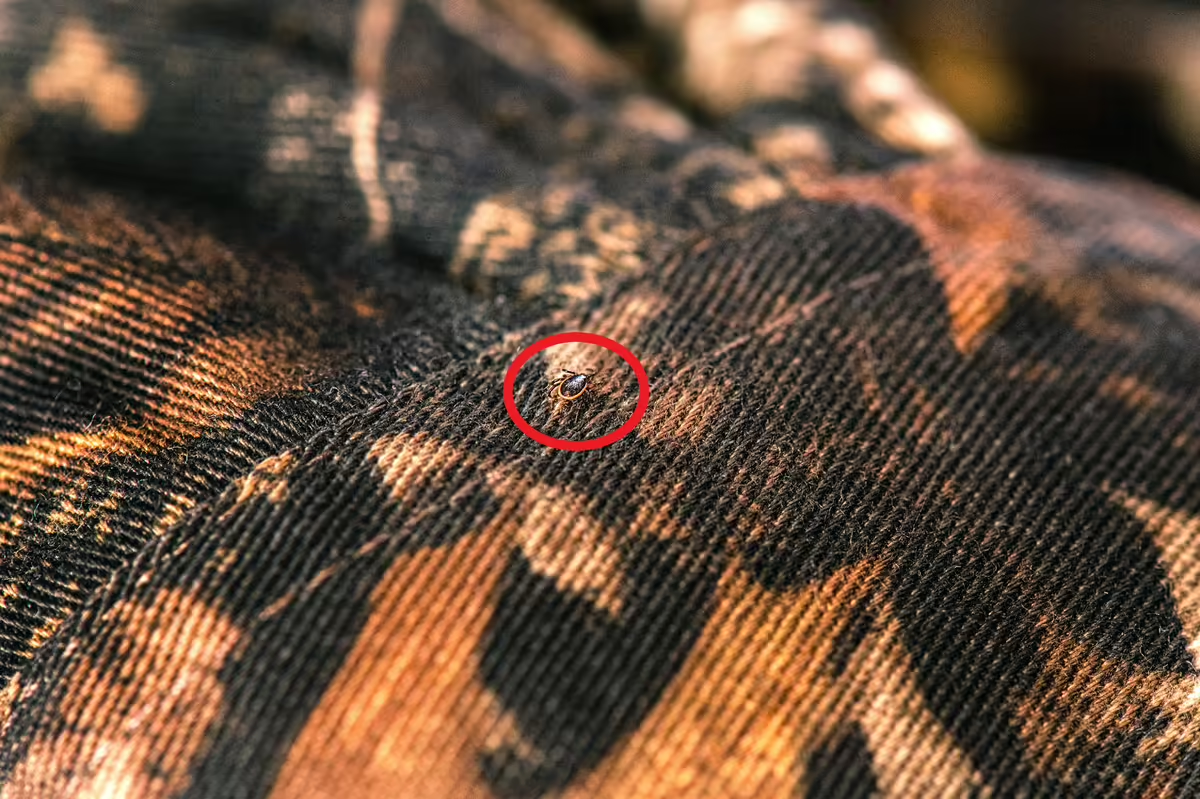
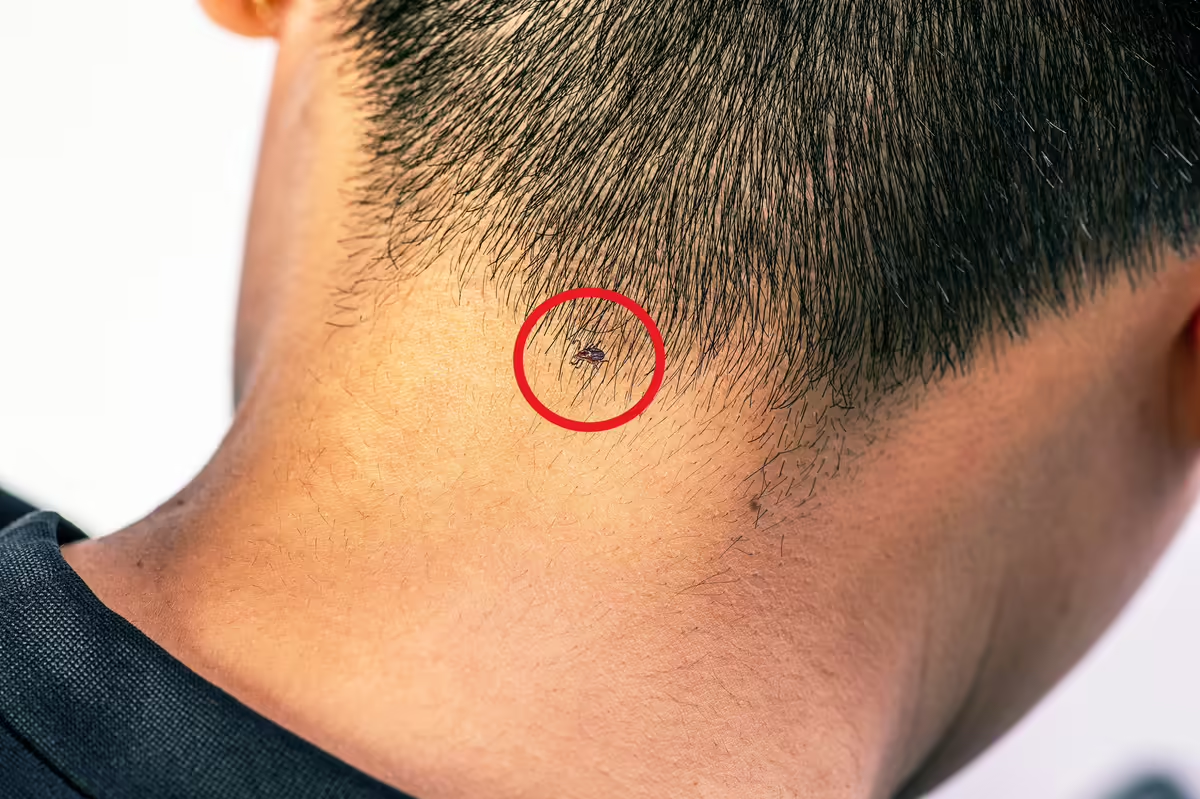
How big are ticks, really?
Photos courtesy of CDC/Lauren Bishop

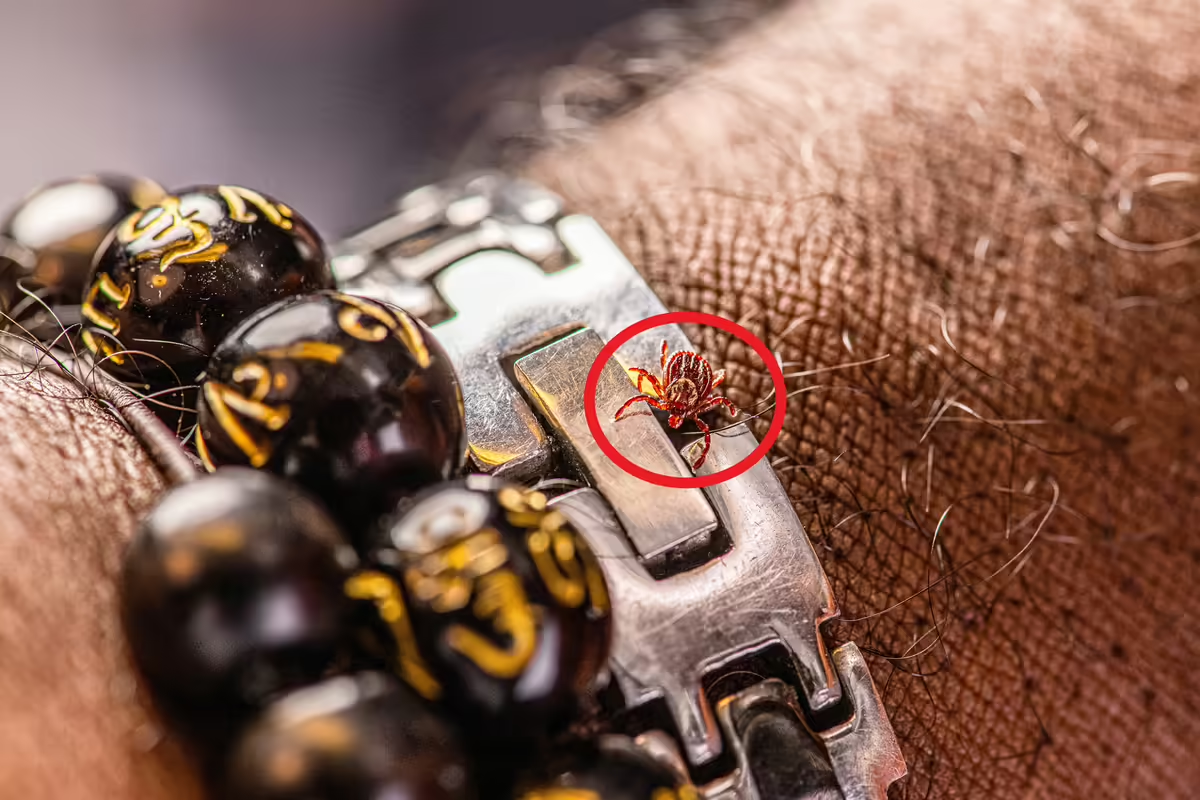
Check for hitchhikers: Conduct a thorough tick check when returning indoors
Even with precautions like covering up and using repellent, always conduct a thorough tick check upon returning indoors, especially after spending time in areas where ticks are known to frequent.
Finding a tick on your body does not necessarily mean it has bitten you. Kuhajda said ticks often crawl on a person or animal while searching for a suitable place to attach and feed: “This is when you want to find them.”
For those spending long periods outdoors, check for ticks periodically throughout the day, whenever possible, in addition to conducting a more thorough check at home.
- Check your person: When conducting a tick check, Steckler says to pay particular attention to the warm places where ticks may commonly attach. “The key thing is, every time you go in for a break, you need to conduct a tick check. Check the groin area, the pit area, just behind the knees, for women underneath the breasts, and those kinds of areas. Periodically, take the fingers and walk through your scalp and make sure you don't feel anything strange.”
- Check your gear: Remove, shake out, and inspect the outer layers of clothing before laundering. If there is a concern, they might be on clothing, normal laundering alone will not kill ticks. Instead, Steckler recommends either freezing or heating exposed clothing: Place clothing in a trash bag and store it in the freezer overnight. Alternatively, clothing can be placed in a dryer on high heat for at least 20 minutes to eliminate any remaining hitchhikers.
- Check your pets: Dogs and cats may easily transport ticks into the home, where they can detach and seek out a human host. Check around the pet’s ears, under the legs, and along the belly. A veterinarian may also be consulted for appropriate tick prevention products. “There is no point in being hypervigilant about ticks if we aren’t treating our pets with the same vigilance,” said Steckler. “If you have pets that sleep with you and spend any amount of time in a location where ticks may be present, they should be brushed or checked over for ticks.”
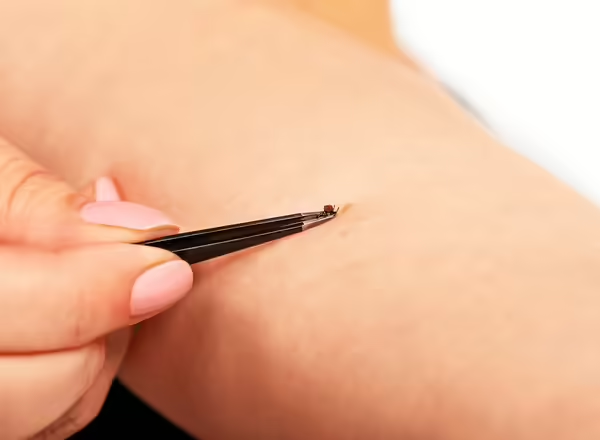
Found an attached tick? Here’s what to do next
While finding an attached tick can be alarming, experts say prompt and proper removal using tweezers can reduce the risk of disease transmission.
“The biggest thing is to remove the tick as soon as possible and remove it properly,” said Kuhajda.
Safe removal instructions and videos can be found online.
“Do not use a match. Do not use Vaseline. Do not use nail polish,” Kuhajda said. “These are all myths that can cause more damage and increase your risk of disease. Just remove the tick properly using tweezers or a specially made tick tool.”
After removal, Steckler says to keep the tick in a sealed container or plastic bag labeled with the date and location where it was found and keep for at least a month. If symptoms develop in the coming weeks, it can be used to aid diagnosis.
If you do not develop symptoms of a tick-borne illness after 30-days, you can submit the tick to your local Illinois Extension office for free identification. Unattached ticks can be submitted immediately. Place the tick in a sealable plastic sandwich bag with a cotton ball soaked in isopropyl alcohol and delivered to an Extension office, where it will be sent to the lab for identification.
More than a bite: Understanding tick-borne diseases
Ticks are parasites and, while many encounters with ticks will never result in illness, some species can transmit diseases such as Lyme disease and alpha-gal syndrome to people and animals. Black-legged ticks, also known as deer ticks, are the primary carriers of Lyme disease in Illinois. Symptoms often, but may not always, include a fever, fatigue, headache, muscle aches, and a characteristic bull's-eye rash. Lone star ticks have received increasing attention because they are associated with alpha-gal syndrome, a condition that can trigger allergic reactions to red meat and other mammal-derived products.
"The lone star right now is getting a lot of press because of alpha-gal and the fact that it is marching its way north across the state of Illinois," Steckler said, adding that in her experience speaking to groups across Southern Illinois, it has become increasingly common for almost half of audience members to know someone affected by the condition.
“More research is needed, but it's getting worse, and I keep finding more and more people who are afflicted by it.”
Although awareness of alpha-gal syndrome has increased significantly in recent years, Steckler said residents should not let it or any tick-related illness discourage them from enjoying the outdoors.
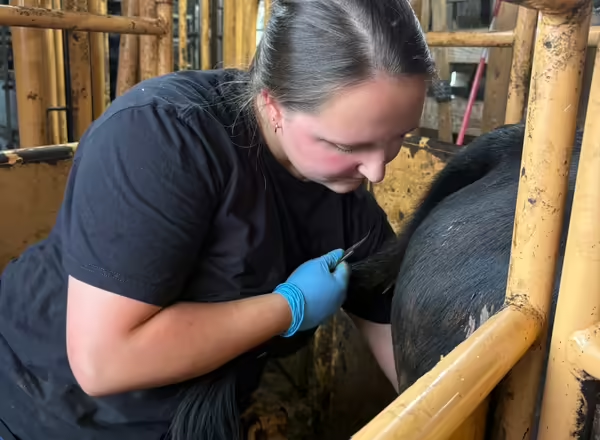
Livestock owners should remain vigilant
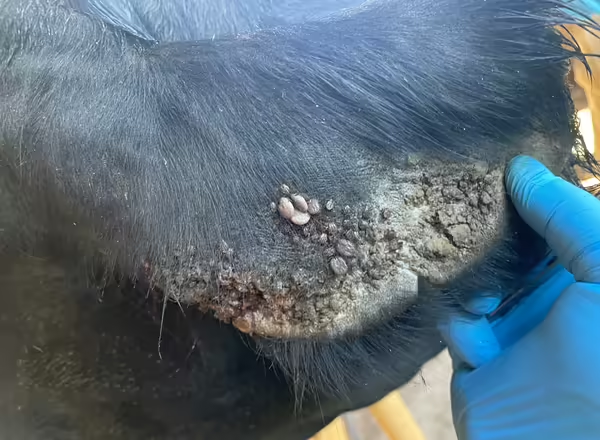
Livestock can also be affected by tick infestations and the diseases they carry. Steckler said producers should routinely inspect cattle, horses, sheep, goats, and other livestock for ticks, particularly during periods of peak activity and when animals have access to wooded areas, brushy fencerows, or pastures with tall vegetation.
“The key is to know what ticks are present in your area and monitor your animals regularly,” Steckler said, who also recommended working with a veterinarian to develop an appropriate tick management strategy as part of their herd health program.
In areas where the invasive Asian longhorned tick has been identified, producers may need to pay particular attention to grazing locations. Unlike many native species, these ticks can occur in large numbers and place significant stress on affected animals. If Asian longhorned ticks are suspected, producers may also contact Steckler for a consultation.
With ticks, knowledge beats fear
As awareness of ticks and tick-borne illnesses continues to grow throughout the state, Extension experts emphasize that knowledge and prevention are what’s important, not fear. “We don't stop gardening because there are weeds, and we don't stop enjoying the outdoors because there are ticks. We learn how to manage them,” said Kuhajda.
For those interested in helping researchers better understand tick populations in Illinois, ticks found crawling on clothing, gear, pets, or people can be submitted to the Medical Entomology Laboratory's citizen science tick surveillance program. Submission is free and submitters receive tick identification results as soon as the sample has been processed. Submitted specimens help researchers track changing tick distributions and identify emerging species across the state.
“There's no reason to be fearful of going outside,” Steckler said. “You just need to be vigilant. Actually, I'm more afraid of mosquito bites than tick bites because with ticks, there are a lot of things you can do to keep them off you. Whereas the mosquitoes, you don't necessarily hear that they're flying around you until it’s too late.”
For more information about Illinois Extension or to find a local office, visit go.illinois.edu/ExtensionOffice.
Help us spread the word
Bring trusted, research-based tick education to your community with a free outreach toolkit packed with ready-to-use signs, flyers, social media graphics, newsletter content, and more.
SOURCES: Nancy Kuhajda, horticulture educator; Teresa Steckler, commercial agriculture specialist.
WRITER: Anthony Warmack, communications and marketing coordinator.
EDITORS: Yukta Sinha, regional media communications coordinator; Emily Steele, media communications manager; Brooke Katcher, 4-H recruitment and engagement coordinator.
INTERVIEWS: Contact Anthony Warmack, warmacka@illinois.edu, to request specialist interviews on this topic.
MEDIA ACCESS: Images to run with this story may be downloaded for media use.
University of Illinois Extension develops educational programs, extends knowledge, and builds partnerships to support people, communities, and their environments as part of the state's land-grant institution. Extension serves as the leading public outreach effort for University of Illinois Urbana-Champaign and the College of Agricultural, Consumer and Environmental Sciences in all 102 Illinois counties through a network of 27 multi-county units and over 500 staff statewide. Extension’s mission is responsive to eight strategic priorities — community, economy, environment, food and agriculture, health, partnerships, technology and discovery, and workforce excellence — that are served through five program areas — 4-H youth development, agriculture and agribusiness, community and economic development, health and community wellness, and natural resources, environment, and energy.