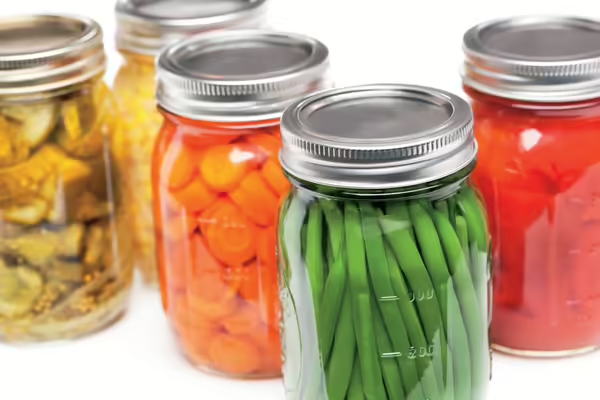
CHAMPAIGN, Ill. – Learn how to safely preserve fresh produce and enjoy homemade goods year-round at Illinois Extension’s summer canning workshop series. Join Nutrition and Wellness Educator Rachel Mannen from 9 a.m. to noon at 201 W. Kenyon Road, Suite 3, Champaign, IL 61820 for hands-on classes on different canning techniques and recipes.
Each workshop features a different topic:
- June 25 – Jam (Register by June 18)
- July 22 – Pickles (Register by July 15)
- August 21 – Salsa (Register by August 14)
Participants will make a product in each session to take home, while learning about proper food safety, preservation methods, and the satisfaction of preparing pantry staples from scratch.
“There’s been a real resurgence in interest around traditional kitchen skills like canning,” said Rachel Mannen, Illinois Extension Nutrition and Wellness Educator. “It’s not only a practical way to preserve your harvest, but also a fun, rewarding way to stock your pantry with homemade goodness.”
Each workshop is $15, which helps cover the cost of canning materials. Space is limited, so early registration is strongly encouraged at go.illinois.edu/CanningINEP
University of Illinois Extension develops educational programs, extends knowledge, and builds partnerships to support people, communities, and their environments as part of the state's land-grant institution. Extension serves as the leading public outreach effort for University of Illinois Urbana-Champaign and the College of Agricultural, Consumer and Environmental Sciences in all 102 Illinois counties through a network of 27 multi-county units and over 700 staff statewide. Extension’s mission is responsive to eight strategic priorities — community, economy, environment, food and agriculture, health, partnerships, technology and discovery, and workforce excellence — that are served through six program areas — 4-H youth development, agriculture and agribusiness, community and economic development, family and consumer science, integrated health disparities, and natural resources, environment, and energy.