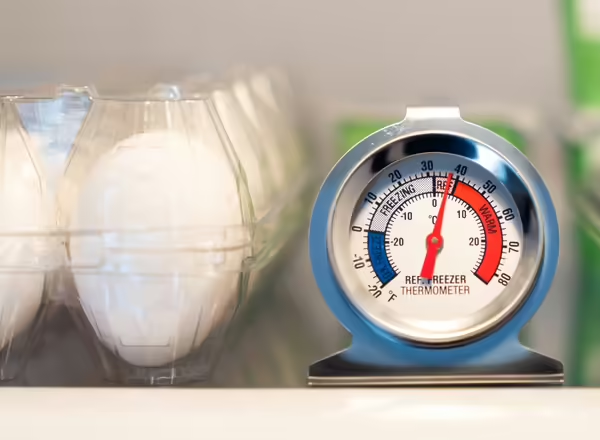
Store raw meats, poultry, eggs, cut fruits and vegetables, pasteurized milk, and pasteurized juice below 40 F in a refrigerator. Do not overcrowd the refrigerator — allow space for air to circulate around each food item. Clean the refrigerator often to prevent the accumulation of harmful bacteria, such as Listeria monocytogenes, that can grow in cold temperatures.
- Freeze refrigerated food within a few days.
- Use freezer-safe packaging.
- Use freezer containers 2 to 3 inches deep to maintain quality and prevent ice crystals from forming.
- Check temperatures with a thermometer intended for refrigerators and freezers.
Refrigerator Safety Tips
- Do not open the refrigerator frequently, especially on warm, humid days, as this raises its temperature.
- Clean the refrigerator regularly to reduce food odors.
- Remove spoiled foods immediately to prevent decay from spreading to other foods.
- Store raw meat, poultry, and seafood on the bottom shelf of the refrigerator so juices don’t drip onto other foods and cause cross-contamination.
- To thaw meat in the refrigerator, place it on a plate or in a container to prevent juices from contaminating other foods.
- Keep uncooked, ground meat and poultry in the refrigerator only one or two days before cooking or freezing (see Tables Refrigerator Storage of Meats, Refrigerator Storage of Poultry, and Refrigerator Storage of Fish).
- Use food stored in the refrigerator quickly. Don’t depend on maximum storage time.
- Practice the First In, First Out method to reduce food waste.
Refrigerator Temperature Check
Check the temperature of your refrigerator with a thermometer, even if it's new. To measure refrigerator temperature:
- Put a glass kitchen thermometer (candy thermometer) in a glass of water and place it in the middle of the refrigerator.
- Wait 5 to 8 hours.
- If the temperature is not 38 to 40F, adjust the refrigerator temperature control.
- Check the temperature again after 5 to 8 hours.
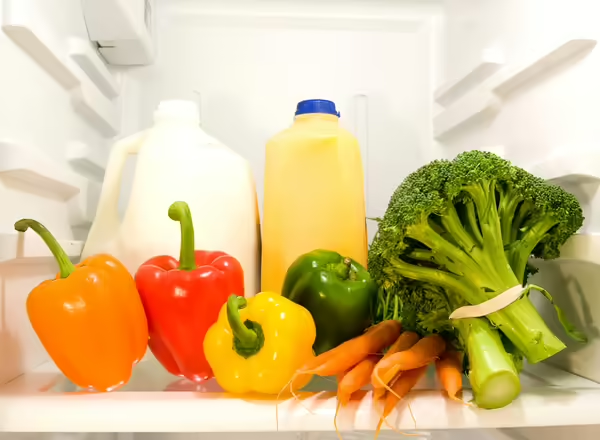
Food Placement on Shelves
Minimize the chance of cross-contamination between foods by keeping certain types of foods on specific shelves in the refrigerator.
- Never store raw vegetables on the same shelf as raw meat.
- Store less perishable foods, such as condiments like mustard, pickles, jellies, and ketchup, in the door, which is often warmer than other parts of the refrigerator. These have added protection, including high sugar or high acidity, to limit harmful bacteria from growing.
- Use crisper drawers for fruits and vegetables and drawers or bin intended for meats and cheese as intended.
- Follow additional recommendations below as closely as possible, depending on how many shelves are available.
How Long do Refrigerated Eggs Last?
Eggs are a tasty and easy-to-prepare source of protein. Crack open some common egg safety questions in our Live Well, Eat Well blog.
| Refrigerator Placement | Types of Food |
|---|---|
| Top Shelf | Ready-to-eat foods; foods that will not be heated (milk, juices, beverages, cheese, raw vegetables) |
| Second Shelf | Cooked foods that will be reheated before eating (casseroles, leftover cooked food) |
| Third Shelf | Raw fish and raw steak |
| Fourth Shelf | Ground meat (raw eggs may be stored on the same shelf) |
| Fifth Shelf | Poultry (raw eggs may be stored on the same shelf) |
| Door | Condiments (ketchup, mustard, pickles, jellies, etc.) |
Can meat spoil in the refrigerator?
Meat comes from animals that can carry bacteria, which might make us sick. Because of this, storing meat safely to prevent the growth of any bacteria that may be present is important.
Bacteria can multiply rapidly, causing food to spoil or become unsafe. Bacteria produce slime, toxins, off-colors, and odors associated with food spoilage. However, disease-causing bacteria can grow without changing the odor, color, or texture of the food. For this reason, keeping meat cold enough to prevent bacterial growth — or heating it to a temperature that kills them — is critical.
Food spoilage bacteria grow best at environmental temperatures of 70 to 100 F. They will grow more slowly at temperatures above and below this temperature range. Your refrigerator should be between 34 and 40 F, because most bacteria grow extremely slowly, if at all, in this range.
Charts for Storing Meat in the Refrigerator
Refrigerator Storage of Meats
| Type of Meat | Length of Time in Refrigerator (35-40 F) |
|---|---|
| Raw roasts, steaks, chops, smoked | 3-5 days |
| Raw livers, raw heart, raw kidneys, and other variety meats | 1-2 days |
| Raw ground meat | 1-2 days |
| Sliced bacon | 7 days |
| Lunchmeat | 3-5 days, opened 2 weks, unopened |
| Cooked meat dishes and leftovers | 3-4 days |
Refrigerator Storage of Poultry
| Type of Meat | Length of Time in Refrigerator (35-40 F) |
|---|---|
| Fresh poultry | 1-2 days |
| Cooked poultry, leftovers | 3-4 days, unless covered in broth or gravy, then 1-2 days |
Refrigerator Storage of Fish and Seafood
| Type of Meat | Length of Time in Refrigerator (35-40 F) |
|---|---|
| Fresh fish | 1-2 days. Keep shellfish to be eaten raw only a few hours |
| Cooked fish | 3-4 days |
| Fresh shrimp, scallops, crawfish, squid | 1-2 days |

Have More Food Storage Questions?
Check out USDA's FoodKeeper resource for a comprehensive list of refrigeration and freezer recommendations for a wide variety of foods and beverages. The resources is also available as the FoodKeeper App on both Android and Apple devices!