Disclaimer - The following is meant only for educational purposes and not to be construed as legal or tax advice.
PEORIA, Ill. - Rising financial stress in the agricultural economy is a primary concern for Illinois farmers and farmland owners. The following insights are summarized from University of Illinois Farmdoc data and recent reports from the Federal Reserve Districts of Chicago and St. Louis. The good news is that most Illinois farmers are financially stable. While the current environment is not in crisis, specific economic conditions warrant close analysis and careful attention from operators.
Interest rates have increased this year, but challenges to long-term profitability remain. Higher or lower yields on a single field, and the timing of marketing, can quickly change an individual farm's economic forecast. Rising input costs are severely hurting profitability. Wars in two key global regions have pushed diesel and fertilizer prices to near-record highs. While farm machinery price inflation has eased somewhat, it follows an extended period of sharp price increases.
Farm Credit Conditions
According to the Federal Reserve Bank of Chicago, Illinois farms' capacity to repay loans is concerning. However, repayment capacity has improved slightly, and any further deterioration has slowed since 2025. Loan renewals and extensions offered to most farmers are strong, but how this plays out after harvest is unknown. These points highlight the importance of building a strong relationship with your banker.
The strength of ag banks in the Corn Belt is measured by the loans-to-deposits ratio, which is creeping upward but still strong. This ratio —at 80%— is considerably higher than before, during, and after the Ag Depression. While agricultural banks are willing and able to lend, their elevated loan-to-deposit ratios suggest farmers may be increasingly reliant on debt to fund daily operations.
If agricultural banks push their loan-to-deposit ratios past 85-90%, they will begin to experience financial stress. This strain will shrink available credit for farmers, potentially triggering wider financial distress across farm operations. Careful monitoring of bank conditions will be required as farms must maintain a strong cash position to navigate financial stress. For more information on farm financial condition measures: https://extension.illinois.edu/blogs/farm-coach/2025-12-18-farm-finance-series-farm-market-value-balance-sheet
This is not the 1980s
The Illinois farm economy today is more stable than it was in the 1980s because current interest rates are lower. Grain prices aren't in downward spirals like in the 1980s, but they are lower than they were just a few years ago. Interest rates on farm loans have risen from near 4% to 7.5% today; however, by comparison, interest rates on operating loans remain nowhere near the 1981 peak of over 18%.
What is a Farmer to Do?
Farmers can't know how the US and global economies will trend; however, conserving cash may be a good strategy for many farmers, depending on their financial condition. Financially strong farmers can reasonably consider expansion, provided they carefully analyze the risks. A strong cash position may be your greatest strength in an uncertain marketplace.
Farmers should analyze nitrogen (N) fertilizer use, as it is directly correlated with yields and late-season plant health. Increasing N application rates to squeeze out more yield may not actually increase profits. You can calculate your N needs for maximum profit here: https://www.cornnratecalc.org/
Closely monitor P, K, and pH levels through soil testing. Shortening lime and fertilizer can be costly in the long run, as can applying more fertilizer than is needed. Check your farm lease for contractual obligations before changing your fertility plan and be prepared to answer the landowner's questions about any planned fertilizer cutbacks.
Other Considerations
Cutting expenses can have both positive and negative consequences. For example, reducing the number of field passes—such as eliminating unneeded tillage—can boost profits by lowering fuel consumption. On the other hand, reducing crop and property insurance could backfire if an unexpected disaster strikes. In that case, a detailed discussion with your agent is a wise use of time. Maximizing crop revenue insurance coverage may be money well spent by minimizing revenue risk.
Farmers should prepare for their post-harvest lender meeting and send a brief status update beforehand. If you see problems ahead, notify those involved in advance and have solutions in place. Avoiding or trying to hide problems will eventually harm your situation. Past financial desperation has led a few Illinois farmers to convictions for bank fraud. Here are some Farm Coach articles to help you navigate the current marketplace:
extension.illinois.edu/blogs/farm-coach/2025-03-21-farm-finance-tips-working-your-farm-lender
Take Care of Yourself
Taking care of your mental well-being is an essential part of overcoming economic challenges. Seek professional mental health care when the stress is building. Prioritizing mental health is a key tool for weathering a downturn in the farm economy. You can find more information on farm stress here:
publish.illinois.edu/farmstress/
extension.illinois.edu/health/farm-mental-health
I recently had the opportunity to discuss stress resilience with Ukrainian grain farmers, who shared their firsthand experiences of managing operations under the extraordinary challenges of a war zone. These are their recommendations to Illinois farmers for handling farm financial stress:
- Carefully plan and analyze your situation
- Eliminate unnecessary costs
- Take time to enjoy your family
- Diversify your operation
- Constantly learn
- Keep smiling
For More Information on Farm Financial Conditions:
www.chicagofed.org/research/data/ag-conditions/index
www.stlouisfed.org/research/economic-conditions-survey-results
Kevin Brooks is a Farm Management Educator with the University of Illinois Extension in Fulton, Mason, Peoria, and Tazewell counties. Kevin's email address is kwbrooks@illinois.edu
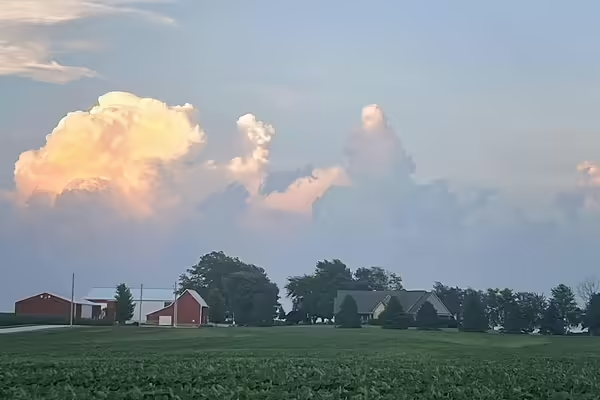
###PHOTO CAPTION: While the scenery remains familiar, Illinois grain farms continue to manage tight margins and market uncertainties. A brief overview looks at the latest economic data for local producers. (Photo by Kevin Brooks)
University of Illinois Extension develops educational programs, extends knowledge, and builds partnerships to support people, communities, and their environments as part of the state's land-grant institution. Extension serves as the leading public outreach effort for University of Illinois Urbana-Champaign and the College of Agricultural, Consumer and Environmental Sciences in all 102 Illinois counties through a network of 27 multi-county units and over 500 staff statewide. Extension’s mission is responsive to eight strategic priorities — community, economy, environment, food and agriculture, health, partnerships, technology and discovery, and workforce excellence — that are served through five program areas — 4-H youth development, agriculture and agribusiness, community and economic development, health and community wellness, and natural resources, environment, and energy.