Houseplants are a great way to keep the gardening season alive year-round, especially during the long and cold winter months. It's safe to say that “there is a houseplant for everyone,” given the wide range of sizes and shapes available. From towering fiddle-leaf fig trees to numerous tiny succulent species, everyone can find something that fits their growing conditions and the space available in their home or workplace.
In recent years, I have really fallen in love with the wide range of houseplants that offer trailing or dangling foliage. Some of these fantastic performers can create a huge effect by sending out long, leaf-covered stems that can be draped over almost anything to add some green foliage to your living space. Others are more modest in their growth habit but have other types of unique leaves and stems that may either stand alone in a solitary pot or add to the “spiller” effect in a planting arrangement.
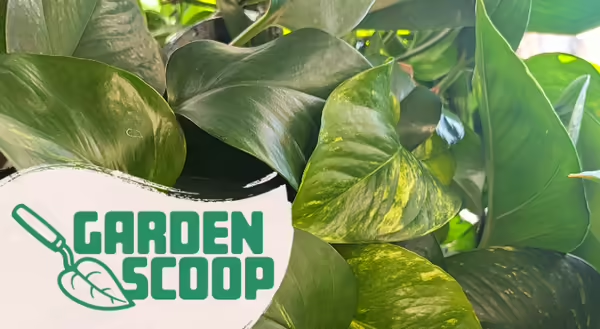
Golden pothos (Epipremnum aureum) is one of the most common trailing houseplants and also one of the toughest. Given the right conditions and some time to grow, this plant will send out extremely long, dangly stems of its heart-shaped, greenish-yellow foliage. The viny stems can be wound around almost anything growing in your home to create a dramatic effect. I’ve always been amazed at how much foliage this plant can produce from a relatively small pot.
In addition to its spectacular growth, this plant is incredibly adaptable. It’s tolerant of very low light and can even survive entirely on artificial light, such as in an office with no windows. However, the faint yellow variegation in its leaves will be more pronounced with higher light levels. It prefers bright, indirect light for optimal growth, but is easy to grow in nearly all conditions that offer some bit of light.
Philodendron is a genus of plants that includes multiple species commonly grown as houseplants. Many of these species a very similar in appearance to pothos plants but offer some differences in foliage. Compared to golden pothos, most Philodendron species are “better behaved,” meaning they do not produce quite as long and extensive stems, although I do consider them fast-growing.
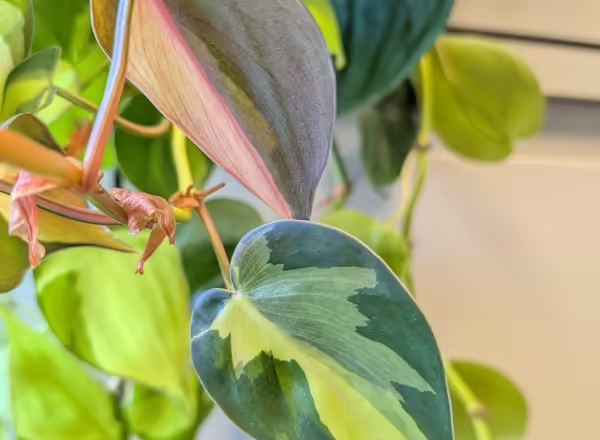
One of my all-time favorites is Philodendron hederaceum ‘Brasil’. This plant’s colorful, heart-shaped leaves are a real showstopper with their vibrant lime-green variegation. I have always loved green variegation on leaves, rather than the more common white. To add to the plant's attractiveness, its new growth emerges with a pretty pink to reddish tint before fading to its two-toned green variegation.
It's another easy-care plant, tolerant of low light and a wide range of indoor temperatures. However, its variegation will be enhanced with exposure to higher light levels.
Hoya carnosa, commonly referred to by a variety of common names, is yet another fantastic trailing houseplant. This semi-succulent plant has smaller, thicker, and waxier leaves than Philodendrons or pothos. There’s a wide variety of cultivars available, which offer varying and interesting foliage. Commonly called “porcelain flower” by some, this plant can sport beautiful umbels of fuzzy, 5-petaled flowers.
Although Hoya plants are relatively easy to care for and keep alive, they require just the right amount of light for flower production. They prefer bright, indirect light, but it may take some moving around to find their “happy place” where flowering will occur. Being semi-succulent epiphytes, they prefer a fast-draining potting mix that is allowed to dry out completely between waterings.
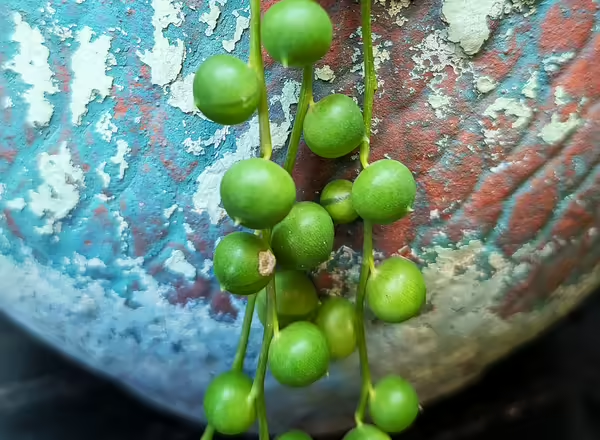
Moving on to a true succulent, string of pearls (Senecio rowleyanus) is another spectacular trailing plant with tiny, circular water-storing leaves that look just like small peas to me. This plant is no showstopper on its own, but it adds a wonderful accent to other pots as it dangles over the edge with tiny strings of its unique foliage.
String of pearls spreads from shallow roots and is known for its easy propagation from stem cuttings. Simply clip off a 3-4 inch long tip of any stem, strip off 4 or 5 leaves on the bottom end, and place the end in potting mix. Unlike many other succulents, string of pearls cannot tolerate much direct sunlight and thrives in the shade of other plants. Consider adding cuttings of this unique, dangling plant to pots with other, established houseplants for an interesting accent.