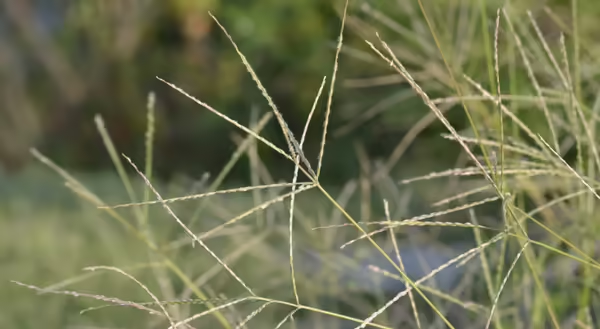
Crabgrass isn’t usually a problem until summertime, but effective management starts this spring. Many cultural choices, like how often and how high you mow your lawn, can impact the ability of crabgrass to establish.
About crabgrass
There are several species of crabgrass in Illinois, but the two most widespread are Common Crabgrass, Digitaria sanguinalis, also called Hairy Crabgrass, and Smooth Crabgrass, Digitaria ischaemum.
Identifying characteristics for the crabgrasses
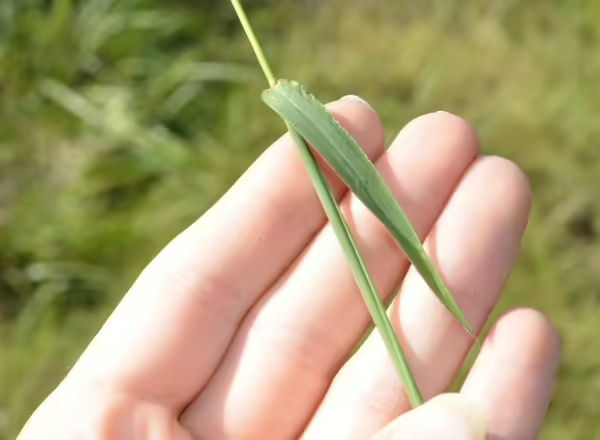
Both species of crabgrass are non-native summer annuals. They grow in meadows, disturbed areas, and lawns. They grow in bunches and spread through seed as well as through the nodes of stems rooting where they touch the ground. They have:
- Short, broad leaves
- Short, membranous ligules
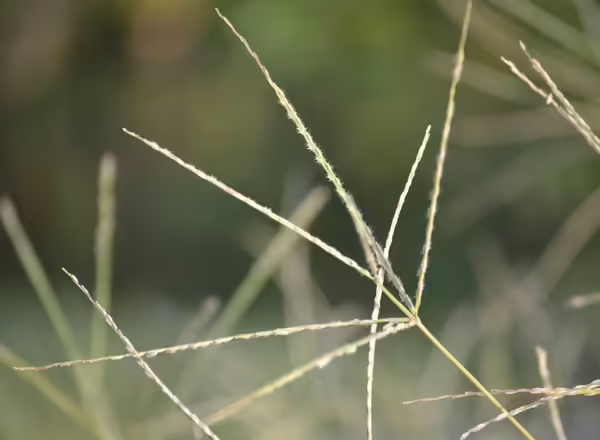
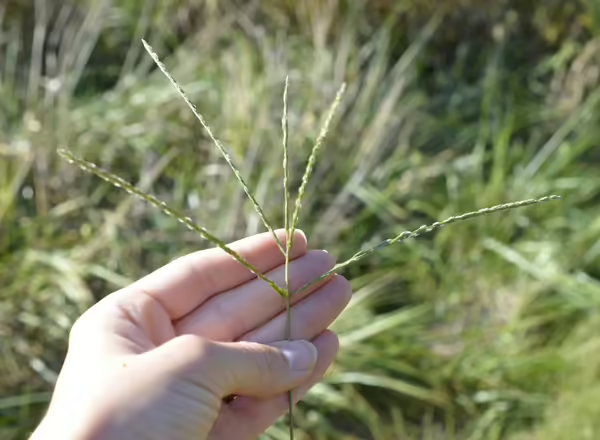
- Raceme inflorescences with finger-like collections of spikelets held on flattened stalks
Telling apart the two species
Crabgrass is crabgrass, right? If your goal is to eradicate it, then knowing which specific species you have isn't necessarily important. But you can find the details of telling the two species apart below.
- Height: Common crabgrass can grow between 1-3 feet tall, while smooth crabgrass tends to stay under 1.5 feet tall. However, if this is in a regularly mowed lawn, height won’t be a reliable characteristic.
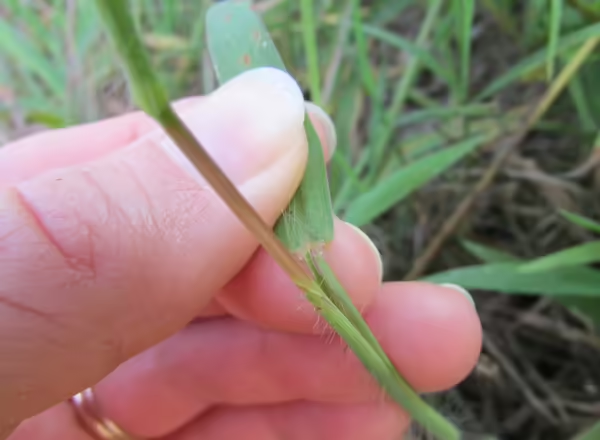
- Hairiness of leaves: Common crabgrass has hairy leaf sheaths, while smooth crabgrass has hairless sheaths. In common crabgrass, the base of the leaf blades can be hairy and in smooth crabgrass you can find some hairs at the base of the leaves too, so make sure to look at the sheaths to tell them apart.
- Size of the spikelets: The spikelets of common crabgrass are slightly larger than those of smooth crabgrass - 3mm in common and 2mm in smooth.
Management
By the time crabgrass pops up in your lawn, it's often too late to effectively manage it for the current growing season. Preventative treatment starting this spring is much more effective, and includes improving your lawn through cultural practices and considering a preemergence herbicide. Learn more at our Managing Crabgrass in Lawns webpage.
Thank you for reading! Need a refresher on grass identification terms, like ligule and spikelet? Check out this blog post!
About Grasses at a Glance
Never miss a new post! Subscribe to our email list to get updates each time a new post is available.
Give us feedback! How helpful was this information (click one): Very helpful | Somewhat helpful | Not very helpful
ABOUT THE AUTHOR: Erin Garrett is a Natural Resources, Environment, and Energy Educator for University of Illinois Extension serving Alexander, Johnson, Massac, Pulaski, and Union counties. Erin develops and delivers high impact programming to adults and youth to help them develop an appreciation for natural resources and to empower them to make small changes to positively impact the environment. Erin’s programming focuses on why homeowners should consider choosing native plants, how to support native pollinators, how to identify grasses, how to identify and manage invasive species, and developing an appreciation for prairie ecosystems.