URBANA, Ill. — Keeping amphibians as pets offers hobbyists an opportunity to connect with the non-human world, often increasing interest in conserving animals in the wild. But there’s a dark side to the amphibian trade, according to a recent study from the University of Illinois Urbana-Champaign.
While the majority of the wildlife trade happens legally and follows proper import regulations, the internet and social media platforms have opened channels for illicit trade. This encompasses everything from domestic breeding of exotic animals to smuggling of rare or endangered species. Not following proper procedure can spread pathogens, threaten wild populations, introduce invasive species, and rob revenue streams from home countries, which are usually biodiversity-rich developing countries struggling with inequality and insufficient funds for conservation and research.
Until now, the scale of the unofficial amphibian trade was poorly known. Devin Edmonds, U. of I. herpetologist and lifelong frog collector, was curious. So, he assembled a multidisciplinary team to shine a light on the trade.
“At first, we wanted to figure out how many non-native amphibians are being bred and sold in the U.S., but quickly realized that data didn’t exist. We settled on online classified ads, so I started emailing computer science folks on campus to see if they could scrape the data from ads posted between 2004 and 2024,” said Edmonds, who worked on the project as a doctoral student in the Department of Natural Resources and Environmental Sciences, part of the College of Agricultural, Consumer and Environmental Sciences at Illinois. He’s now a research affiliate at the Illinois Natural History Survey and program director at Amphibian Ark.
After many hours identifying species from photos in ads, and annotating price, date, location, and other information, the team collected nearly 8,500 listings representing 301 amphibian species from around the world.
Read the full article from College of ACES.
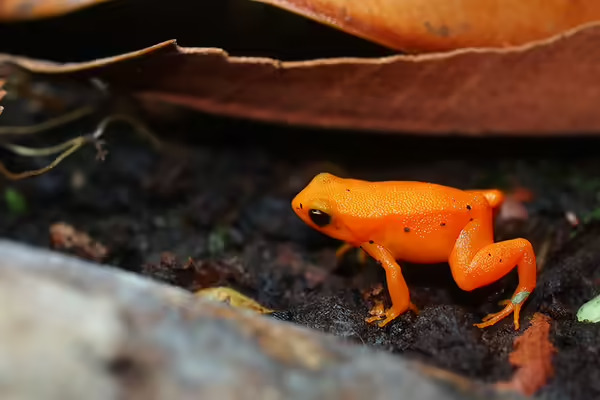
Photo: A Mantella aurantiaca frog bred in captivity by Devin Edmonds.
University of Illinois Extension develops educational programs, extends knowledge, and builds partnerships to support people, communities, and their environments as part of the state's land-grant institution. Extension serves as the leading public outreach effort for University of Illinois Urbana-Champaign and the College of Agricultural, Consumer and Environmental Sciences in all 102 Illinois counties through a network of 27 multi-county units and over 700 staff statewide. Extension’s mission is responsive to eight strategic priorities — community, economy, environment, food and agriculture, health, partnerships, technology and discovery, and workforce excellence — that are served through five program areas — 4-H youth development, agriculture and agribusiness, community and economic development, health and community wellness, and natural resources, environment, and energy.