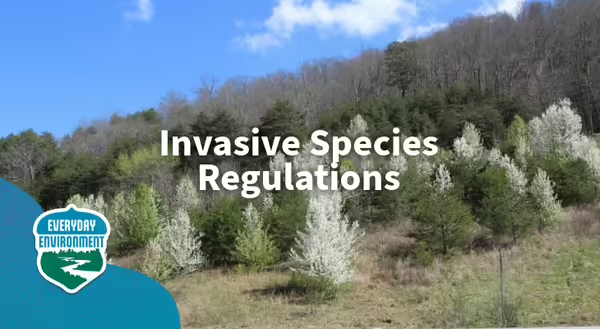
You may have heard about the new invasive species regulations in Illinois that took place in 2025. If not, then, in short, nine plant species were added to the Illinois Exotic Weeds Act, making it illegal to buy, sell, and transport them in the state. For eight of those species, the regulations take effect immediately. The ninth, Callery pear, is deferred until Jan. 1, 2028, to allow nurseries an opportunity to deplete stock that is already in the production process.
Regulations like these are one tool to help manage invasive plants as they limit or restrict invasive species in the landscape.
Regulations as a tool
The Illinois Exotic Weed Act is one of several regulations in the state that address invasive plants. Learn more about Illinois Regulations Regarding Invasive Plant Species.
In general, regulations limit or restrict invasive species in the landscape. Some, like the Illinois Exotic Weed Act, only deal with commerce or transport. Others, like the Illinois Noxious Weed Law, prohibit possession and can mandate control of existing populations.
Regulations can remove invasive plants from commercial trade, reducing potential spread and new introductions. For species that are not available commercially, adding them to a regulatory list can provide justification of their invasiveness, which can be important for agencies or organizations when prioritizing resources and funds for management.
Assessing species
In order for a species to be regulated as an invasive species, there needs to be clear evidence about the ecological or economic threat posed by that species. One of the major objectives of the Illinois Invasive Species Council is to develop processes to evaluate species, conduct those assessments on potential invaders, and advise the Illinois Department of Natural Resources and the Illinois Department of Agriculture on invasive species issues.
The council is made up of four subcommittees: Terrestrial Plants, Pests and Pathogens, Wildlife, and Aquatic Life. Each subcommittee is responsible for developing an assessment process and evaluating species. The finished assessments are brought to the full council for approval, publishing, and sharing with the Illinois departments of Natural Resources and Agriculture. Suggestions for invasives to be regulated can be submitted to the committee at Illinoisinvasivespeciescouncil@gmail.com.
Layers of regulation
Some local municipalities have their own ordinances and restrictions related to invasive species, and the federal government maintains a Federal Noxious Weed List. The multiple types and layers of regulations can be confusing for the general public, but regulations are vital to the concepts of prevention and early detection of invasive species.
About Everyday Environment
Everyday Environment is a series of blogs, podcasts, webinars, and videos exploring the intricate web of connections that tie us to the natural world.
Was there something about this blog's topic we didn’t cover? See something cool in nature? Let us know! Hit "Connect with Us" below to send us your question or share your everyday nature observation with and we may share it in a future blog or podcast.