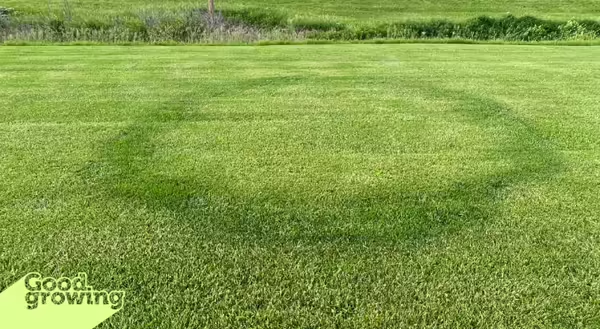
Have you ever noticed a near-perfect circle of lush green grass or a ring of mushrooms growing in a lawn? While these patterns may seem concerning or even supernatural, they are caused by soil-dwelling fungi and are commonly referred to as fairy rings.
What are Fairy Rings?
Fairy rings are caused by around 50 species of fungi. The fungi do not attack grass roots; they feed on decaying organic matter (tree stumps, roots, thatch, construction debris, etc.) buried in the soil. As the fungi consume this material, they grow outward from a central point, typically forming a relatively uniform circular pattern. The rings typically range in size from 2 to 15 feet across but can reach over 50 feet.
The Different Types of Fairy Rings
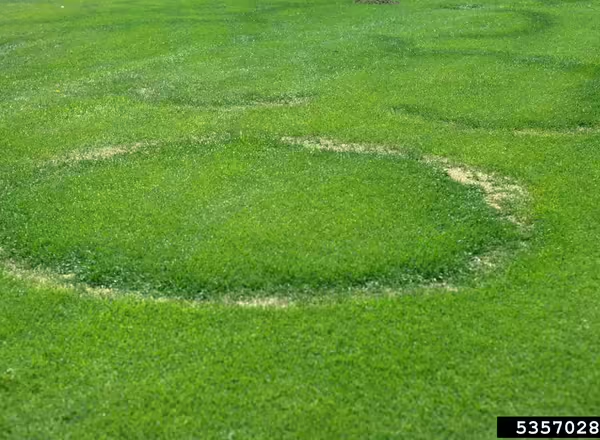
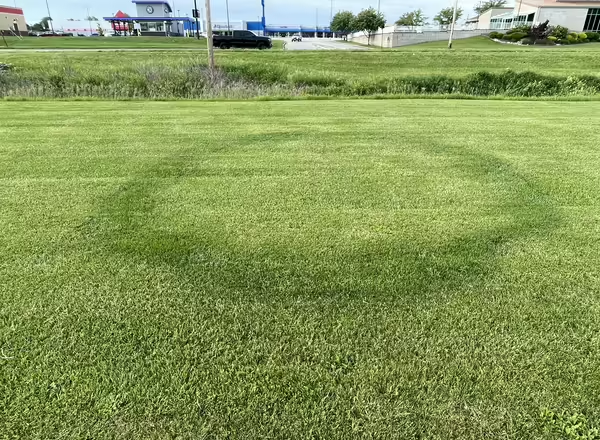
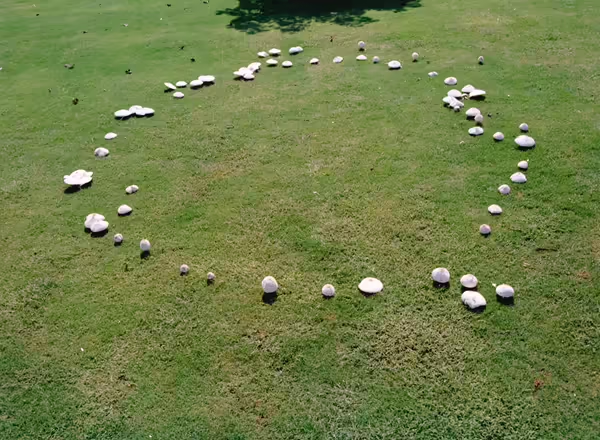
Fairy rings most commonly appear as a band of dark-green, fast-growing turf. They may also appear as a ring of thin, brown, or dead grass. After periods of rainfall, mushrooms or puffballs may emerge along the ring edge, marking the boundary of the fungal colony.
There are three different types of fairy rings that can develop:
- Type I is the most problematic type of fairy ring. In these rings, dense fungal growth in the soil creates a water-repellent (hydrophobic) layer that prevents water from reaching the roots. This causes the turf to become water-stressed and eventually die. Fortunately, this is the least common type in home landscapes
- Type II fairy rings produce dark green, vigorously growing grass. This happens because nitrogen and other nutrients are released into the soil as fungi break down organic matter.
- Type III fairy rings appear as rings of mushrooms with little to no visible change in turf (for better or worse). These fairy rings are most commonly seen after heavy or prolonged rainfall.
How Do I Get Rid of Fairy Rings?
In most cases, fairy rings do not damage turf and are cosmetic ‘problems’, and management is not necessary. While the rings may persist for several years, they will eventually disappear as their food source is exhausted or environmental conditions change.
Managing fairy rings typically focuses on masking symptoms and improving soil conditions rather than eliminating the fungi:
- To prevent fairy rings from forming in the first place, potential food sources such as tree stumps, large roots, and construction lumber should be removed from an area before planting the lawn.
- In turf that has Type I fairy rings, soil can be core aerated to help break up fungal mats and improve water infiltration.
- If Type II fairy rings are an issue, nitrogen can be applied to green-up the other turf in a lawn to mask the presence of the fairy ring.
- For Type III fairy rings, mushrooms can be removed by hand-picking (wear gloves), raking, or mowing when they appear.
- Fungicides are typically not effective at managing fairy rings and should not be used to manage them.
It’s important to remember that these fungi are performing a natural and beneficial role, breaking down organic material and returning nutrients to the soil. While the patterns they create may be unusual, they make great conversation starters, and perhaps a chance to spot a fairy or two.
Good Growing Fact of the Week: In many parts of Europe, it was believed that fairy rings formed where fairies or elves had danced overnight. Some traditions warn that stepping into a fairy ring could bring bad luck, illness, or transport you to another world, while others suggest that fairy rings bring good fortune.
Bonus Fact of the Week: The most common fungus species causing fairy rings is a small, tan species called the fairy ring fungus, Marasmius oreades.
Photos:
Type I fairy ring - Lester E. Dickens, Bugwood.org
Type II fairy ring – Ken Johnson, University of Illinois Extension
Type III fairy ring - Clemson University - USDA Cooperative Extension Slide Series, Bugwood.org
Want to get notified when new Good Growing posts are available? SIGN ME UP!
Give us feedback! How helpful was this information (click one): Very helpful | Somewhat helpful | Not very helpful
MEET THE AUTHOR
Ken Johnson is a Horticulture Educator with University of Illinois Extension, serving Calhoun, Cass, Greene, Morgan, and Scott counties since 2013. Ken provides horticulture programming with an emphasis on fruit and vegetable production, pest management, and beneficial insects. Through his programming, he aims to increase backyard food production and foster a greater appreciation of insects.