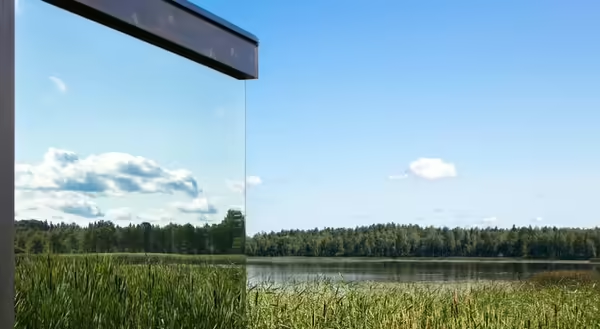
The “built” environment is made by humans, for humans. You’re very accustomed to the built environment and probably wouldn’t want to live without the comforts it affords. But for wildlife, the buildings, roads, and enormous parking lots that represent the built environment are formidable landscape features. Some of these features are merely desolate, others are outright dangerous.
Glass pervades the built environment. Glass windows are bigger than ever, glass doors are commonplace, and the “structural glass wall” has become a mainstay of modern architecture. This proliferation of glass has certainly improved interior visibility, but these magical walls pose a problem for birds.
Illusions
In indirect lighting, exterior glass appears clear. In direct lighting, exterior glass reflects the world around it like a mirror.
Reflective windows trick birds into thinking there is natural habitat where it isn’t; these windows reflect the sky or vegetation nearby, which birds mistake for the actual habitat. Vegetation planted near a building can drive up bird strikes, first because plantings attract birds but also because trees and shrubs reflected in the windows may confuse birds.
Birds can also be tricked by glass when it is clear; they might fly into glass walls, like bus stop shelters, when there is desirable habitat on the other side, not recognizing the transparent barrier.
Glass lit from behind (as in a house at night) can also cause issues. These lights attract and disorient birds, especially migratory birds, and lights may also make windows less visible in some cases. During spring and fall migration, more birds strike windows, as millions or even billions of birds pass over relatively unfamiliar territory on their way to or from wintering areas. After hours of flight, migratory birds alight in trees to rest for a day or more, facing innumerable risks, including deceptive glass.
On any given building, the amount of glass can elevate the risk, though most bird collisions occur on the lower floors of tall buildings. In fact, suburban and residential structures may have a greater impact on birds overall than tall buildings because there are so many of them.
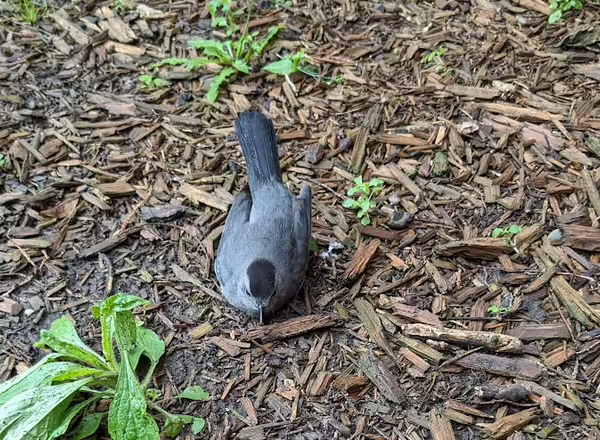
Birds usually die when they strike glass or they could be severely injured. While bird-window strikes are a global conservation issue, our best estimates of bird deaths from collisions with glass are from the U.S., where Scott Loss and co-authors estimate somewhere between 100 million and 1 billion birds are killed annually after colliding with windows. Incomplete survey data and scavengers eating bird carcasses account for some of the uncertainty of this estimate. Still, it’s clear that windows kill a lot of birds. Luckily, there are straightforward solutions to this problem .
Preventing Bird Collisions
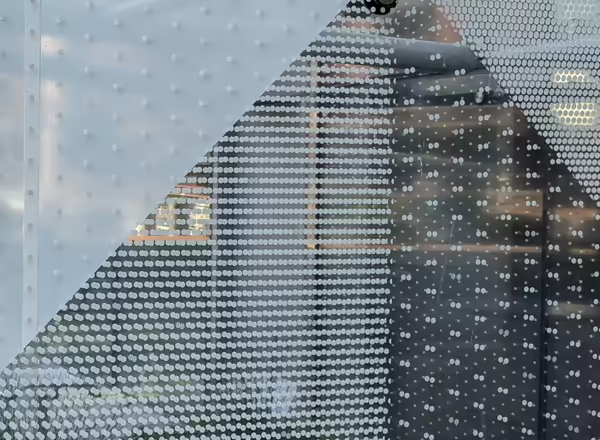
Research shows that high-density, high-contrast treatments on glass exteriors renders them visible to birds. The treatment can be pasted or painted onto glass or erected as physical barrier just in front of the glass. A popular and low-cost method is a decal with a 2-inch spacing of dots pasted on the clean exterior surface.
Homeowners can purchase decals or use a stencil and paint marker (e.g., white water-based acrylic) to place dots on one or a few windows. Window screens or other physical barriers also keep birds from striking the glass.
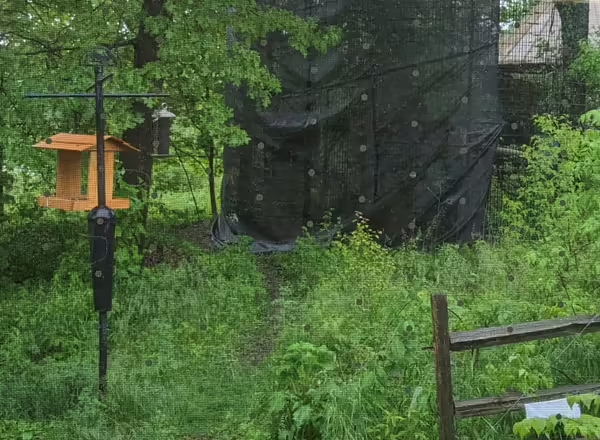
Beyond decorating or covering your windows, you can help to prevent bird strikes at home by moving bird feeders at least 30 feet away from windows (excepting feeders mounted on windows), evaluating bird flight paths to/from feeders and adjusting as needed. Also, when you’re planting vegetation, think about how birds might use that shrub or tree in the future and how it will be reflected in your windows. Consider joining Audubon’s “Lights Out” program during migratory periods.
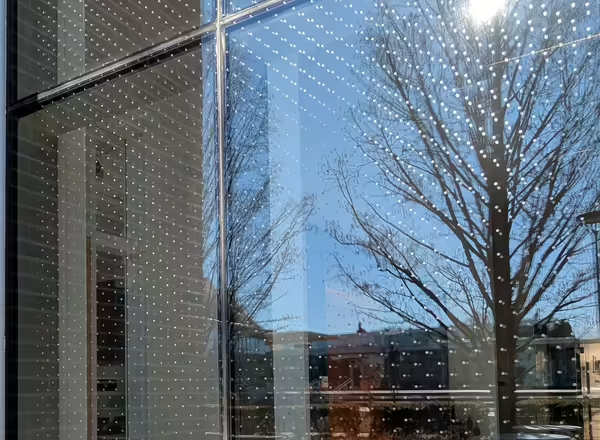
As for all those new structures with floor-to-ceiling glass walls; the state of Illinois recently passed legislation (Bird-Safe Buildings Act) requiring bird-friendly designs to be incorporated into the construction and renovation of state-owned buildings. There’s a lot more work to be done though, and overhauling standards to require bird-safe construction in the private sphere will be key to bird conservation in the future. Reducing the incidence of bird collisions with windows is a critical action recommended by bird conservation partners to help our North American bird populations.
Volunteering
If you’re interested in joining a community science effort to monitor buildings for bird strikes, or starting your own, there are many possible pathways. At college campuses across the world, students are leading survey efforts, and many cities have monitoring programs. For example, Chicago’s Bird Collision Monitors program has been ongoing since 2003, documenting bird strikes and advocating for changes to deadly buildings. They and other partners successfully advocated for a major window treatment project at Chicago’s McCormick Place along the lake, saving thousands of birds from striking windows since 2024. While commercial buildings are not typically required to treat their glass, community advocacy and heightened public awareness of this easily fixable problem can make all the difference in convincing building managers to take action in the interests of conservation and sustainability.
References
Loss, S.R., Will, T., Loss, S.S. and Marra, P.P., 2014. Bird–building collisions in the United States: Estimates of annual mortality and species vulnerability. The Condor, 116(1), pp.8-23. https://doi.org/10.1650/CONDOR-13-090.1
Loss, S.R., Li, B.V., Horn, L.C., Mesure, M.R., Zhu, L. et al. 2023. Citizen science to address the global issue of bird–window collisions. Frontiers in Ecology and the Environment, 21(9): 418–427. doi:10.1002/fee.2614
Riggs, G.J., Barton, C.M., Riding, C.S. et al. 2023. Field-testing effectiveness of window markers in reducing bird-window collisions. Urban Ecosystems 26, 713–723. https://doi.org/10.1007/s11252-022-01304-w