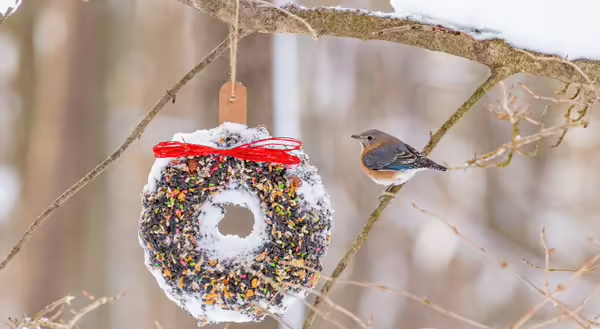
By Jennifer Bass, Extension Master Gardener, Master Naturalist, and Conservation@Home member serving Fulton, Mason, Peoria, and Tazewell counties
On Sundays, when the grand kids arrive, they often check whether the bird feeders are full and hurry to fill them with seed for our feathered friends. As we sit at the dining room table, eating lunch or playing games, we enjoy watching the birds and laughing and talking about all we see in the backyard. As I have aged, I have become more committed to caring for the birds and wildlife in my yard.
Choosing the Right Feeder
When deciding to feed birds, one can visit a farm store, a big box store, or, if you live near Peoria, the “bird” store to choose a feeder. There are many styles and designs to choose from; some may be more decorative than functional, while others are better suited to certain seeds that attract specific birds. Read the label when selecting a feeder. Often, the best feeder will have a recommendation from a reputable association such as Audubon or Cornell Ornithology Feeder Watch.
Tube Feeders
A tube feeder is suitable for holding mixed seeds. Check that the perch near the hole is long enough for the bird to rest on. Also, check whether the bird can easily remove the seed you plan to place in the feeder. Often the tube feeder holds a mixed seed if the holes are round, but if the holes are small slits, it will hold nyjer seed.
Mesh Feeders
Another style of feeder is the mesh feeder. Mesh feeders are suitable for holding whole black oil sunflower seeds. Mixed seed will often flow through the mesh and onto the ground; a larger seed is usually used in this style of feeder. The base has a tray where seed that may come through the mesh can be caught, and birds can retrieve for a meal. When feeding black oil sunflower seed, one needs to know there will be shells on the ground under the feeder. These will need cleaning when warmer weather arrives. A thin layer may compost into the soil, but a dense layer can cause mold or kill any plants or grass below.
Hooded and Flat Feeders
Two other styles of feeders are the hooded and flat feeders. Both have flat, wide bottoms and allow the birds that often feed on the ground to scratch while feeding. These feeders can hold both the tiny mixed seed blend and whole sunflower seed. Kits to build these feeders can be found online and are easy to put together. They can hang from a tree limb or be placed on a pole. Placing them on a pole ten feet from a tree or fence helps keep squirrels away.
Suet Feeders
A suet feeder offers food rich in fat, protein, and seeds, which is suitable for birds on cold winter days. The base of suet is often kidney fat with added seeds, nuts, and berries. Woodpeckers especially favor suet but other birds visit this feeder too. Suet can be purchased or made at home. If you make your own suet, you can go to the local butcher and ask for kidney fat at a low price. Do not use bacon or a cured fat in making suet. Birds do not need the added salt in their diet.
Simple Suet Recipe
1 cup peanut butter 1 cup vegetable shortening 4 cups cornmeal 1 cup flour A handful of nuts, chopped dried fruit, or raisins
Mix well, place on a cookie sheet and freeze. Cut to the needed size, place in the feeder, and hang.
Fruit for Birds
Fruits can also be placed outside for the birds. Orange sections, apples, and raisins are all good fruits to put in a feeder or hang.
Ground Feeding
Seeds placed on the ground are fun for birds that like to feed on the ground. However, do not place too much on the ground as it can attract other animals. A flat feeder can serve as a ground feeder. If you have trouble with other animals bothering feeders, place ear corn in another part of the yard. This may help a bit, but animals are going to a source of something they want. One can also try removing the feeders for a few days, then re-hanging them, but it will not be long before they are rediscovered. It may be a case where you feed the birds, deer, squirrels, raccoons, and possums!
Window Feeders
There are feeders that attach to windows and these are fun especially for individuals who are confined to a home or children. One disadvantage is sudden movement in the home can sometimes spook the bird. Place feeders on a pole or in a tree at least ten feet from the house. Again, birds can spook at the feeder and fly toward a window causing death.
Types of Seed
Nyjer Seed
Nyjer is a seed that is heat treated so it will not sprout. It is a good seed that will attract finches, chickadees, doves, pine sisks, sparrows, and buntings.
Mixed Seed Blends
When purchasing mixed seed, check whether it has a high concentration of milo, as this seed is often used as filler and is not a favorite of birds. If it has a lot of milo, switch to another brand. A mixed seed will also contain sunflower, cracked corn, and millet. These seeds provide protein and fat for the birds. Birds attracted to mixed seed are cardinals, blue jays, titmice, sparrows, doves, nuthatches, and woodpeckers.
Winter Watering Warnings
If you provide a heated fountain, do not have deep water—only an inch or two—and place larger rocks in the fountain so the birds can perch as they drink. Try to make it so the birds cannot get into the water. If their feathers get wet and freeze, the bird can freeze.
Cleaning Feeders
Clean the feeders regularly, as many birds congregate there each day. A common disease in finches is conjunctivitis, which affects the eyes. When cleaning a feeder, it can be placed in a dishwasher or washed with hot water and Dawn dish soap. One can use bleach to clean the feeder, but please make sure it is rinsed thoroughly afterward.
Learn More
For more information regarding landscaping for birds and winter protection, check out a video by Good Growing entitled Create a Winter Bird Haven.