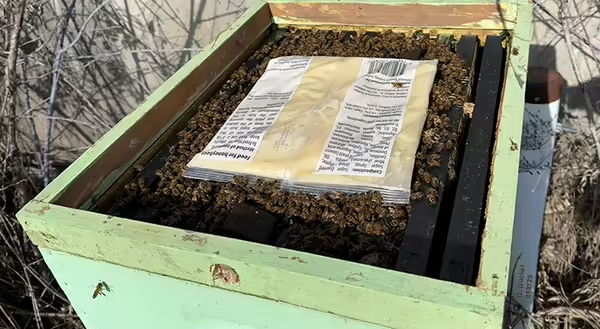
During the recent warm period in January, I checked the status of my bees. As you can see in the above photo, the bees seem to have survived the very cold temperatures of late November and the first half of December just fine as of the first 10 days of January.
What surprised me was the quantity of food that they had consumed so far. Before Thanksgiving, I placed a 2.2-pound (1 kg) of commercially prepared fondant on this hive with two nearly full honey supers. When I opened the hive, I was surprised to find that the fondant packet was nearly consumed by the bees, even though there was still honey in the honey supers.
Research shows that a colony of bees in our central Illinois climate will need at least 60 to 90 pounds of capped honey to meet its winter energy needs. My hive had about 90 pounds of capped honey before winter.
What did I learn from checking my bee colony on this warm winter day?
- The critical importance having supplemental bee food in the hive. When honey bees are in their cluster to keep warm and generate heat, the bees only move up and down in the hive, not side to side. That is why supplemental food that the bees can access when they reach the top of the hive is so important during prolonged winter cold spells.
What can I do to ensure this hive survives winter?
Add supplemental feed at least monthly through the end of March. At the end of January, the queen will begin laying eggs, so the hive’s energy levels will increase further. All this is happening before there is a nectar and pollen source for the bees to forage on, which makes winter feeding of the hive so critical for Illinois honeybee survival. In the above photo, you see the new 2.2-pound fondant packet that I placed on the hive before replacing the insulated top and outer covers.
Continue to monitor the mite levels. Varroa mite control is another key to winter bee survival. Mite levels must be low in the fall. Are you monitoring the mite levels in your colonies?