Episode Number
114
Episode Show Notes / Description
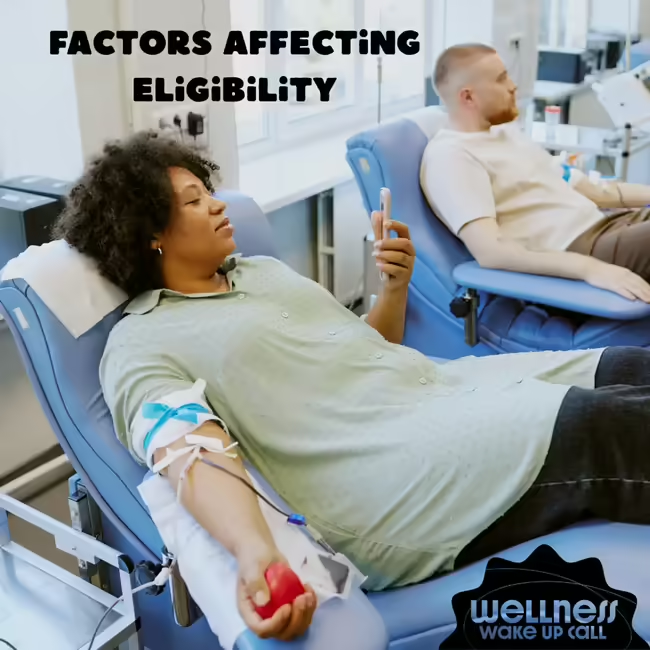
January is National Blood Donor Month, a time to recognize the lifesaving impact of donors and encourage more people to give blood. However, before rolling up a sleeve, it’s essential to understand the factors that affect blood donor eligibility.
Transcript
Good morning, this is your Wellness Wake Up Call with University of Illinois Extension.
January is National Blood Donor Month, a time to recognize the lifesaving impact of donors and encourage more people to give blood. But before rolling up a sleeve, it’s important to know the factors that affect blood donor eligibility.
To donate blood, you must weigh at least 110 pounds and be at least 16 or 17 years old, depending on the law in your state. You also must be in good health and pass a brief health screening upon arrival.
Certain medical conditions may affect eligibility. People with HIV, hepatitis, or some cancers cannot donate. Others may face temporary deferrals, such as those recovering from colds, flu, or recent surgery. Travel to areas with malaria risk, recent tattoos or piercings, and some medications may also require waiting before giving blood.
Pregnancy is another consideration; individuals are not eligible to donate during pregnancy and usually must wait until after childbirth. Additionally, donors must follow timelines between donations:
• Whole-blood donors can give every 56 days in the United States.
• Plasma donors can give every 28 days.
• Platelet donors can give every eight days, up to 24 times in 12 months.
• Double red blood cell donors can give every 112 days.
Regular donations help keep blood supplies steady—especially during winter, when shortages are common. This week, find a blood center near you and find out if you’re eligible to donate.
Thank you for listening! I hope you have a happy and healthy day ahead. This has been Kristin Bogdonas, food and nutrition educator with University of Illinois Extension.
January is National Blood Donor Month, a time to recognize the lifesaving impact of donors and encourage more people to give blood. But before rolling up a sleeve, it’s important to know the factors that affect blood donor eligibility.
To donate blood, you must weigh at least 110 pounds and be at least 16 or 17 years old, depending on the law in your state. You also must be in good health and pass a brief health screening upon arrival.
Certain medical conditions may affect eligibility. People with HIV, hepatitis, or some cancers cannot donate. Others may face temporary deferrals, such as those recovering from colds, flu, or recent surgery. Travel to areas with malaria risk, recent tattoos or piercings, and some medications may also require waiting before giving blood.
Pregnancy is another consideration; individuals are not eligible to donate during pregnancy and usually must wait until after childbirth. Additionally, donors must follow timelines between donations:
• Whole-blood donors can give every 56 days in the United States.
• Plasma donors can give every 28 days.
• Platelet donors can give every eight days, up to 24 times in 12 months.
• Double red blood cell donors can give every 112 days.
Regular donations help keep blood supplies steady—especially during winter, when shortages are common. This week, find a blood center near you and find out if you’re eligible to donate.
Thank you for listening! I hope you have a happy and healthy day ahead. This has been Kristin Bogdonas, food and nutrition educator with University of Illinois Extension.