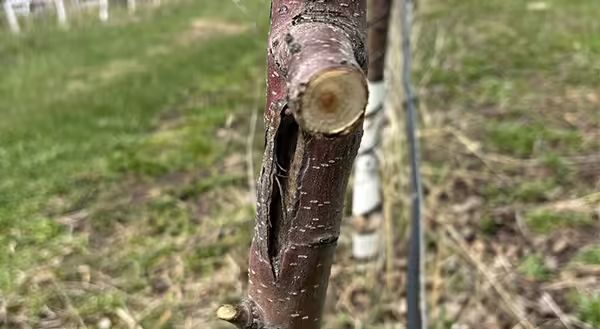
May is a critical month for assessing winter trunk damage because trees are fully leafing out and water demand is increasing. Differences in vigor among cultivars and rootstocks that were subtle during bloom are often more obvious now. Along with thinning decisions, this is a good time to evaluate tree support, removal, and replant planning.
Apples
In both high‑density young orchards and mature blocks, winter trunk damage in apples often shows up as uneven growth rather than sudden collapse.
Key indicators to look for include:
- Vertical bark splits, sunken or discolored trunk areas, or poor callusing
- Delayed or weak leaf‑out, short internodes, or reduced shoot growth
- Uneven canopy density within a tree or across rows
- Damage concentrated on the southwest side of the trunk
- Injury near the graft union or evidence of rodent feeding after trunk guards are removed
A knife test can help confirm injury: healthy cambium is green and moist, whereas winter‑killed tissue appears brown and dry. In high‑density systems, even partial trunk damage can permanently limit uniformity and long‑term productivity. In mature blocks, damage may persist as chronically weak scaffolds or reduced yield.
Management in May should emphasize stress reduction rather than stimulation:
- Maintain consistent irrigation as tree water demand increases
- Control weeds and avoid additional trunk injury from herbicide contact
- Use balanced nutrition to support canopy function and callus formation
Trees showing severe trunk injury, girdling, or continued lagging growth by late May should be flagged for next steps. Early identification is especially important in high‑density systems, where carrying marginal trees often costs more in lost yield than timely replacement. Mapping damage now can also help identify site exposure, rootstock sensitivity, or trunk protection issues.
Stone Fruits (Peach, Plum, Cherry, Apricot)
Stone fruits are generally less tolerant of trunk injury than apples and often decline rapidly as growth demand increases in spring. What appears manageable at bloom can progress quickly in May. In northern Illinois, repeated bud loss and trunk injury in higher‑risk stone fruit cultivars may ultimately determine whether stone fruit is a viable long‑term option for an orchard.
Key symptoms to watch for—regardless of tree age—include:
- Weak or uneven leaf‑out followed by sudden shoot flagging
- Excessive gumming on trunks or scaffold limbs
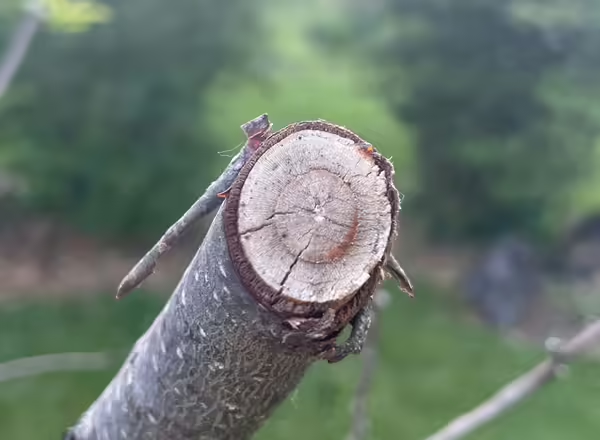
- Bark cracking, sloughing, or sunken areas
- Clearly defined brown, dry cambium when bark is scraped
Because winter‑injured stone fruit tissue is highly susceptible to secondary problems, May management should focus on minimizing additional stress:
- Maintain adequate soil moisture and good weed control
- Avoid pushing nitrogen on compromised trees
Trees showing extensive gumming, girdling, or progressive dieback by mid‑May are unlikely to recover, regardless of age. Prompt removal is often the most economical option and helps reduce disease inoculum and wasted inputs. Observations made in May are also valuable for identifying cold‑prone sites and refining cultivar selection, trunk protection, and planting strategies moving forward.