Bloom Period
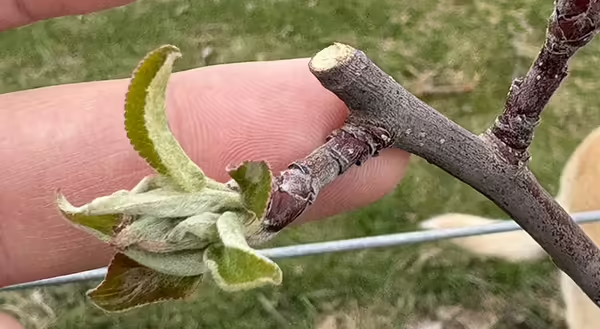
By the time you read this, most fruit trees in northern Illinois will have bloomed. When I visited an orchard in mid‑April, most cultivars were at tight cluster to half‑inch green. Just a week later, some cultivars had already entered late pink and even bloom. This rapid progression was a bit concerning, especially as parts of the region experienced a freeze on April 20. Depending on the stage of development and the duration of the freeze, there may be little to no impact on flowers—but outcomes will vary.
As a reminder, apple fruit bud development stages from tight cluster through full bloom can be injured when air temperatures fall below 28°F (potentially killing ~10% of buds) and below 25°F (potentially killing up to 90%). If buds were primarily at half‑inch green during the freeze event, the critical threshold is closer to 23°F. Keep in mind that freeze injury varies widely depending on cultivar, orchard layout, duration of the freeze or frost event, microclimates, and many other factors.
Depending on orchard scale and freeze risk, some growers may want to explore orchard fans. I know many growers in northern Illinois have already invested in these systems. A single fan typically covers 10–13 acres and can provide roughly 3–5°F of protection but only under the right conditions-these systems work best during calm, clear (radiative) freezes when warmer air sits above the canopy and can be mixed down to protect buds and flowers. During windy, advective freeze events, when cold air is already moving through the orchard, fans provide little benefit. Most are paired with orchard weather stations, with total system costs generally ranging from $16,000 to $35,000.
And of course, frost events are still possible in May in northern Illinois.
Voles
With the start of the growing season, I’m seeing more reports of vole damage in orchards—some of it quite severe. Damage includes feeding on roots, bark, the lower trunk, and even low side branches. Common signs are surface runways through vegetation and bark removal right at the soil line.
The most effective response is an integrated approach that focuses on prevention. Keeping vegetation tightly mowed around trees and maintaining a vegetation‑free strip of about 2 feet around the trunk can significantly reduce vole habitat. I also recommend installing trunk guards (cloth or plastic) that extend 2–3 inches below the soil line and 18–24 inches above it to help prevent girdling, especially on young trees—though I recognize that getting guards below the soil line can be challenging in some orchards.
On the control side, repellents containing capsaicin (such as Hot Sauce or Plantskydd) or putrescent egg solids can reduce feeding pressure, and I’ve seen some success with these products when vole populations are not extreme. When pressure is high, baits such as zinc phosphide or anticoagulants may be necessary, provided they are labeled for your use. While fall remains the most critical window for managing voles ahead of snow cover, what you do now—monitoring, mowing, and protecting trunks—can make a meaningful difference this season.
High Tunnel Research, Year 2, Freeport High School
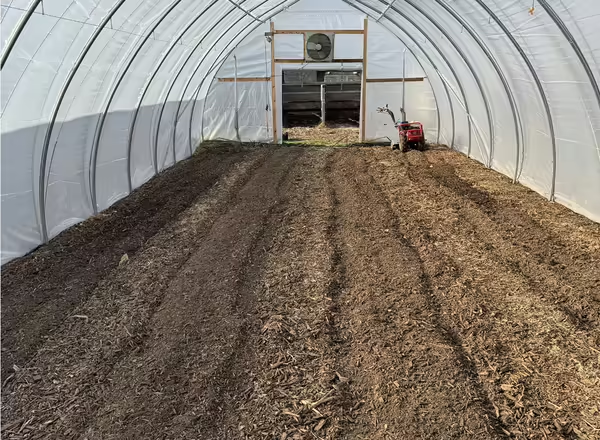
This is the 2nd year of our research project with Ben Skipor, Agriculture teacher at Freeport High School, and students at the Freeport High School Student Garden. One of the unique parts of this research project is the role of students as they have different management positions and weekly responsibilities at the garden not just during the school year but throughout the entire growing season. Funded by a SCBG, this study determines and looks at the feasibility of growing various tomatoes and cucumbers in high tunnels, shifting from field to high tunnels. The garden sells directly to consumers via CSA, farm stand, and farmers market. Last year’s study revealed some challenges in growing, trellising, and insect control that we hope to address this upcoming season. Further, some of the great tradeoffs were a much longer season of yields as to be expected within high tunnels. While research is occurring in Northern Illinois, Bronwyn Aly and other educators around the state have provided substantial support to this project. In April, seeds were started, and tunnels were retrofitted with louvers and thermometers on the fans. Beds were prepped on April 20th.