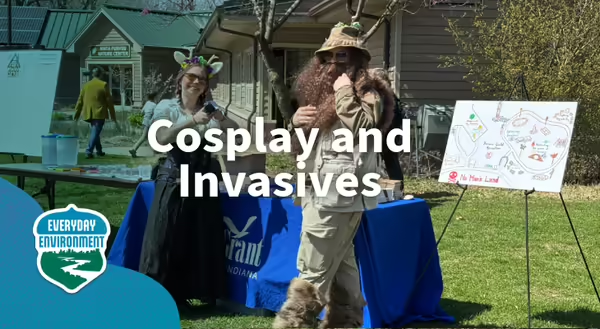
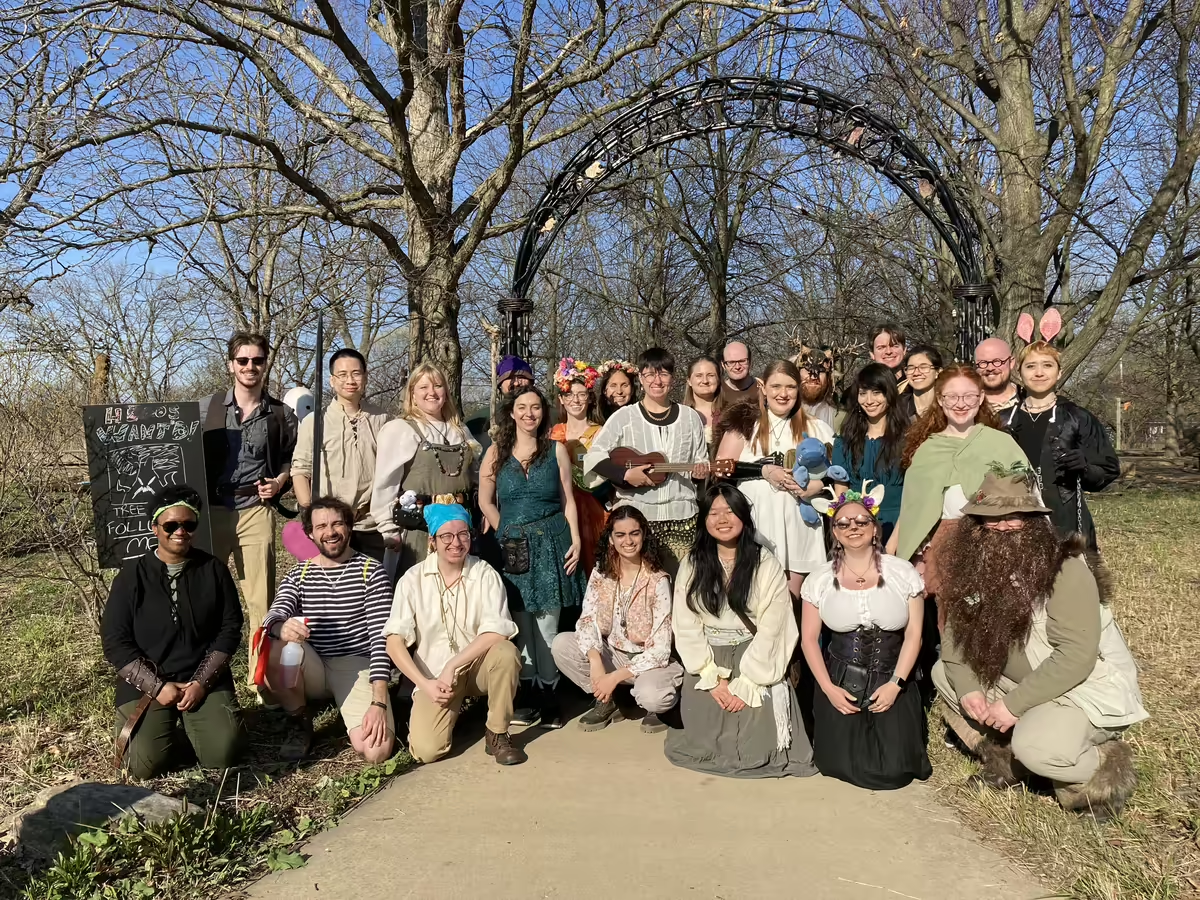
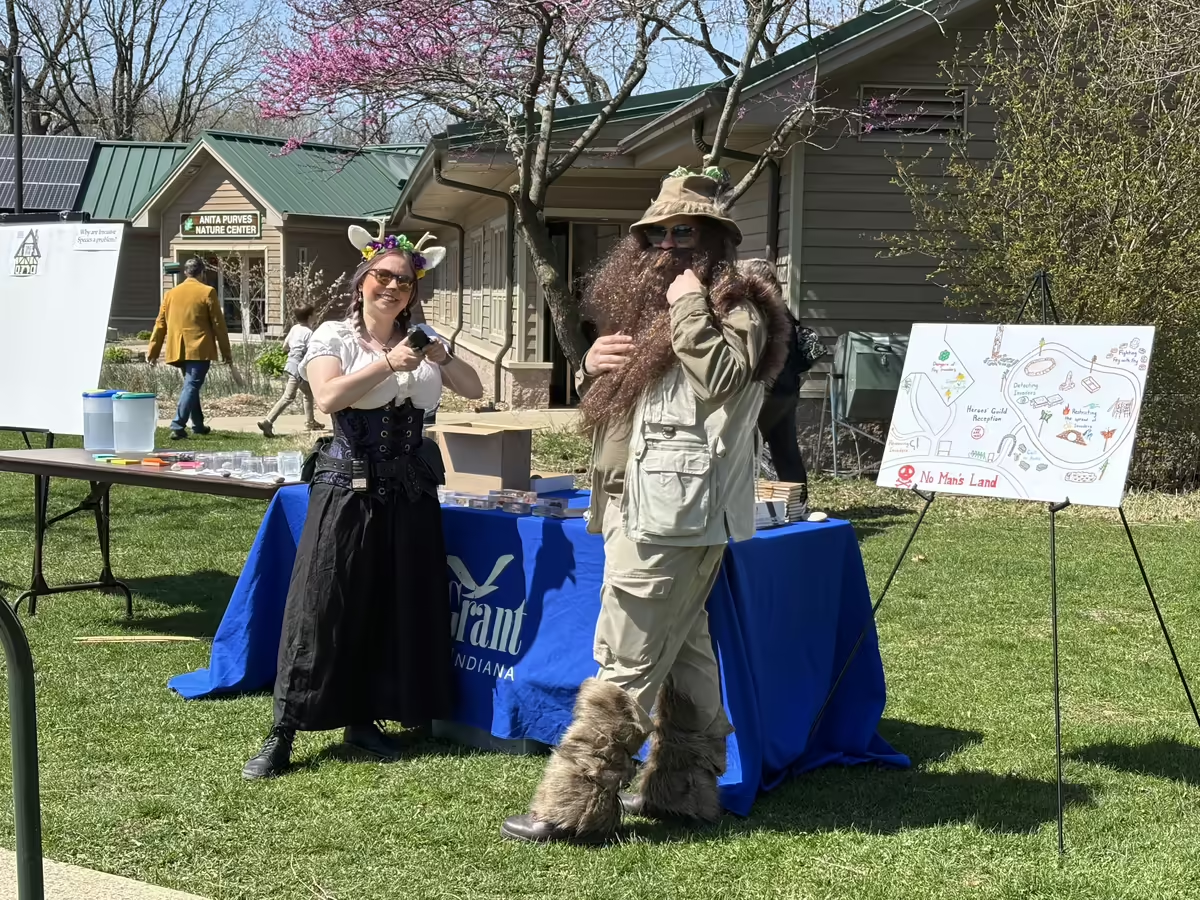
It was a beautiful April Saturday afternoon at the Anita Purves Nature Center in Urbana. Like most spring Saturdays, the grounds of the nature center were full of families from the surrounding area exploring the indoor exhibits and strolling along the boardwalk through the nearby woods. Unlike most Saturdays, several visitors were donning medieval dresses, dragon wings, and foam swords.
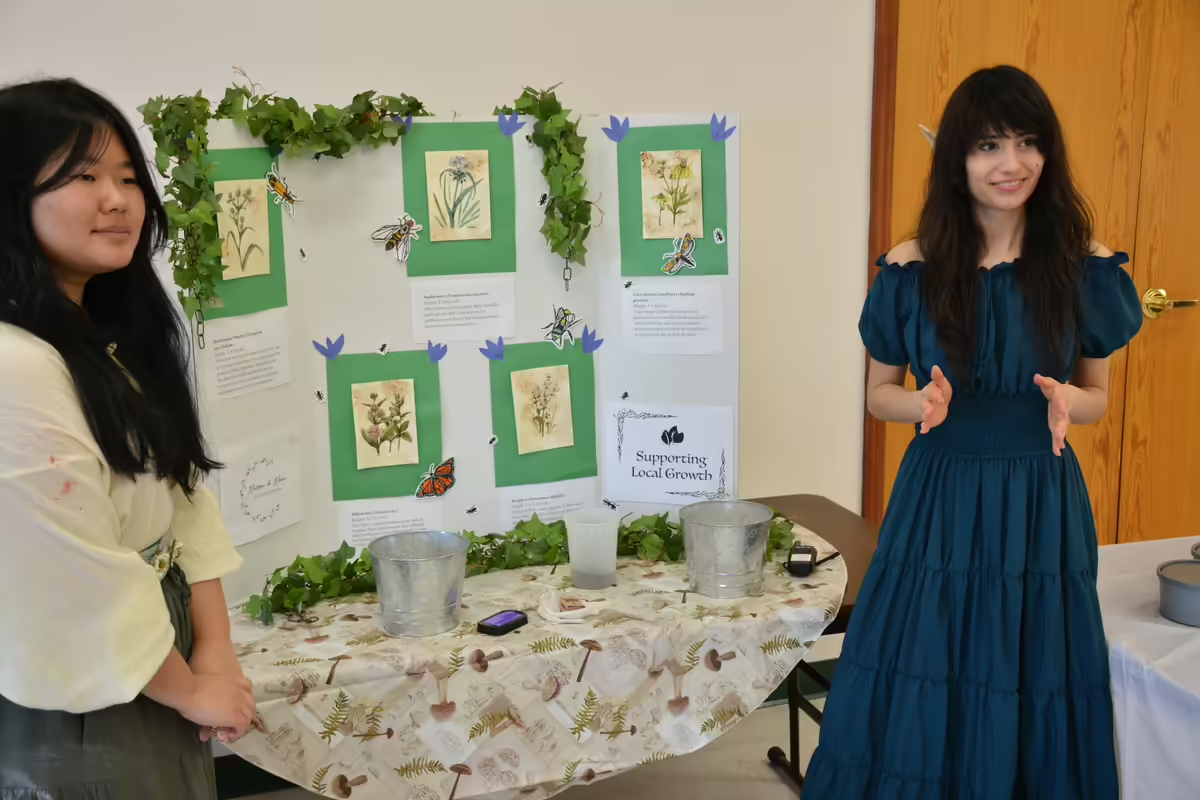
These aspiring adventurers were on a quest, taking part in training activities to combat the incursion of invasive species into central Illinois. But these are no ordinary invasives: blink dogs, faerie dragons, and other wondrous creatures from the Feywild – a magical plane that exists adjacent to our own – have invaded and are wreaking havoc on the local ecosystems. While some visitors learned how to detect magical invasives utilizing the spell Detect Natural Anomaly (or eDNA), others hotly debated the best type of biological control agent for dealing with ravenous owlbears or visited Flora and Elmyra’s Mystical Native Seed Emporium to make druidic seedballs.
At least, that was the story presented by a mix of students, alumni, and colleagues from University of Illinois, attracting people to a new and unique scientific outreach event in collaboration with Cosplay for Science.
This blog is by Dr. Philip Anderson, Associate Professor of evolution, ecology, and behavior at University of Illinois Urbana-Champaign.
What is Cosplay for Science?
Cosplay for Science is a group of researchers, curators, and teachers who implement best practices in science communication through “cosplay” and “role play.” Scientists participate in an immersive experience for general audiences built on science fiction, fantasy worlds, or other popular culture. For this event, fantasy adventure was the theme of choice, drawing on the tabletop role-playing game Dungeons & Dragons and other fantasy sources. While fantastical in theme, the science is very real, addressing the challenges and dangers invasive species bring to local wildlife and ecosystems in the real world.
Why is Cosplay for Science important?
The modern world is deeply dependent on the understanding and application of scientific data and inquiry. This is especially true of issues surrounding conservation and shifts in the environment that can have far-reaching consequences for everyday life. However, the public’s scientific literacy appears to be declining. This is not helped by the common perception of scientists as out of touch with the general public, leading to persistent disconnects between scientific ideas and people’s everyday lives.
While traditional venues such as museums, libraries, and universities can draw crowds to science outreach events, they tend to self-select members of the general public who already have buy-in to science. Cosplay and role play offer a means to engage with those who do not. Cosplay is the process of dressing up like a character from popular culture and attending events such as comic book conventions (i.e., comic cons). Cosplayers come from many ages, ethnicities, races, genders, educational backgrounds, and occupational backgrounds, including educators. This approach is important in that it allows scientists to explore new ways to reach audiences while removing barriers to engagement with scientists who might otherwise seem intimidating or unrelatable. Cosplay for Science runs events at a wide variety of venues, including sci/comic conventions such as San Diego Comic Con and New York Comic Con. The Midwest group, based out of University of Illinois Urbana-Champaign, is currently planning events for both C2E2 in Chicago and GenCon in Indianapolis. Such activities can potentially lead to the development of greater science understanding and encourage lifelong learning for a diverse audience.
What we can do to help?
Cosplay for Science is open to anyone interested in scientific outreach, cosplay, or gaming. While the original organization is based in Southern California, the Anderson Evolutionary Biomechanics lab at the University of Illinois is currently acting as a hub for Midwestern activities. Participation as a volunteer or organizer does not require affiliation with the university. Anyone from the area interested should reach out to Dr. Anderson, who can either put you in touch with others organizing events or help you start your own cell of Cosplay for Science.

About Everyday Environment
Everyday Environment is a series of blogs, podcasts, webinars, and videos exploring the intricate web of connections that tie us to the natural world. Want to listen to us chat about this topic?
Was there something about this blog's topic we didn’t cover? See something cool in nature? Let us know! Send us your question or share your everyday nature observation with us at go.illinois.edu/EEconnect, and we may share it in a future blog or podcast.