If you live in the Midwest, you may be used to seeing garlic mustard thriving along forested roadsides or buckthorn shrubs taking over forests and parks. These are two examples of invasive plants that have become widespread. Plants are considered invasive if they are non-native, meaning they originated outside of a specific region, such as the Midwest, and cause some type of harm to the environment, economy, and/or human health. Most non-native plants do not cause harm, but those that do can degrade ecosystem health and function and cost billions of dollars to control.
This is why early detection of invasive plants is so important. When invasive plants are discovered early, there is an opportunity to eliminate, or at least contain, the new population, avoiding immense investments of time and money and preventing significant environmental damage. In the Midwest, one group is working to catch invasive plants before they become a problem.
This guest blog was written by Michelle Beloskur, Director of the Midwest Invasive Plant Network
The Midwest Invasive Plant Network
The Midwest Invasive Plant Network, MIPN, highly prioritizes invasive plant early detection. MIPN tracks known invasive plants that have either been recently introduced to our area or that are present in neighboring regions and are at risk of expanding their range into the Midwest. We share this information with our network to raise awareness of these plants, make sure people avoid planting them, report sightings, and, when possible, remove them.
Each year, MIPN surveys invasive plant experts across our region and issues a summary of emerging plants of concern. MIPN also develops and shares community outreach and awareness promotional materials on terrestrial and aquatic early-detection species. Keep-a-Lookout flyers identify 16 priority species, and the new Protect Our Upper Midwest Forests flyer highlights six early-detection species that could negatively impact forests. The organization also offers webinars focused on specific early-detection species, covering identification, reporting, and management.
Public Gardens as Sentinels Against Invasive Plants
MIPN also co-directs Public Gardens as Sentinels Against Invasive Plants, PGSIP. This initiative began in 2016 when one of the founders recognized that many public gardens track and manage plants in their collections that escape from the sites where they were cultivated, a potential sign that a plant is invasive. At that time, there was no systematic way to capture and share that information. A new working group created standardized guidelines and a database to enable gardens to collect this information.
Over the last five years, nearly 70 public gardens and arboreta across North America have shared observations of non-native plants in their collection that are escaping cultivation.
The group maintains a publicly accessible Data Dashboard to highlight plants most commonly reported by public gardens and issues Plant Alerts on species of highest priority. The goal of these alerts is to raise awareness of these plants, share what public gardens have observed about their propensity to spread, and recommend actions accordingly. New research found that data from sentinel public gardens are useful indicators of potential plant invasion.
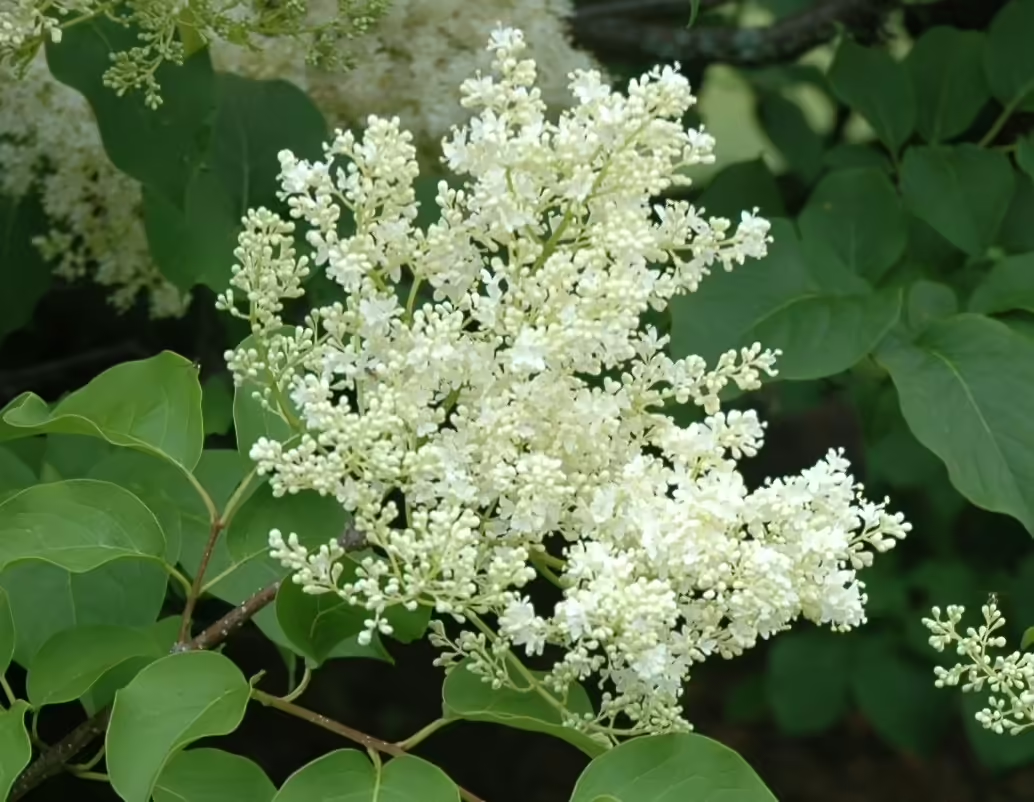
At the end of 2025, the PGSIP Working Group issued two new Plant Alerts, one on Japanese tree lilac (Syringa reticulata) and one on golden rain tree (Koelreuteria paniculata). Our group also updated a 2023 Plant Alert featuring Amur corktree (Phellodendron amurense).

Title
More about The Midwest Invasive Plant Network
Explore more about MIPN’s invasive plant early detection efforts and access resources to help you address invasive plants where you live.
About Everyday Environment
Everyday Environment is a series of blogs, podcasts, webinars, and videos exploring the intricate web of connections that tie us to the natural world.
Was there something about this blog's topic we didn’t cover? See something cool in nature? Let us know! Hit "Connect with Us" below to send us your question or share your everyday nature observation with and we may share it in a future blog or podcast.