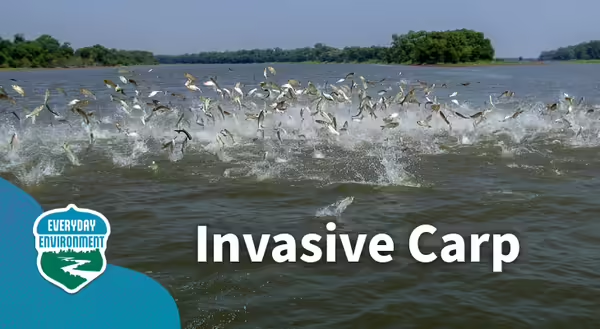
On one warm afternoon last June, I suddenly throttled down the boat as a barrage of silver carp leaped out of the water and pummeled my assistants and me, leaving a generous layer of slime on everything in the boat. Anyone who has been in a boat on the Illinois or Mississippi rivers during the past two decades has probably had a similar experience with these piscine aerial missiles, and numerous videos on the internet document this spectacle. However, the impacts of invasive carp aren’t limited to bruises and cracked boat windshields. These fish are having a substantial effect on the aquatic ecosystems and native fish assemblages in North American rivers.
This guest article was written by Steve Butler, Biologist at the Kaskaskia Biological Field Station.
The term “invasive carp,” often also referred to as “Asian carp,” refers to four species of large-bodied fish native to the rivers of East Asia.
- Silver carp are the most visible of these due to their tendency to leap out of the water, and along with bighead carp, consume large quantities of plankton using specialized gill rakers, competing with native planktivores and causing cascading alterations to aquatic food webs.
- Grass carp consume large quantities of aquatic vegetation, which can have secondary impacts on water quality and negatively affect invertebrate and fish communities.
- Black carp consume snails and mussels, presenting a substantial risk to the already imperiled mollusk assemblages of eastern North America.
How Carp Came to America's Waterways
Imported into the United States in the 1960s and '70s for various aquaculture and biocontrol purposes, the four invasive carp species eventually escaped confinement and established reproducing populations within the Mississippi River basin. Silver carp and bighead carp in particular became extremely abundant in some rivers, especially in the Illinois River during the 1990s to early 2000s. Because the Illinois River is linked to Lake Michigan through the Chicago Area Waterway System, the risk of invasive carp spreading into the Great Lakes became apparent.
The potential establishment of invasive carp in the Great Lakes could threaten the multi-billion-dollar recreational and commercial fishing industries of several states, tribes, and provinces, as well as cause considerable impacts to aquatic habitats and imperiled species. Therefore, numerous control measures and deterrent technologies have been pursued to prevent the expansion of invasive carp populations. A series of electric deterrent barriers currently operates on the Chicago Sanitary and Ship Canal near Romeoville, Ill., as a last line of defense against any invasive carp approaching Lake Michigan.
Controlling Invasive Carp
An intensive harvest program has also been implemented in the upper Illinois River to reduce densities of invasive carp in the navigation pools closest to Lake Michigan. Available evidence suggests that these removal efforts have substantially reduced invasive carp densities in the upper Illinois River since 2010. Invasive carp densities have been reduced enough in the uppermost navigation pools of the Illinois River to diminish their impact on key zooplankton taxa, but this response has remained elusive further downstream, and evidence of diminished impacts on other food web components, including native fishes, has yet to be documented. Continued assessment of the ecological impacts of invasive carp control efforts will evaluate if reducing densities of these fish will offset their negative effects on riverine ecosystems.
Even if we can greatly reduce invasive carp densities, control efforts must be continuously pursued to be effective, as invasive carp have extremely high fecundity, with individual females producing hundreds of thousands to millions of eggs. Invasive carp populations can therefore quickly rebound if left unchecked. Invasive carp are broadcast spawners that release their eggs into the water column during periods of rising water levels. Invasive carp spawning is known to occur as far upstream on the Illinois River as the Dresden Island Dam near Channahon, Ill., but eggs and larvae drift in river currents for considerable distances before the young settle into nursery habitats in backwaters, creek mouths, and channel margins, largely downstream of the Starved Rock Dam. Current research is being conducted to identify specific spawning and nursery areas to target for control efforts, as well as to understand levels of population reduction that will reduce the reproductive productivity of invasive carp populations.
Learning to Manage Invasive Carp
Unfortunately, invasive carp aren’t going away. We can hopefully keep them out of the Great Lakes. We might eventually be able to manage their populations in our rivers to limit their impacts on our native fisheries. This will require considerable effort by state and federal agencies, but every one of us can help.
- Do not move fish between waterbodies. This includes the minnows in your bait buckets, fish you catch while angling, or even fish you might buy from some dealers. A number of invasive fish species have spread to new waterbodies due to introductions by anglers or through poorly screened stockings.
- Only buy fish for stocking ponds from licensed, reputable dealers, and only stock sterile, triploid grass carp for control of aquatic vegetation.
- Finally, eat as many invasive carp as you like! There are no limits on how many invasive carp you can catch. There is even a bounty in place on black carp, so you could get paid $100 for every one you catch! Unlike common carp, the four invasive carp have milder, white meat, but they do contain numerous bones. There are many videos online on how to clean and cook invasive carp, including how to remove the bones. Also, look for invasive carp in stores and restaurants, marketed under the name “Copi.”
By increasing demand for these fish, we can encourage additional harvest for them, helping to further reduce their numbers and offset their impacts.
Resources
- Invasive Carp Regional Coordinator Committee
- Managing Invasive Carp from the U.S. Fish and Wildlife Service
- Invasive Carp Canada
- Non-indigenous Aquatics Database: Silver Carp, Bighead Carp, Grass Carp, Black Carp
- Illinois Department of Natural Resources, ChooseCopi
What lurks under the surface? Aquatic invasive species may seem like sea creatures from the movies, but the impact of these introduced plants and animals on Lake Michigan is no fiction. From blood-sucking sea lamprey to jumping silver carp, many aquatic invasive species look and act like...
About Everyday Environment
Everyday Environment is a series of blogs, podcasts, webinars, and videos exploring the intricate web of connections that tie us to the natural world.
Was there something about this blog's topic we didn’t cover? See something cool in nature? Let us know! Hit "Connect with Us" below to send us your question or share your everyday nature observation with and we may share it in a future blog or podcast.