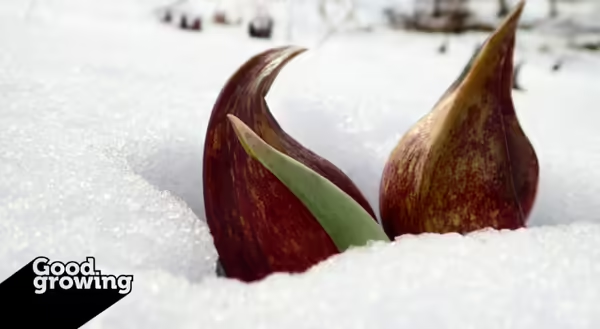
The cold winter temperatures may make it seem like spring is a long way off, but before we know it, spring will arrive, bringing warmer temperatures and spring-blooming plants. When we think about spring-blooming plants, many plants may come to mind, including traditional garden favorites, such as daffodils, crocus, tulips, grape hyacinths, or, if natives are your thing, Virginia bluebell, trilliums, and spring beauty. There is one plant that beats all these plants to bloom, often blooming with snow still on the ground: skunk cabbage.
Where Is Skunk Cabbage Found, and What Does It Look Like?
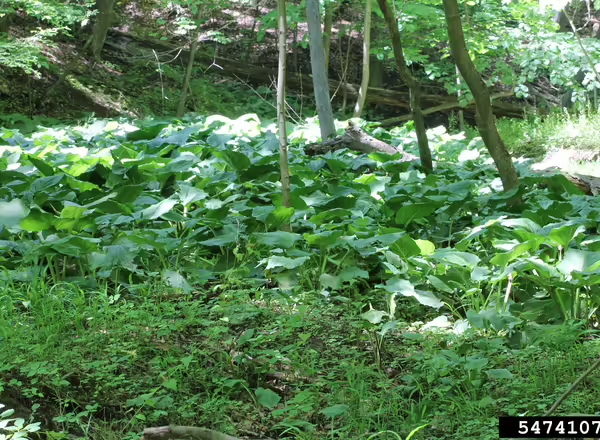
Skunk cabbage (Symplocarpus foetidus) is a low-growing plant in the arum family (Araceae). It is native to eastern North America, from Nova Scotia west to Ontario in Canada and from Maine west to Minnesota, and south to Tennessee and North Carolina. It can be found in the northern half of Illinois, particularly the northeast part of the state. It grows in wet areas, such as marshy woods, wetlands, stream banks, and bogs.
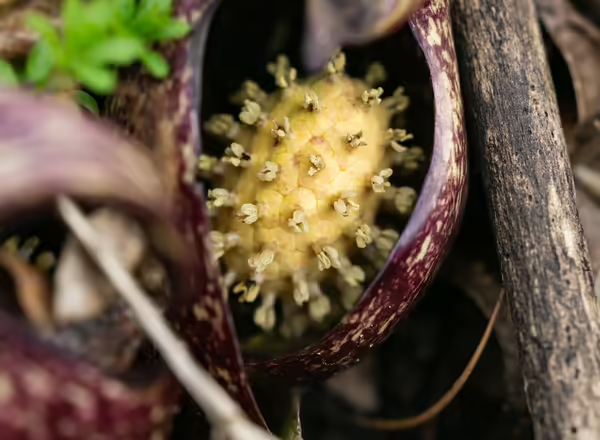
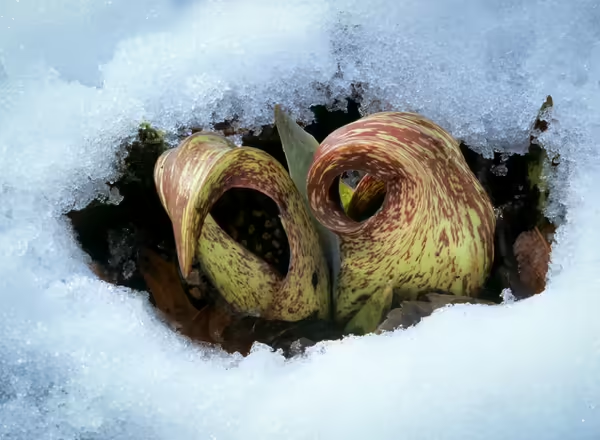
Skunk cabbage is among the first, if not the first, plant to bloom in the spring. Flowers may emerge as early as February. Like other members of the arum family, they produce flowers (spadix) that are surrounded by a spathe (a modified leaf).
The spathes are 4 to 6 inches tall, hood-like, and often twisted. They can range in color from wine red to marron, and some may have yellow to yellow-green mottling and streaking. The spathes have an opening on one side, which allows access to the spadix. The spadix is 2 to 5 inches long with a number of tightly packed flowers. The female flowers will mature before the male flowers do (protogynous).
As their name implies, skunk cabbage has unpleasant smelling flowers that have been described as smelling like skunk and putrid meat, while others describe it as smelling like garlic or a mix of cabbage and mustard. The flowers are pollinated primarily by flies, gnats, and beetles, which are attracted to the smell.
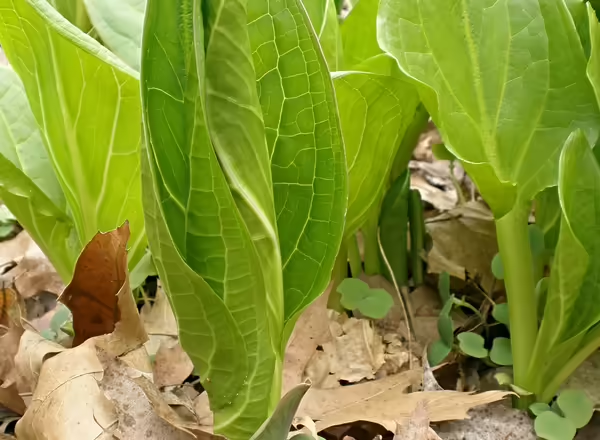
As the spathe begins to wilt, leaves will emerge from the rhizomes. The leaves form a funnel-shaped rosette and can reach 3 feet long and 1 foot wide. When damaged, the leaves also have a skunk-like odor. The leaves also contain calcium oxalate crystals that cause a burning sensation when eaten. By the time summer arrives, the leaves will begin to die and will break down rapidly.
The Plant That Generates Heat
Perhaps the most notable attribute of skunk cabbage is that it is one of the few plants that can generate its own heat (thermogenic plant). This allows the plants to bloom while snow and ice are still on the ground. The spadix produces the heat as it breaks down starches (it's more complicated than that). The plants are capable of maintaining temperatures inside the spathe 15-35°F or more (documented to be 80°F in some cases) warmer than the surrounding air temperature.
There are several theories as to why skunk cabbage evolved to generate its own heat.
- The heated air (and the spathe's shape) helps spread the flower's odor, attracting pollinators.
- Plants will produce more heat while the female flowers are mature. In studies of a related species (S. renifolius), scientists found that the optimum temperature for pollination is around 73°F. Therefore, generating heat while the female flowers are receptive will increase the likelihood of successful pollination.
- The heat can also help attract insect visitors, protecting them from low temperatures and increasing the amount of time they spend visiting their flowers. While the insects are inside the spathe, they may pick up or deposit pollen. Some fly species will even lay eggs, and their larvae will develop within the spathes.
Growing Skunk Cabbage at Home
Because it prefers consistently wet locations, skunk cabbage may be difficult to grow in a home landscape. Plants are typically grown from transplants or seeds. Large, mature plants are incredibly difficult to dig due to their large and extensive contractile root systems, which pull them deeper into the soil as they age; use young plants instead (you should never dig wild populations without permission). Seeds should be planted in the fall, while they are fresh; they do not remain viable long and will die if they dry out.
Skunk cabbage may not be a typical garden ornamental, but its early bloom time and unusual biology make it a fascinating native plant worth appreciating, whether in the wild or, for the adventurous gardener, in a home wetland garden.
Good Growing Fact of the Week: Skunk cabbage uses the reaction of starch and oxygen to produce heat. It is estimated that skunk cabbages consume as much oxygen as mammals of the same size.
Bonus Fact of the Week: Beetles and flies aren’t the only arthropods found in skunk cabbages; spiders will occasionally build webs near the opening of the spathe to capture prey.
Bonus Fact of the Week #2: Bees, particularly honey bees, have been observed visiting the flowers to collect pollen; however, they are rarely observed visiting the flowers during the female phase, meaning they likely don’t play an important role in pollination.
References and For More Information
Campbell, Dean J, and Kristi McQuade. “Hot Topic for Early Spring: Thermogenesis of Eastern Skunk Cabbage.” Chemical Education Xchange, March 6, 2021. https://www.chemedx.org/blog/hot-topic-early-spring-thermogenesis-eastern-skunk-cabbage.
Isabelle Barriault, Denis Barabé, Louise Cloutier, Stéphanie Pellerin, Marc Gibernau. Pollination ecology of Symplocarpus foetidus (Araceae) in a seasonally flooded bog in Quebec, Canada. Botany Letters, 2021, pp.1-11. ⟨10.1080/23818107.2021.1909496⟩. ⟨hal-03262116⟩
Knutson, Roger M. 1974. “Heat Production and Temperature Regulation in Eastern Skunk Cabbage.” Science 186 (4165): 746–47. https://doi.org/10.2307/1739984.
Seymour, Roger S. 2010. “Scaling of Heat Production by Thermogenic Flowers: Limits to Floral Size and Maximum Rate of Respiration.” Plant, Cell & Environment 33 (9): 1474–85. https://doi.org/10.1111/j.1365-3040.2010.02190.x.
Williams, Katherine A. “A BOTANICAL STUDY OF SKUNK CABBAGE, SYMPLOCARPUS FOETIDUS.” Torreya 19, no. 2 (1919): 21–29. http://www.jstor.org/stable/40595977.
Photos
Skunk cabbage emerging in snow – Gerry, Adobe Stock
Skunk cabbage flower – Erik, Adobe Stock
Emerging leaves - Ansel Oommen, Bugwood.org
Patch of skunk cabbages - Rob Routledge, Sault College, Bugwood.org
Want to get notified when new Good Growing posts are available? SIGN ME UP!
Give us feedback! How helpful was this information (click one): Very helpful | Somewhat helpful | Not very helpful
MEET THE AUTHOR
Ken Johnson is a Horticulture Educator with University of Illinois Extension, serving Calhoun, Cass, Greene, Morgan, and Scott counties since 2013. Ken provides horticulture programming with an emphasis on fruit and vegetable production, pest management, and beneficial insects. Through his programming, he aims to increase backyard food production and foster a greater appreciation of insects.