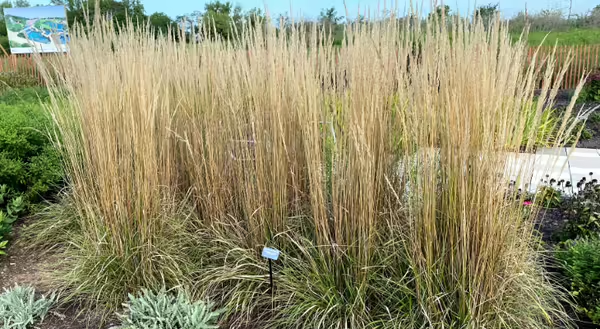
When it comes to plant selections in landscaping, much of the focus is typically put on trees, shrubs, and showy flowers. But take a closer look at many landscaped areas and you’ll often find a few grasses. Grasses are underappreciated but can often provide four season interest in the landscape. Probably one of the most commonly planted grasses is Feather Reed Grass (Calamagrostis x acutiflora), especially the cultivar Karl Foerster.
I’ve seen this grass planted in front of doctor’s offices, along drive-throughs at fast food restaurants, and in parking lots. It’s the ubiquitous choice. So why is it so popular?
Pros
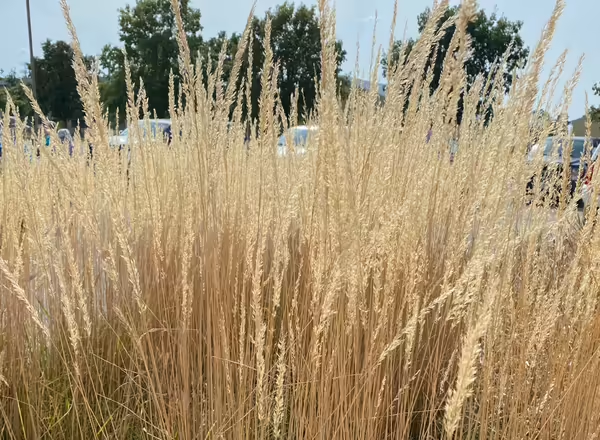
Feather Reed Grass is a perennial grass that grows in very tidy, upright clumps. Because it is a cool-season grass, it starts to green up early in the spring. By early summer, it sends up its flowering stalks, which can grow to 5-6 feet tall in the Karl Foerster cultivar. It turns a golden color in the fall and adds winter interest to the landscape. Some other desirable qualities are it can grow well in clay soils, it is not usually impacted by pests and diseases, and this cultivar is considered sterile. Win-win-win!
Cons – are there any?
As far as non-native grasses go, this is a great option. Thus far it has not exhibited signs of invasiveness.
However, one thing to consider in designing and planting our landscapes is species diversity. Having a wide variety of plants in our landscapes make them more robust against pest and disease issues. If an insect pest or disease showed up and began impacting this grass, the effect on our landscapes would be quite large. Consider the impact that Emerald Ash Borer had on our ash trees, and the now spreading impacts of boxwood blight on boxwoods in our managed landscapes. This is one reason to think about diversifying our plantings and including a few more options.
Native alternatives
If you are looking for native alternatives to Feather Reed Grass, consider the following:
Junegrass
I think Junegrass is the closest look-alike to Feather Reed Grass. It is also a cool-season bunchgrass with an upright form. It turns yellow in the summer. It is a shorter grass, usually staying under 2 feet, but I think it has a lot of potential for the home landscape.
Little Bluestem
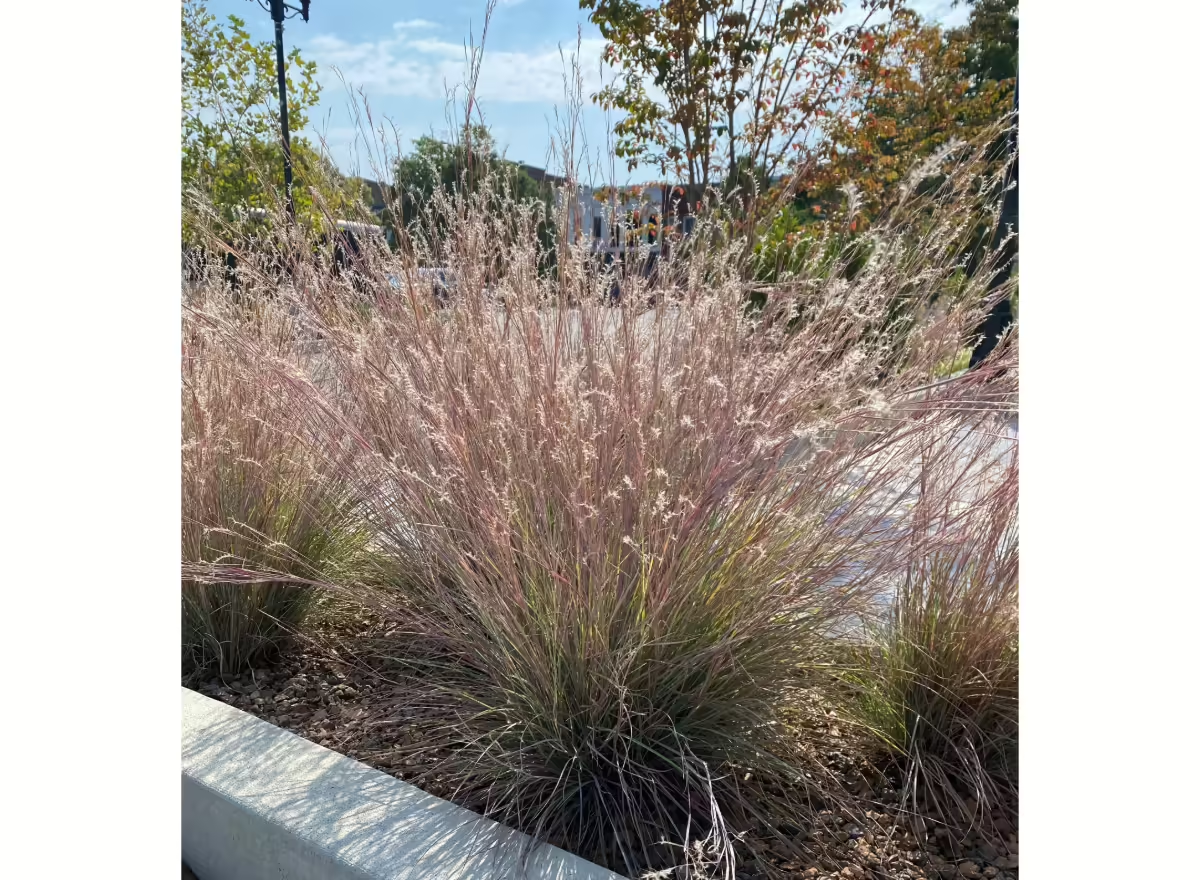
Little Bluestem has the same clumping habit and upright form, although as a warm-season grass it will green up and flower later than Feather Reed Grass. It will not grow as tall, typically only 3-4 feet tall, and it turns reddish orange instead of gold in the fall, but still provides fall and winter interest.
Sideoats Grama
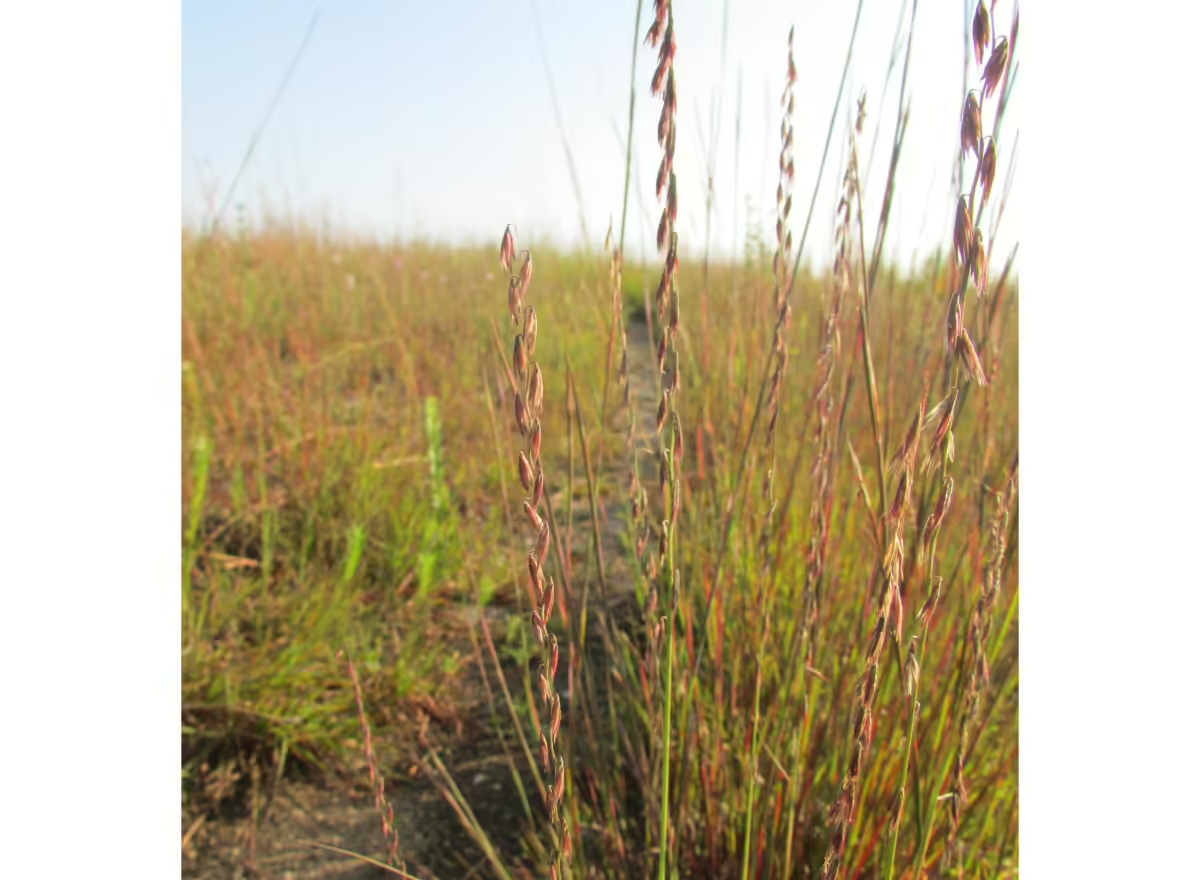
Sideoats Grama is a warm-season bunchgrass that can spread over time through rhizomes. It is more understated but if planted in mass could be more of a statement grass.

Thank you for reading! Need a refresher on grass identification terms, like ligule and spikelet? Check out this blog post!
About Grasses at a Glance
Never miss a new post! Subscribe to our email list to get updates each time a new post is available.
Give us feedback! How helpful was this information (click one): Very helpful | Somewhat helpful | Not very helpful
ABOUT THE AUTHOR: Erin Garrett is a Natural Resources, Environment, and Energy Educator for University of Illinois Extension serving Alexander, Johnson, Massac, Pulaski, and Union counties. Erin develops and delivers high impact programming to adults and youth to help them develop an appreciation for natural resources and to empower them to make small changes to positively impact the environment. Erin’s programming focuses on why homeowners should consider choosing native plants, how to support native pollinators, how to identify grasses, how to identify and manage invasive species, and developing an appreciation for prairie ecosystems.