
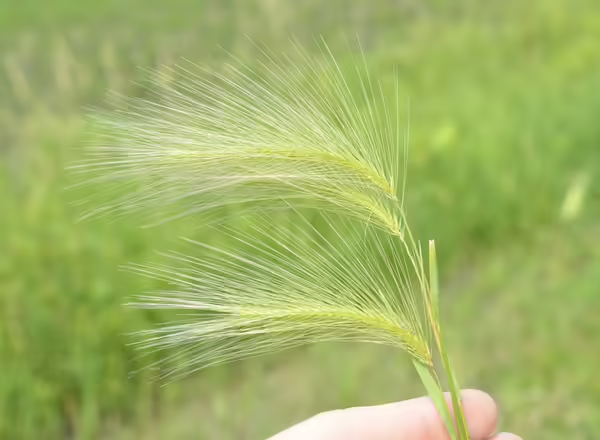
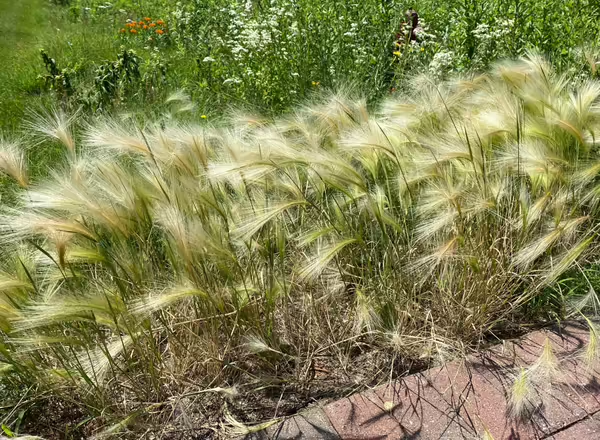
While working in tallgrass prairie restorations in central Minnesota, I was responsible for identifying and recording presence and abundance of native and non-native plants. I remember coming upon a clearing that was full of squirreltail barley, Hordeum jubatum, which seemed to form a patch of grass that danced gracefully in the breeze (pictured to the right). Named for the long awns that make this grass resemble a squirrel’s tail, this species of barley is easy to pick out from other grasses.
Also called foxtail barley, squirreltail barley is in the Hordeum genus, which includes five species in Illinois. The most common other species is Little Barley, which we’ve covered in a previous blog post.
Identifying features
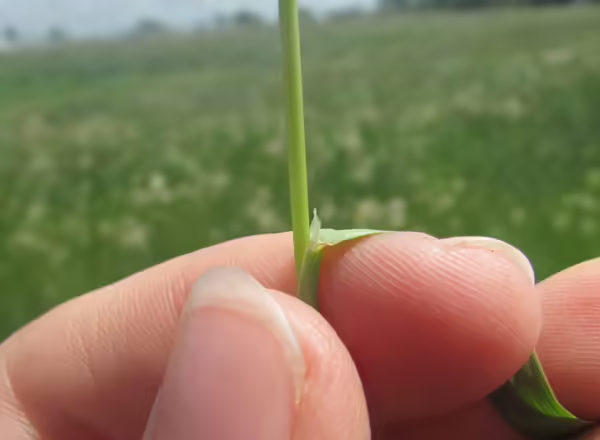
Squirreltail barley is native to Illinois, although it tends to grow in more disturbed, weedy areas, so it isn’t necessarily a species intentionally planted. It grows in a wide range of soil conditions but prefers sunny, dry spots. It usually stays under 2 feet tall. It has short leaves that taper to a point and a short, membranous ligule. When it flowers, it has a spike inflorescence covered in long, silky awns that are between 1 and 3 inches long. The awns can range in color from yellow to green to red.
This grass is palatable to livestock prior to its seedheads developing, after which the awns can harm grazers.
Have you seen squirreltail barley before?

Thank you for reading! Need a refresher on grass identification terms, like ligule and spikelet? Check out this blog post!
About Grasses at a Glance
Never miss a new post! Subscribe to our email list to get updates each time a new post is available.
Give us feedback! How helpful was this information (click one): Very helpful | Somewhat helpful | Not very helpful
ABOUT THE AUTHOR: Erin Garrett is a Natural Resources, Environment, and Energy Educator for University of Illinois Extension serving Alexander, Johnson, Massac, Pulaski, and Union counties. Erin develops and delivers high impact programming to adults and youth to help them develop an appreciation for natural resources and to empower them to make small changes to positively impact the environment. Erin’s programming focuses on why homeowners should consider choosing native plants, how to support native pollinators, how to identify grasses, how to identify and manage invasive species, and developing an appreciation for prairie ecosystems.