By Megan Todd, Extension Master Gardener, Serving Fulton, Mason, Peoria, and Tazewell counties
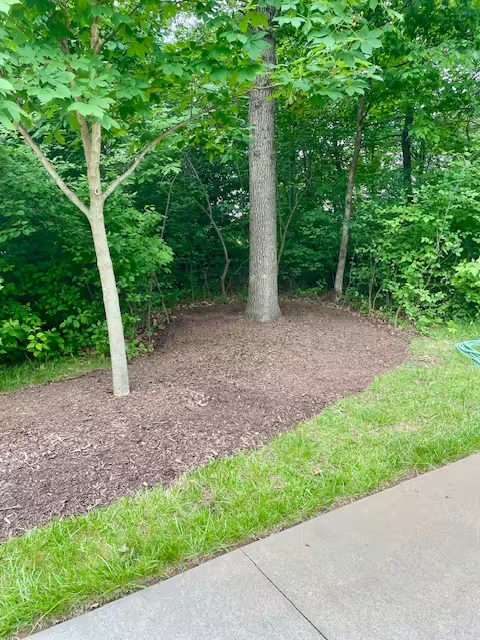
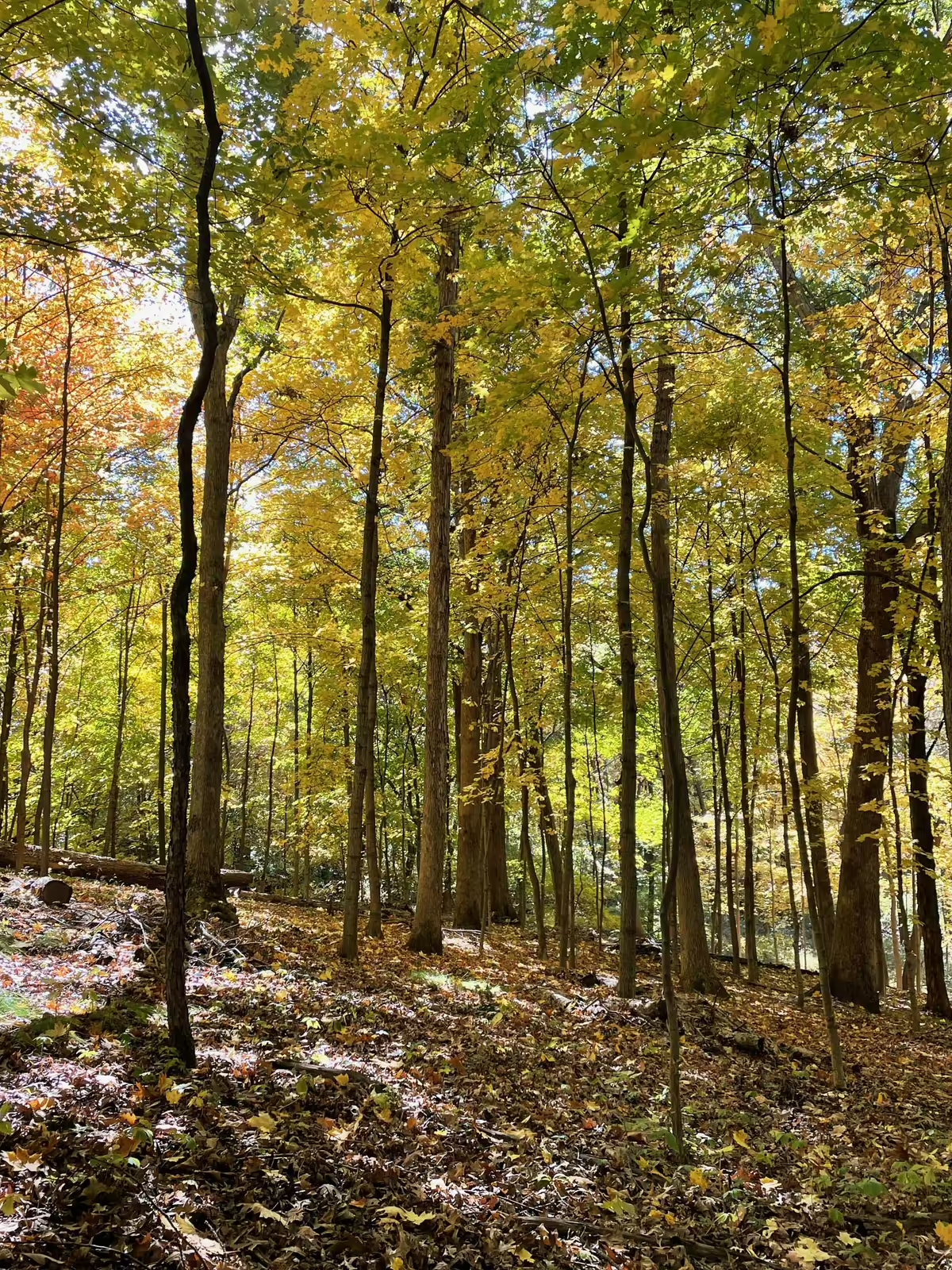
Driving up the street in a Morton subdivision searching for the home of new Conservation@Home members Gordon and Joyce Wassell, one needs no house number to know which place is theirs. All along their street, houses sit on wide expanses of sterile lawn, not a weed in sight. Well behind every house thick, dense snarls of woods serve as distant, wild backdrops. The back edge of each lawn serves as a strict demarcation boundary. Every property looks the same. Every property, that is, except one. One house sits tucked lovingly into the woods as if it grew there, like a secret hideaway, surrounded by trees that cover the entire property. Asking yourself “which of these properties is a place a lot of creatures might call home” would lead you right to their place!
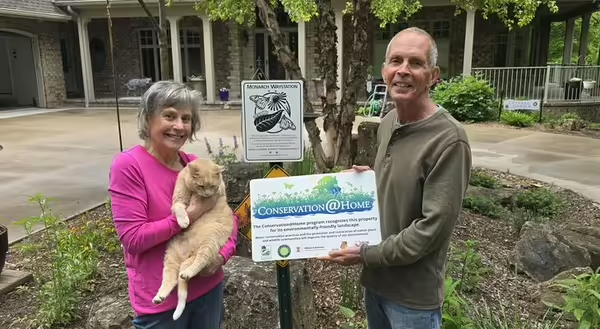
Joyce learned about Conservation@Home while in the Extension Master Gardener training course. The philosophy closely resonates with her own. She read down the list and noticed that everything was already in place to qualify. She applied in hopes that having the sign posted would encourage people passing by to ask questions.
Originally from the Peoria area, the Wassells spent ten years in northern Wisconsin. They returned to the area 13 years ago when their grandson was born. They both had a lifetime of knowledge, having grown up in families that gardened, and from owning and caring for 80 acres of managed forest crop land in Wisconsin. They wanted wooded property with virgin timber, which made for a narrow search because there is not much left. They had lived in Morton before and knew they liked it, so when their realtor heard about a subdivision being planned in a large area of virgin timber, she brought them out to have a look. They had their pick of the available lots. It was all densely wooded and completely wild.
Gordon recalls, “I walked back there when we came with the realtor. She wouldn’t walk back there. I needed to at least see over the hill to see what we were buying, and when I came back through there, I mean I just gutted it out, my shirt was shredded.”
They purchased over 4 acres, and thus began an adventure that has lasted 13 years to date and has resulted in their own well-earned paradise. This lot was intimidating. The plants were different from those in Wisconsin, plus everything was well entrenched. Things here tend to grow on a gargantuan scale.
While all their neighbors tackled the dense woods by hiring heavy equipment to pulverize the vegetation in the front portion of their lot in order to clear a house site, Joyce and Gordon employed a unique approach. They made their plans with a guiding philosophy “disturb the landscape and its inhabitants as little as possible, respect what lived here first.” They hand cleared all 4 acres!
They decided that the first step would be to look around and get the lay of the land, which was a challenge considering they had a hard time getting far enough back just to mark their house site. They targeted the areas of most need first, removing invasive plant species and securing the hillside where their walkout basement would be from erosion. There was honeysuckle everywhere and wild rose bushes over their heads with trunk-like stems that had to be removed with a chainsaw, some weighing over 80 pounds! Removing these was physically taxing but cleared large spaces at once for tangible progress each day. As they progressed, they noticed obvious next steps, and the process unfolded slowly and organically over several years.
They worked together for entire days while their house was being built. Even after Joyce returned to work, she would go out and help Gordon until 9pm each night. They worked well as a team. Gordon took care of the trees, and using the heavy power saws, as well as taking point on erosion prevention. Joyce did most of the plant management and clearing that required hand tools. She said, “It was helpful to focus on small sections at a time rather than thinking about the total space so that it didn’t become overwhelming.” That first year they cleared and burned by hand, starting with the area around their house site and working back. They secured the hillside where their walkout basement was installed using logs and planting bald cypress trees and mint which, according to Gordon, “have phenomenal root structures that are great to hold soil in place.”
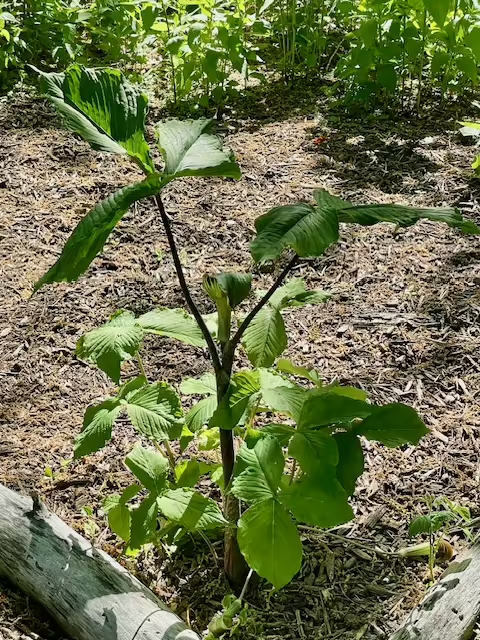
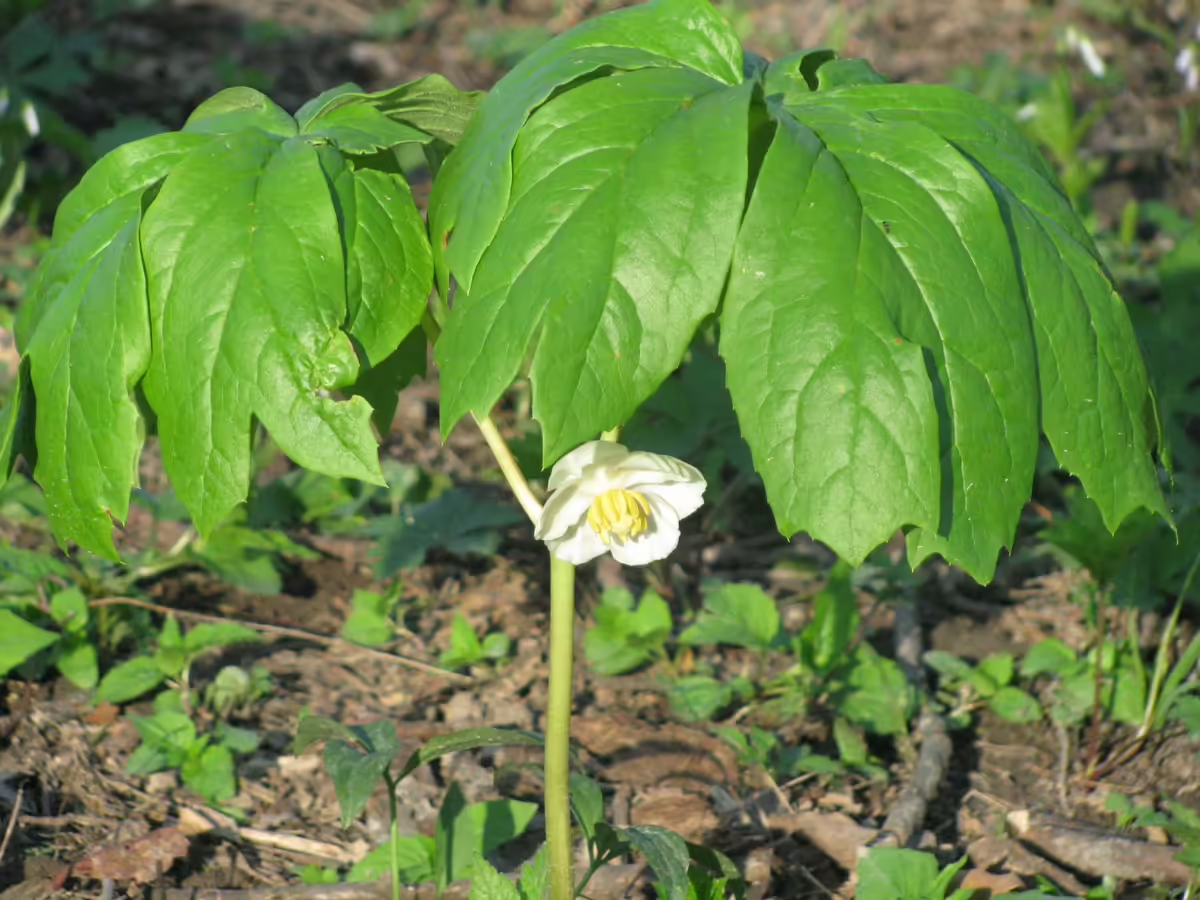
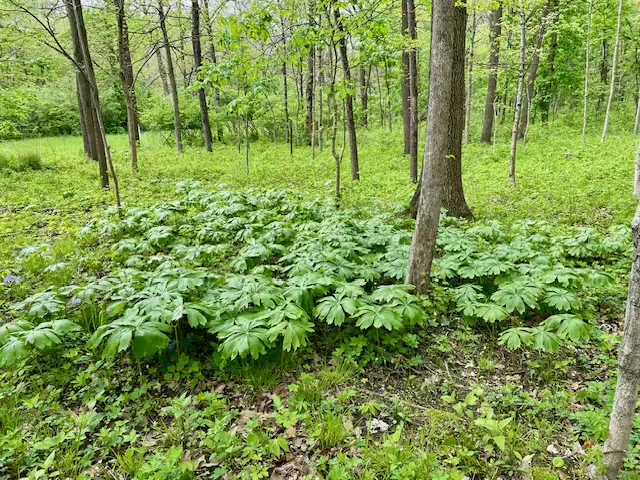
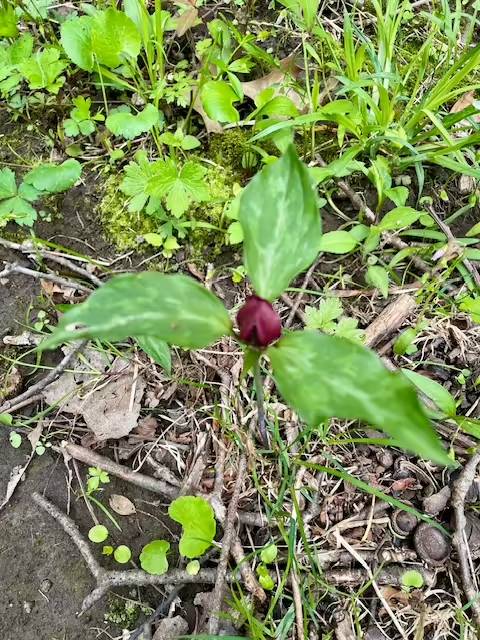
Once the obvious invasive plants were removed, the Wassells relied on their experience and some extensive research to make more nuanced decisions. Smaller trees were selectively removed thinning the canopy and allowing filtered sunlight through. This encouraged an array of other existing plants and wildflowers, like Jack-in-the-pulpits, to emerge. Another tough but necessary decision was removing a grove of nettle that stood 7 feet tall. The nettle was so thick that they couldn’t walk in that section of their yard without their faces stinging. It had to go. Realizing that some butterflies benefited from it, they researched and planted other plants that would provide habitat. Gordon used a power saw on a long pole, “It was a pleasure to cut them.”
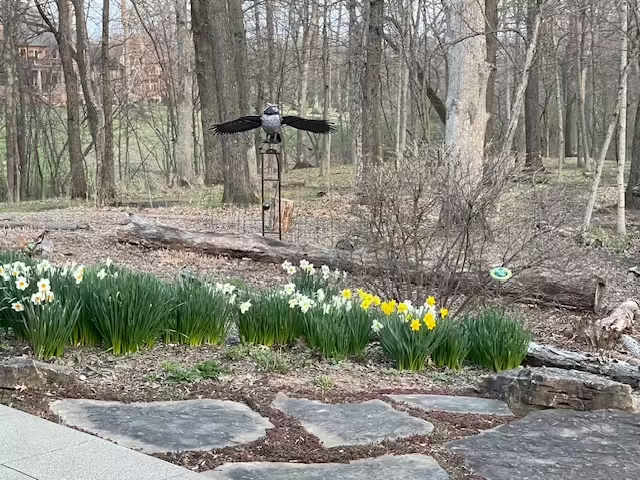
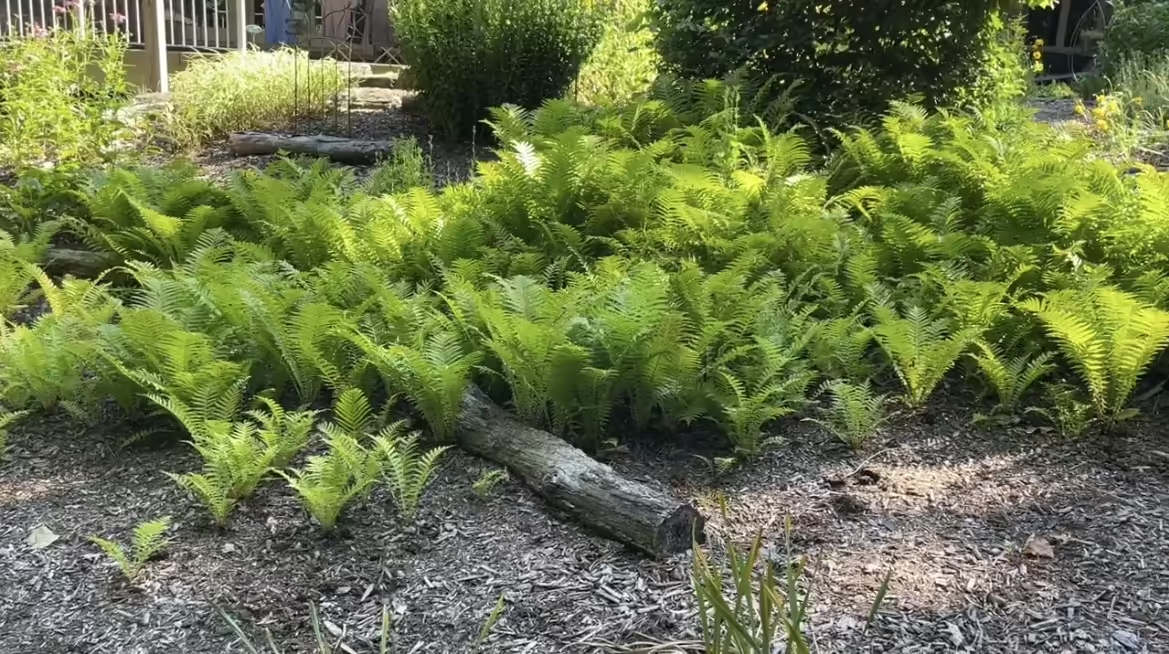
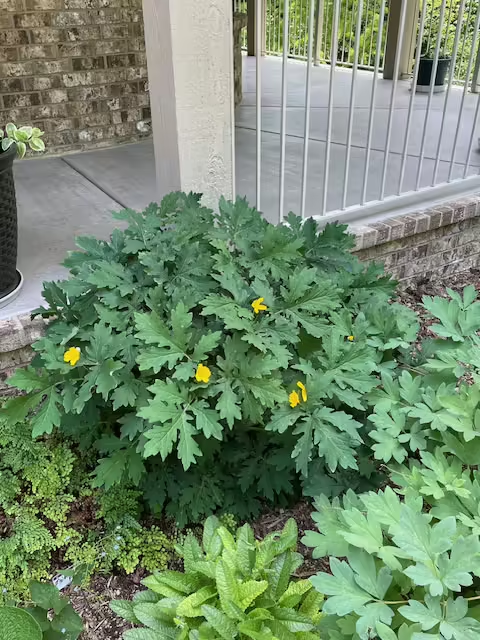
Besides thinning a lot of forest by hand, the Wassells also planted thousands of daffodils that first fall. Joyce also planted single plants to start what are now thick groves of ferns and woodland poppy, just by dividing and transplanting over the years. As the house was finished, they had rock and wooden steps installed, and created beautiful flagstone paths that blend with the surrounding landscape. They also established mulched walking trails throughout their 4 acres of woods.
Gordon recalls, “We have 27 cubic yards of mulch delivered every year. We have a commercial-sized wheelbarrow, and it takes about 325 wheelbarrows to maintain the trails. I know because we take them back one at a time. It’s work.” They do this by hand because a tractor would destroy their landscaping and delicate plants.
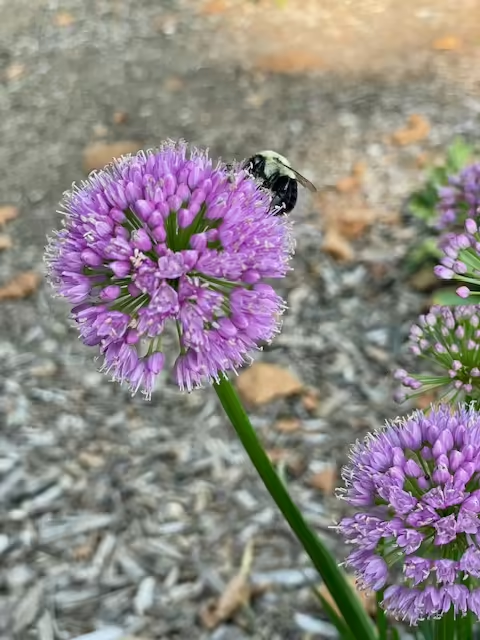
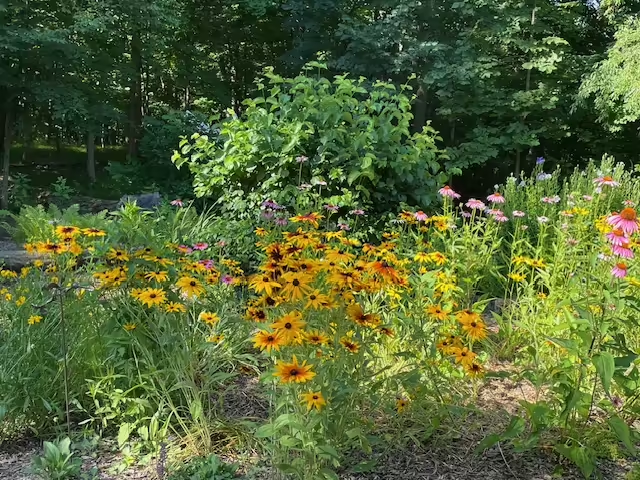
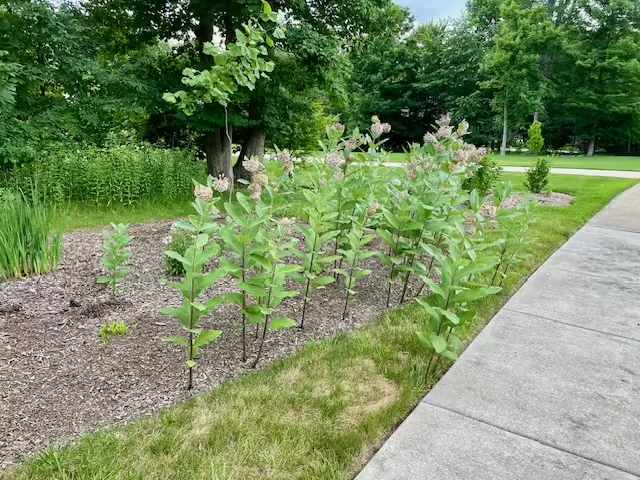
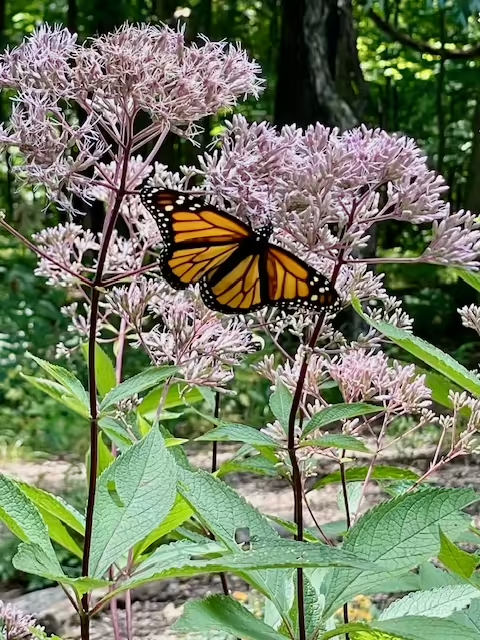
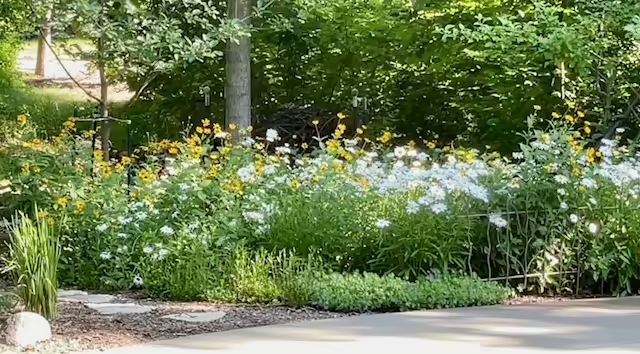
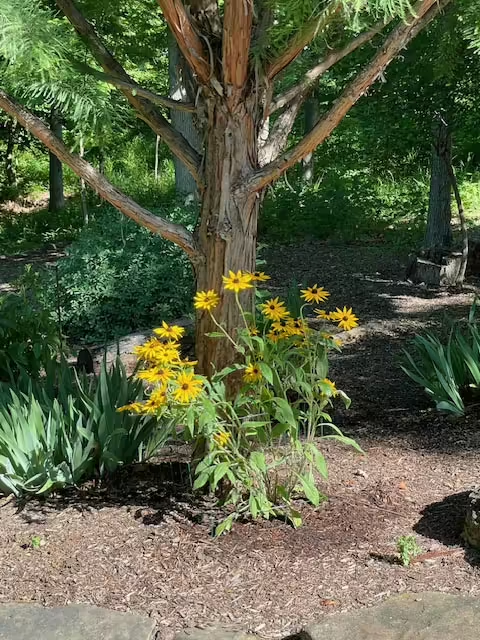
Other decisions have been simpler. When a tree is downed, they leave it, allowing it to become a moss-covered part of the landscape. Where they removed the large area of nettle, wild, naturally occurring Joe-pye emerged in beautiful groves along their front yard, which are loaded with bees and butterflies all summer. This, combined with milkweed-lined paths installed by Joyce, mingled with cone flowers and zinnias, have made the Wassels' front yard not only a showcase, but also a Monarch Waystation and Pollinator Pathway.
An interesting benefit of the Wassells' land is that the soil here grows things big. Aside from the 7-foot nettle, Gordon also found a 9 inch tall morel mushroom that he photographed next to a ruler because, “No one would believe me!”. Near the house a sunny space was designated for a vegetable patch where each summer they plant hot peppers, basil, and heirloom tomatoes. They harvested a tomato from this patch that weighed in at 2.8 pounds and was 17 inches in diameter! They had to create a sling to support it while it was still on the vine. Sunflowers that were supposed to top out at 5 feet grew to 15 feet tall. On display in their home is a beautiful curved wooden limb that looks like it was cut from a small tree but is in fact the stem of a Virginia Creeper vine that grew on the property.
Another benefit to owning a property loaded with habitat is the opportunity to bear witness to some extraordinary moments in nature. Multiple times Joyce has had the honor of seeing monarch butterflies the moment they emerge from their chrysalis, getting their bearings while drying their new wings, and then flying off for the first time to meet the world as a brand-new butterfly!
The Wassells agree that this is what they enjoy spending their time doing. To them, it is not work. Joyce says that their property now is in a maintenance phase. They still change out a plant or two here and there, and they spend time regularly keeping invasives at bay. Sometimes Joyce heads back to the creek with their cat Pumpkin and spends up to five hours removing garlic mustard before it turns to seed. To her, this is not work but a source of enjoyment and fulfillment.
Being the yard that is different from all the others requires diplomacy and compromise. Every invasive plant species that the Wassells have painstakingly removed grow in abundance in the untouched back woods of neighboring properties. They will always get seeds blown in by winds and transplanted by birds and wildlife. The neighbors all spray chemicals on their lawns which the Wassells must try to mitigate on their Monarch Waystation and Pollinator Path, and the Wassells are careful to remove leaves on the sections of their yard where they would be apt to blow onto neighbor properties. “There are plenty of leaves in the back woods that we leave so that things can find their spot for the winter,” Joyce explained.
I asked Joyce and Gordon if they had advice they would share with anyone wanting to develop a property of their own using similar principles. They both said, “It is important to work with your property and not fight nature. Understand that when you remove invasives they are going to come back. This can be discouraging, but every time they return they are a little smaller and eventually the roots systems get spent. Don’t force anything. That takes the fun out of it. Choose plants that are hardy with the least amount of work. Understand that you can’t fight the deer. They will always win. If deer find a plant and eat it, you are better to plant something else that they don’t like. Also, find or form a network to join for sharing information, where you can ask questions and get updates on issues that could affect your property. Ask questions about a pest rather than just reaching for something to spray. And one of the points that they most strongly emphasized is that your property is never ‘done’. Maintenance is ongoing, but well worth it!”